Showing posts with label Banks. Show all posts

Wednesday, May 23, 2012

Obama Should Be Attacking Casino Capitalism

By Robert Reich, cross-posted from his website
 
I wish President Obama would draw the obvious connection between Bain Capital and JPMorgan Chase.

That way his so-called “attack” on private equity is neither a personal attack on Mitt Romney nor a generalized attack on American business.

It’s an attack on a particular kind of capitalism that Romney and JPMorgan both practice: Using other peoples’ money to make big bets which, if they go wrong, can wreak havoc on the economy.
It’s the substitution of casino capitalism for real capitalism, the dominance of the betting parlor over the real business of America, financial innovation rather than product innovation.

It’s been terrible for the American economy and for our democracy.

It’s also why Obama has to come out swinging about JPMorgan. The JPMorgan Chase debacle would have been prevented if the Volcker Rule were sufficiently strict, prohibiting banks from using commercial deposits to make bets except very specific offsetting bets (hedges) on narrow classes of trades.

But Jamie Dimon and JPMorgan have been lobbying like mad to loosen the Volcker Rule and widen that exception to include the very kind of reckless bets JPMorgan made. And they’re still at it, as evidenced by Dimon’s current claim that the rule that eventually emerges would allow those bets.

As a practical matter, the Volcker Rule is hopeless. It was intended to be Glass-Steagall lite — a more nuanced version of the original Depression-era law that separated commercial from investment banking. But JPMorgan has proven that any nuance — any exception — will be stretched beyond recognition by the big banks.

So much money can be made when these bets turn out well that the big banks will stop at nothing to keep the spigot open.

There’s no alternative but to resurrect Glass-Steagall as a whole. Even then, the biggest banks are still too big to fail or to regulate. We also need to heed the recent advice of the Dallas branch of the Federal Reserve, and break them up.

At the same time, there’s no point to the “carried interest” loophole that allows private-equity managers like Mitt Romney to treat their incomes as capital gains, taxed at only 15 percent, when they’ve risked no money of their own.

If private equity were good for America it wouldn’t need this or the other tax preference it depends on, elevating debt over equity. But the private equity industry has huge political clout, which is why these tax preferences remain.

Get it? Bain Capital and JPMorgan are parts of the same problem. The President should be leading the charge against both.

Monday, May 21, 2012

Wall Street, Romney, And Obama

By Mike Lux, cross-posted from Crooks and Liars

The most critical battle in this election year is the battle over Wall Street. Candidates all over the place, from the high profile candidates like Elizabeth Warren to a slew of others all over the country, are battling over who is on Wall Street’s side, who wants to keep bailing them out, and who is pushing them to go to jail. But nowhere is this battle being played out more prominently than in the race for the White House.

The Obama campaign is doing a major push in the coming weeks on Mitt Romney’s sordid history at the helm of Bain Capital. His fellow Republicans called it vulture capitalism, and they were right. Mitt bought companies (many of them doing just fine at the time he bought them), loaded them up with massive amounts of debt that Bain could write off on their taxes, in many cases destroyed and outsourced jobs and cut pay and benefits, and then frequently carved them up and sold off the pieces to maximize short-term profits. A few of these companies ended up surviving this brutal process and becoming more profitable, and we will hear a lot from Mitt about those examples. But way too many times, Mitt and Bain left these companies, and especially their workers, far worse for the wear, leaving behind a lot of shattered lives in the process, while Mitt and his fun-loving pals stuffed money in their pockets and walked away. High School wasn’t the only place Mitt brutalized those weaker than him, and he enjoyed doing it.

Bain Capital was Wall Street at its worst. But the cutthroat, anything-goes-in-the-pursuit-of-one-more-dollar culture at Bain has infected our entire banking system. The Obama campaign is right to attack on Bain and on the culture of Wall Street; it is in my view their single most powerful attack line. However, that attack will be undercut unless they buttress their own credibility on taking on Wall Street. Republicans aren’t going to hesitate coming after Obama hard on his ties to Wall Street (ironically with a lot of Wall Street money) in order to weaken the campaign’s credibility when they attack Bain, and we are seeing signs of that right now.

Saturday, May 19, 2012

Using The Poor As Piggy Banks

By Barbara Ehrenreich, cross-posted from TomDispatch

Individually the poor are not too tempting to thieves, for obvious reasons. Mug a banker and you might score a wallet containing a month’s rent. Mug a janitor and you will be lucky to get away with bus fare to flee the crime scene. But as Business Week helpfully pointed out in 2007, the poor in aggregate provide a juicy target for anyone depraved enough to make a business of stealing from them.

The trick is to rob them in ways that are systematic, impersonal, and almost impossible to trace to individual perpetrators. Employers, for example, can simply program their computers to shave a few dollars off each paycheck, or they can require workers to show up 30 minutes or more before the time clock starts ticking.

Lenders, including major credit companies as well as payday lenders, have taken over the traditional role of the street-corner loan shark, charging the poor insanely high rates of interest. When supplemented with late fees (themselves subject to interest), the resulting effective interest rate can be as high as 600% a year, which is perfectly legal in many states.

It’s not just the private sector that’s preying on the poor. Local governments are discovering that they can partially make up for declining tax revenues through fines, fees, and other costs imposed on indigent defendants, often for crimes no more dastardly than driving with a suspended license. And if that seems like an inefficient way to make money, given the high cost of locking people up, a growing number of jurisdictions have taken to charging defendants for their court costs and even the price of occupying a jail cell.

The poster case for government persecution of the down-and-out would have to be Edwina Nowlin, a homeless Michigan woman who was jailed in 2009 for failing to pay $104 a month to cover the room-and-board charges for her 16-year-old son’s incarceration. When she received a back paycheck, she thought it would allow her to pay for her son’s jail stay. Instead, it was confiscated and applied to the cost of her own incarceration.

Wednesday, May 16, 2012

Robert Reich Explains How We Need A New Era Of Reform Based On Public -- Not Private -- Morality

Romney Has Public Morality And Private Morality Upside Down

by Robert Reich, cross-posted from his website


Mitt Romney’s reaction to J.P. Morgan Chase’s mounting losses from reckless trades is “the market will take care of it.” His spokesman says “no taxpayer money was at risk” so we don’t need more financial regulation. Romney has even promised to repeal Dodd-Frank if he’s elected president.

Yet at the same time, Romney has come out strongly against same-sex marriage. He’s also against abortion. He has no problem with government intruding on the most intimate of decisions a person makes.

He’s got private and public morality upside down. He doesn’t want to regulate where regulation is necessary — at the highest reaches of the economy, where public immorality has cost us dearly, and will cost even more unless boardroom behavior is constrained. Yet he wants to regulate where regulation is least appropriate — at the level of the individual, in bedrooms and other intimate spaces, where private morality should govern.

This is a dangerous confusion. It should be a matter of personal choice whom to marry and when to have children. But it is undoubtedly a matter of public choice whether big banks should be allowed to take the kind of risky bets that plunged the economy into the worst downturn since the Great Depression, and whether people with great wealth and should be able to buy our democracy with huge campaign contributions.

Please see the attached video and pass it on.

 Robert Reich is Chancellor's Professor of Public Policy at the University of California at Berkeley.  He writes a blog at www.robertreich.org.  His most recent book is Beyond Outrage.

Monday, May 14, 2012

JP Morgan: Bank Or Casino?

Robbie Conal
The New York Times reports that JP Morgan, "which emerged from the financial crisis as the nation’s biggest bank, disclosed on Thursday that it had lost more than $2 billion in trading, a surprising stumble that promises to escalate the debate over whether regulations need to rein in trading by banks."  Its CEO, Jamie Dimon, blamed “errors, sloppiness and bad judgment” for the loss, which stemmed from "a hedging strategy that backfired."

Surprising?  Hardly.  As Travis Waldon writes at ThinkProgress, these are the kind of errors that "could have been prevented were it not for extensive lobbying efforts from banks like JPMorgan, which has spent nearly $10 million on lobbying since the beginning of 2011 (including nearly $2 million already this year)."

Robert Reich reminds us that Dimon has incessantly argued against government regulation of Wall Street:
Last year he vehemently and loudly opposed the so-called Volcker rule, itself a watered-down version of the old Glass-Steagall Act that used to separate commercial from investment banking before it was repealed in 1999, saying it would unnecessarily impinge on derivative trading (the lucrative practice of making bets on bets) and hedging (using some bets to offset the risks of other bets).
And since then, Reich continues, "J.P. Morgan’s lobbyists and lawyers have done everything in their power to eviscerate the Volcker rule — creating exceptions, exemptions, and loopholes that effectively allow any big bank to go on doing most of the derivative trading it was doing before the near-meltdown."

As Waldon writes, "Thursday’s events prove that Wall Street hasn’t learned its lesson from the last crisis, and that America’s 'too big to fail' institutions are too irresponsible to avoid failure. The Volcker Rule, watered down as it may be, is aimed at preventing that. Unfortunately, Dimon and his Wall Street colleagues remain committed to making sure it won’t."

Matt Taibbi explains why we should care "if some idiot trader (who apparently has been making $100 million a year at Chase, a company that has been the recipient of at least $390 billion in emergency Fed loans) loses $2 billion for Jamie Dimon."
Because J.P. Morgan Chase is a federally-insured depository institution that has been and will continue to be the recipient of massive amounts of public assistance. If the bank fails, someone will reach into your pocket to pay for the cleanup. So when they gamble like drunken sailors, it’s everyone’s problem.
Taibbi concludes:
 If J.P. Morgan Chase wants to act like a crazed cowboy hedge fund and make wild exacta bets on the derivatives market, they should be welcome to do so. But they shouldn’t get to do it with cheap cash from the Fed’s discount window, and they shouldn’t get to do it with money from the federally-insured bank accounts of teachers, firemen and other such real people. It’s a simple concept: you either get to be a bank, or you get to be a casino. But you can’t be both. If we don’t have rules to enforce that concept, we ought to get some.

Tuesday, February 21, 2012

Occupy Heads Into The Spring

Mad, Passionate Love -- And Violence.  Or Why The Media Loves The Violence Of Protestors And Not Of Banks.

By Rebecca Solnit, cross-posted from Tom Dispatch

Robbie Conal
When you fall in love, it’s all about what you have in common, and you can hardly imagine that there are differences, let alone that you will quarrel over them, or weep about them, or be torn apart by them -- or if all goes well, struggle, learn, and bond more strongly because of, rather than despite, them. The Occupy movement had its glorious honeymoon when old and young, liberal and radical, comfortable and desperate, homeless and tenured all found that what they had in common was so compelling the differences hardly seemed to matter.

Until they did.

Revolutions are always like this: at first all men are brothers and anything is possible, and then, if you’re lucky, the romance of that heady moment ripens into a relationship, instead of a breakup, an abusive marriage, or a murder-suicide. Occupy had its golden age, when those who never before imagined living side-by-side with homeless people found themselves in adjoining tents in public squares.

All sorts of other equalizing forces were present, not least the police brutality that battered the privileged the way that inner-city kids are used to being battered all the time. Part of what we had in common was what we were against: the current economy and the principle of insatiable greed that made it run, as well as the emotional and economic privatization that accompanied it.

This is a system that damages people, and its devastation was on display as never before in the early months of Occupy and related phenomena like the “We are the 99%” website. When it was people facing foreclosure, or who’d lost their jobs, or were thrashing around under avalanches of college or medical debt, they weren’t hard to accept as us, and not them.

And then came the people who’d been damaged far more, the psychologically fragile, the marginal, and the homeless -- some of them endlessly needy and with a huge capacity for disruption. People who had come to fight the power found themselves staying on to figure out available mental-health resources, while others who had wanted to experience a democratic society on a grand scale found themselves trying to solve sanitation problems.

And then there was the violence.

Tuesday, February 14, 2012

Occupy Has Raised Class Consciousness: Now What?

By Rose Aguilar, cross-posted from Truthout

Eric Drooker
The year 2011 will go down in history as the year in which citizens used their collective power to make economic justice part of the national conversation and force the media to focus on real issues rather than the manufactured deficit crisis. Last February, Wisconsinites began demonstrating and, eventually, occupying their state Capitol to stop attacks on public workers, collective bargaining and unions.

Since Occupy Wall Street kicked off on September 17, Occupy demonstrators across the country have raised awareness about the widening wealth gap, inequality, rising student debt, criminal activity on Wall Street, poverty and home foreclosures.

Politico's Dylan Byers did a quick search of the news via Lexis Nexis and found a significant rise in the use of the term "income inequality," from less than 91 instances in the week before Occupy Wall Street started to almost 500 instances in November 2011.

"The Occupy movement is an extraordinary breakthrough," says David Korten, co-founder and board chair of YES! Magazine, and author of "Agenda for a New Economy." 

"On the progressive side, we tend to focus on individual issues. The Occupy movement has given us an overall framing umbrella with a focus on inequality. It may be one of the most effective branding exercises in history."

"They tapped into something that millions and million of Americans obviously felt," adds Gar Alperovitz, professor of political economy at the University of Maryland and author of "America Beyond Capitalism: Reclaiming Our Wealth, Our Liberty, and Our Democracy."

"The response tells you far more about where most Americans are than we had known before. Those ideas touch something in the understanding of millions of people that something is profoundly wrong in America."

Thursday, February 9, 2012

The Bank Deal: Ante Before The Cards Are Played

By Robert Borosage, cross-posted from Campaign for America's Future

The bank settlement of $25 billion over three years from five major banks for robo-signing forgeries is being hailed in Washington and scoured by leading bank critics.

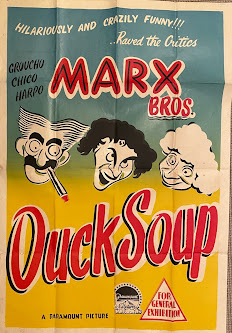
It is hard not to be suspicious of any settlement that the banks would agree to. I’m reminded of Groucho Marx who said upon being invited to join a country club: “I wouldn’t want to belong to any club that would have me.”

But the deal should be seen for what it is – a relatively small ante by the banks handed out before the real cards are seen.

What’s clear is that the banks trampled the law in their wilding while blowing up the housing bubble. They abused homeowners, committed routine forgery and perjury before the courts, and defrauded investors. When the bubble burst and the housing market collapsed, homeowners were left about $700 billion underwater (owing that much more on their mortgages than their houses are worth).

The banks are looking for a deal that will relieve them of untold criminal and civil liabilities. Untold is the right word because, outrageously, there has been no real investigation into the scope of their crimes. The state attorneys general simply don’t have the resources. The federal government does, but once the administration decided to continue Bush’s policies of bailing out the banks without reorganizing them, it has been committed to keeping insolvent banks afloat, not holding them accountable.

So the administration and some state attorneys general started pushing a deal that would relieve the banks of immunity. Some courageous attorneys general – Eric Schneiderman of New York, Beau Biden of Delaware, Catherine Cortez-Masto of Nevada, Martha Coakley of Massachusetts, Kamala Harris of California and others – held out. Schneiderman led the effort to limit the scope of immunity offered the banks, expand the settlement, and force the administration to launch a real investigation at the federal level.

So this deal results. It gets a relatively small sum from the banks in exchange for circumscribed immunity on their flagrantly illegal robo-signing – or forgery – of mortgage documents. The money will provide homeowners with the possibility of real legal assistance and small amounts of relief. No private rights of action have been waived. The suit brought by Schneiderman against Mortgage Electronic Registration Systems, or MERS – the bank creation that simply trampled hundreds of years of property laws – continues, and other state AGs should follow suit. Schneiderman now co-chairs a federal task force charged with doing a real investigation that could result in a serious settlement. That's not part of the settlement, but it is the most important part of the deal.

The deal has been cut before the investigation so it is suspect on its face, but limited in its scope. Whether it will be enforced adequately remains to be seen. How homeowners benefit will differ from state to state.

But the real question remains whether the federal investigation will finally turn over all the cards so we know just how bad a hand the banks are holding. Only then is there a possibility for real accountability – and real relief for homeowners.

So this settlement must be the beginning, not the end. We have to sustain pressure on the administration for an aggressive investigation. State criminal and civil suits, individual and investor relief have to continue. We are a far remove from achieving the justice and accountability that is due.

Saturday, January 28, 2012

Stress Testing Tim Geithner

By Mary Bottari, cross-posted from Campaign for America's Future

DonkeyHotey
Thanks to Occupy Wall Street, in the State of the Union this week President Obama struck some of his most populist themes yet. He wants to tax millionaires, bring back manufacturing and prosecute the big banks. He touted his Wall Street reforms saying the big banks are “no longer allowed to make risky bets with customers deposits” and “the rest of us aren’t bailing you out ever again.”
But are we safe from the next big bank bailout?

Many experts are dubious and Wednesday the consumer advocacy group Public Citizen decided to test the theory in the most direct way possible. They used the administrative law process to formally petition the nation’s top bank regulators to move swiftly to break up Bank of America (BofA) asserting in their petition: “The bank poses a grave threat to U.S. financial stability by any reasonable definition of that phrase.”

A Ticking Time Bomb

BofA is not just big, its behemoth. With assets of $2.1 trillion, equal to more than 14 percent of U.S. GDP, it is bigger than many small countries. Yet, its stock is trading at $7.

What does Wall Street know that we don’t?

The petition provides a compelling list of disturbing data points. In 2008-2009, BofA publicly took $45 billion in TARP bailout funds and secretly took another $1 trillion in emergency Federal Reserve loans. Yet, several analysts predict that BofA is woefully short of capital reserves and facing potentially billions in legal liability for its role in the crisis.

Although the bank declared net profits in recent quarters, these profit comes from accounting tricks, one-time asset sales and stock swaps. BofA’s share price to tangible book value is extremely low. The market suspects the bank is worth roughly half of what management claims and the price of credit default swaps (a type of insurance) on BofA recently rose to record highs.

“The bank is a ticking time bomb,” says David Arkush of Public Citizen. “If Bank of America in its current form were to fail, it would devastate the financial system. We’re asking the regulators to make sure that never happens. The only way to be sure is to reform the institution into something safer before any crisis materializes.”

Public Citizen asked the new Financial Stability Oversight Council (FSOC), which is chaired by Treasury Secretary Tim Geithner and made up of the nation's top bank regulators, to use the tools provided in the Dodd-Frank Wall Street reform law to act before a crisis occurs and to break BofA into smaller separate institutions. The law allows the FSOC to limit big bank mergers and acquisitions, restrict products and services or order it to divest assets or off-balance-sheet items after a vote to designate the institution a “grave threat” to financial stability.

Monday, January 23, 2012

Tell Obama: Just Say "No" To Bank Sweetheart Deal

By Robert Borosage, cross-posted from Campaign for America's Future

Americans from across the political spectrum are angry that the Wall Street banks blew up the economy and got bailed out, while home owners and taxpayers were stuck with the bill. And now, with fresh reports today of a pending state attorneys general settlement with the big banks that would immunize them from prosecution and civil suits in exchange for $25 billion, largely for principal reduction for underwater homeowners, the Campaign For America’s Future has joined in a broad coalition to oppose any sweetheart deal.

We're asking you to send an email to President Obama right now: Reject the sweetheart bank settlement. Do not follow through with your plan to announce it in the State of the Union address Tuesday. Instead, investigate the banks that caused the housing crisis.

This is an issue that raises a fundamental question about the nature of our justice system and the nature of our democracy. The law is respected only if it is enforced. Cutting a settlement with the big banks before we understand the scope of what the FBI has called "an epidemic of fraud" violates our basic sense of justice. No one who robbed a bank would be offered immunity, a modest fine and no admission of guilt before there was any investigation into who stole the money and how much they took.

And for our democracy, politically Americans are increasingly cynical about the ability of Washington to deal with special interests. They increasingly believe Washington can be bought and sold by Wall Street. This is destructive to our democracy. The President’s campaign will sensibly highlight his commitment to fair rules and a fair shot for every American. Needless to say, a sweetheart deal with the banks would be a glaring contradiction to that theme, and any deal enforced over the objections of the most independent attorneys general, such as New York’s Eric Schneiderman, will fail that test.

What the people want is clear: Investigation before immunity. Penalize the perpetrators, not their victims. Any settlement must have sufficient scope to deal with the scale of the problem. There is an estimated $700 billion of negative equity in underwater homes. While 1 million homeowners have been helped by efforts to save homeowners, 10.7 million homeowners are underwater and that does not count people who have already suffered foreclosure. The top six banks paid bonuses worth $140 billion last year alone; experts conservatively estimate this totals $420 billion over the last three years. They hold assets of $9.5 trillion. The rumored settlement of $25 billion is barely a slap on the wrist.

It is vital to this country that the banks are made accountable. It is vital that they do not see the law as simply a minor price of doing profitable business, a speed bump on the way to their bonuses.

With Occupy Wall Street inspiring activists and with citizens across the country being asked to pay to clean up the mess the banks created in the economy, every state attorney general and the Obama administration should understand that any deal will receive widespread public scrutiny. Any settlement must be able to satisfy the standards of justice and fairness. What is now on the table does not come close.

Act now: Tell President Obama: No sweetheart deal for the banks in the State of the Union address.

Thursday, January 12, 2012

No Sweetheart Deals For Big Banks

By Robert L. Borosage, cross-posted from Campaign for America's Future

Robbie Conal
Bankers who committed bank fraud deserve to be prosecuted and sent to jail. Enforcement of the law is vital to deter such behavior in the future.

Some of America's best state attorneys general are trying do just that —trying to get justice for Americans hurt by what the FBI called an "epidemic of fraud" by America's banks and mortgage lenders that contributed to widespread economic devastation in the U.S.

Amazingly, officials in the Obama Administration are encouraging a deal which could insulate bankers who broke the law from investigation or prosecution. Officials in the Justice and Treasury Departments have been urging the states to support this sweetheart deal.
  • Bankers would be given a free pass for criminal behavior.
  • The truth about Wall Street's crimes would remain hidden from the public forever.
  • Executives could once again pass the cost of their actions onto others, while "neither admitting nor denying" that they had broken the law.
Please act now. Sign the petition to President Obama: Don't let banks off the hook for illegal practices that led to the housing crisis. Kill the deal and launch a federal investigation now.

Join us in calling on President Obama to withdraw support for this sweetheart deal and begin a nationwide criminal investigation into allegations of fraud by the country's major banks and financial institutions.

More than 11 million borrowers are currently "underwater" and owe more than their house is worth. Millions have already lost their homes, and many of these borrowers are victims of fraudulent banking malpractice— from the peddling of loans with hidden costs, to imposing punitive and unjustified fines and fees to foreclosures undertaken without establishing proper ownership of the mortgage.

Bankers should not be allowed to walk away from the economic havoc they wreaked upon the country. They should be held accountable, so that no one on Wall Street even thinks about playing roulette with people's lives again.

Friday, January 6, 2012

For A Sane Economy, How About A Little Shame

By Richard (RJ) Eskow, cross-posted from Campaign for America's Future

The other day I was asked what one single thing could do the most to save our economy. What one idea or tool might help us create a more just society? My answer was "shame."

Shame isn't always a wasted or negative emotion. On the contrary, it can perform an important and socially useful function. Shame enforces our moral values even when legal and political institutions are too broken or corrupt to do so. Our society must learn to develop a "moral economics," and morality is often enforced through shame.

We live in a society where it's no longer considered shameful to oppose spending $6 billion to save nearly 8 million lives, even though that's less than $800 apiece. This kind of cynicism is so accepted, in fact, that even the more liberal political party doesn't dare suggest it. We live in a society where it's not shameful to let crooked bankers go unpunished while asking everyone else to pay the cost of their illegal enrichment. Nowadays even the lawbreakers aren't ashamed of themselves!

Incredible.

Perhaps no single change to our culture could do more to improve our lives than the rediscovery of the shame we used to attach to vile, greedy, selfish, and corrupt behavior. Consider how far we've fallen:

Not long ago a person would have been ashamed to appear in public if they had shattered the global economy by cheating millions of innocent people, accepted the outstretched hands of the same people they'd cheated by accepting an unconditional bailout, and then cheated them again.

Not long ago a politician who accepted the corrupting dollars of known criminal bankers immediately paid a steep price. (See the Keating Five, for example.)

Not long ago political figures and pundits were ashamed to openly advocate the deaths of millions of people just to provide tax advantages for the wealthy or ensure more favorable market conditions for predatory corporations.

In 2012, it's time for shame to make a comeback.

Wednesday, January 4, 2012

Obama Does Recess

The American people deserve to have qualified public servants fighting for them every day - whether it is to enforce new consumer protections or uphold the rights of working Americans.  We can’t wait to act to strengthen the economy and restore security for our middle class and those trying to get in it, and that’s why I am proud to appoint these fine individuals to get to work for the American people.  -- President Barack Obama

Well, this little blog here has argued often that pushing first for Elizabeth Warren and then for Richard Cordray, to head the Consumer Financial Protection Bureau was a fight very well worth having.  (See, e.g., Party of Nullification; Cordray, It's Not You It's Them; Washington Microcosm.)

This morning I posted a piece by Ian Millhiser at ThinkProgress which explained the justification for making a recess appointment in the wake of Republican intransigence.  And as Adam Serwer noted, "few presidents have seen their appointments subject to as much obstruction as Obama, and few have been so timid about taking advantage of recess appointments.

Timid until now.  Obama used a recess appointment today to appoint Cordray as director of the CFPB.  And that's not all.  The President will be announcing three recess appointments (Department of Labor Attorney Sharon Block, labor lawyer Richard Griffin, and NLRB counsel Terence Flynn) to the National Labor Relations Board which as Dave Johnson recently wrote, the Republicans have effectively shut down.

Travis Waldron at ThinkProgress explains:  
Like the CFPB, Republicans have spent the past year blocking nominations to the NLRB in an effort to keep the agency from functioning. Those efforts would have paid off soon, since after Craig Becker’s term on the board expired this week, the NLRB would have been reduced to two members, which is the number it had for more than two years from 2008 to 2010. This effectively shuts down the board, since the Supreme Court ruled in 2010 that two members does not constitute a legal quorum, and thus, a two-member board can’t make binding rulings.
As Laura Clawson says at Daily Kos, "This is huge."
Without these appointments, the NLRB would have been down to two members; it cannot make decisions without a three-member quorum. Republicans were determined to block Obama's NLRB nominations to shut down the board and prevent it from being able to pass rules like its recent moves streamlining union elections and requiring employers to put up posters informing workers of their existing legal rights.
Obama's decision to recess appoint both these NLRB members and Cordray to the CFPB doesn't just put qualified people into the government—it enables the government agencies themselves to function. That functioning, not the specific individuals, was what Republicans hoped to obstruct. It goes without saying that the GOP will be outraged all over again, despite the fact that the last three Republican presidents all made recess appointments to the NLRB. Kudos to Obama for braving the outrage and doing what needs to be done to keep government working.
Now that the President has finally done the right thing we need to show him our support and encouragement.  Click here to send an email courtesy of Daily Kos to President Obama to thank him for taking these important steps to protect workers and consumers.  Here's another one from Campaign for America's Future.

Thursday, December 29, 2011

Move Your Money To A Better Bank

By Andrew Korfhage, cross-posted from Other Words

During a key scene in the classic holiday film It's A Wonderful Life, savings-and-loan proprietor George Bailey, played by Jimmy Stewart, memorably explains to the townspeople how his business works – that he's not sitting on piles of money just because he runs a small, local bank.

"Your money's not here," George tells the crowd. "It's in the Kennedy house and the MacLaren house, and a hundred others. You all put your savings in here and then we make loans to people to buy homes and cars and other things."

Alas, when you save or invest in big corporate banks in the 21st century, the bank isn't likely to explain to you, George-Bailey-style, how your money is going to work in the world. Imagine what it would be like if they would.

"Your money's not here," the bank might say. "It's financing fossil-fuel energy projects that are polluting our environment, or helping a corporation move jobs into overseas sweatshop factories. It's in the CEO bonus, and the CFO bonus, and a hundred others."

As Occupy Wall Street and related protests grew this fall, anger at the giant banks rightfully swelled as well, with a "Bank Transfer Day" declared for pulling money out of the big banks and moving to smaller local banks and credit unions. But not every news story covering this issue took note of the financial institutions specially designed to play a positive role in local communities.

Community development banks and credit unions — collectively called CDFIs, for "community development financial institutions" — direct their lending toward those who have been overlooked by conventional lenders. Unlike the conventional banks that contributed to the 2008 global economic crisis by lending out billions in unsound and predatory subprime mortgages that their borrowers couldn't repay, CDFIs take pride in their expertise with lower-income borrowers. They take the time to get to know their clients, determining what homeowners and small-business owners can actually afford.

With more of a community focus, CDFIs pursue reasonable, rather than excessive, rates of return. They target projects that lift up underserved communities, and boost local economies by financing small businesses that perform vital local services. By contrast, the New Rules Project reported in 2010 that the 20 biggest banks "devote only 18 of their commercial loan portfolios to small business," despite the clear need to spur small-business growth to jump-start our economy.

Where are the big banks directing all their money if they're not supporting small businesses? For one thing, mega-bank CEOs as a group have seen their pay skyrocket back to 2008 levels and higher. The Financial Times reports that big-bank CEO pay rose 36 percent in 2010, while average workers in private industry saw their pay rise only 2 percent.

If you'd rather see your banking and investment dollars going to improve your own community, rather than lining the pockets of CEOs or financing projects that don't match your values, there's an easy solution. When you pull your money out of your mega-bank and start banking with CDFIs, your old bank will hear your voice even louder and clearer than if you were standing on Wall Street with a bullhorn.

And you'll be joining a growing movement. Funds invested in CDFIs grew from $5 billion in assets to nearly $40 billion over the last decade. You can find lists of banks and credit unions maintained by the Community Development Bankers' Association (www.cdbanks.org) and the Federation of Community Development Credit Unions (www.cdcu.coop). You can use these resources to find your own local "George Bailey" and make a New Year's resolution to make your banking part of the solution, rather than part of the problem.

Andrew Korfhage is Green America's online and special projects editor. www.greenamerica.org

Thursday, December 22, 2011

Bank Of America Settlement: The Good, The Bad And The Ugly

By Richard (RJ) Eskow, cross-posted from Campaign for America's Future

The Obama Administration announced a $335 million settlement deal with Bank of America to settle charges of discriminatory lending practices. Here is, in ascending order of importance, the good, the bad, and the ugly.

The Justice Department deserves praise for responding to illegal bank behavior more aggressively than it's done in the past. So does the Occupy movement, and so do the many Americans who have expressed their outrage over the lack of prosecutions and sweetheart bank deals. Without them it's unlikely we'd be seeing a deal like this at all.

But while the Justice Department has taken a first step, the proposed agreement seems designed to do only the bare minimum its framers hoped would be needed to quell public outrage. While it will be sold as bold and decisive, it's not. In fact, this deal perpetuates some of the worst failings of past settlements the government's made with big banks.

As we said, it has good features. But where it's ugly, it's very ugly indeed. Hopefully the judge who reviews it will bear that in mind.

The Good

First, let's offer some positive reinforcement for our leaders in Washington: The agreement is meant to settle charges that Countrywide, which is now owned by Bank of America, systematically discriminated against African American and Latino homeowners in issuing loans. Discriminatory lending is endemic in the banking industry and can take a variety of forms, including charging higher interest rates for minorities, pressuring borrowers to exclude their spouses from mortgages, and predatory lending practices which target minority communities.

Friday, December 9, 2011

Make Banks Re-Lend Subsidy Billions To The 99%

By Mark Hertsgaard, cross-posted from his blog. 

[Tuesday], the Occupy movement began occupying foreclosed homes to save fellow members of the 99 percent from economic ruin, not to mention homelessness–good for them. But it’s important to add that many of the millions of pending foreclosures in the United States could have been prevented–and still could be–if the federal government so orders. In fact, such a move would be one of the strongest steps the Obama administration could take to reduce human suffering and revive the economy.

When Washington pumped billions of dollars into the nation’s banks in 2008 and 2009, there was good reason to do so: It kept the US and arguably the global financial system from outright crashing, which would have brought even greater human and economic suffering than was experienced otherwise. But federal officials made an inexcusable error: they didn’t impose any conditions on the huge public subsidies that were provided to private banks.

Specifically, Washington could have made banks use the bailout money to modify the mortgages of people who were having trouble paying. This would have been fair–the banks had tricked many people into signing misleading mortgages in the first place–and it also would have been economically stimulative: it would have buoyed the housing market and boosted overall demand and therefore hiring.

President Obama has never publicly explained why he chose not to attach such conditions to the massive amounts of public money used to bail out the banks (but I’d bet that advice from Tim Geitner and Larry Summers played a big role). Now that Obama’s out running for re-election, he should be asked about this repeatedly on the campaign trail, by citizens as well as reporters, and urged to do better.

Because it’s not too late to do the right thing. As former New York governor and attorney general Elliot Spitzer explained recently in Slate, requiring banks to re-loan the billions in subsidy money they received to homeowners struggling with mortgage payments is a key step toward righting our economy and restoring justice for the 99 percent.
.
Why not combine the Occupy movement’s feet-on-the-street activism with Spitzer’s policy advice? Strikes me as a recipe for real change.

Wednesday, December 7, 2011

L.A. City Council Echoes Occupy And Calls For End To Corporate Personhood

By Brooke Jarvis, cross-posted from Yes! Magazine

On December 3, just two days before Occupy L.A. was evicted by police, the General Assembly of the occupation passed a unanimous resolution calling for a constitutional amendment to end corporate personhood.

Today, the City Council of Los Angeles also voted, also unanimously, for a resolution making the same appeal.

So what’s this issue that's uniting occupiers and the city they’re occupying? Corporate personhood is the legal concept that underpins rulings like the Supreme Court's 2010 decision in Citizens United v the Federal Election Commission; it means that corporations are considered people under the law, with the constitutional right of free speech. Since the courts have also defined money as constitutionally protected speech, the upshot is that corporations are empowered to spend unlimited amounts of money trying to influence the political process.

When L.A. and Occupy L.A. are making the same unanimous demand, it’s clear that the desire to take on corporate power in politics is gaining traction.
In order to reverse Citizens United—and a long line of other rulings supporting corporate rights over human ones—the resolutions passed by Los Angeles and Occupy L.A. call for an amendment to the U.S. Constitution clearly stating that corporations are not people and money is not speech.

It’s little surprise that Occupy, a movement that wants our nation’s decisions to be made by the 99% instead of the 1%, supports a constitutional fix for the problem of corporate influence on politics. In its first official statement, the flagship occupation in New York’s Zuccotti Park declared, “no true democracy is attainable when the process is determined by economic power.” The assembly included in a list of grievances the fact that corporations “have influenced the courts to achieve the same rights as people, with none of the culpability or responsibility.” Other Occupy sites have also called for constitutional checks on corporate power, and slogans calling for the end of corporate personhood and the overruling of Citizens United are common sights on protesters’ signs.

But when L.A. and Occupy L.A. are making the same unanimous demand, it’s clear that the desire to take on corporate power in politics is gaining traction.

Indeed, though Los Angeles is the largest city to date to join the call for a constitutional amendment taking on corporate personhood, it’s not the first. So far this year, voters in Boulder, Colo.; Missoula, Mont.; Madison, Wisc.; and Dane County, Wisc., have all passed ballot initiatives making the same appeal, with support ranging from 75 percent to 84 percent. Other cities, including Pittsburgh, Penn., have gone so far as to eliminate the rights of “personhood” for corporations seeking to perform certain activities within their borders.

“Local resolution campaigns are an opportunity for citizens to speak up and let it be known that we won’t accept the corporate takeover of our government,” said Kaitlin Sopoci-Belknap, a spokesperson for Move to Amend. The group was created in the wake of Citizens United to advocate for a constitutional amendment that would overrule the decision; a local chapter pressed for passage of the resolution by the L.A. City Council. Move to Amend hopes that 50 cities and towns will put the same resolution on ballots next November. “Our plan is to build a movement that will drive this issue into Congress from the grassroots,” said Sopoci-Belknap.

Approximately 100 people came to the L.A. council meeting to support the resolution, many of them reportedly members of Occupy L.A.

The Los Angeles Times reported only one dissenter: a man in a top hat, with fake money pouring out of the pockets of his suit, who said he had come to speak for the wealthy. He implored the council not to pass the resolution.

Brooke Jarvis wrote this article for YES! Magazine, a national, nonprofit media organization that fuses powerful ideas with practical actions. Brooke Jarvis is YES! Magazine's web editor.

Tuesday, December 6, 2011

Obama's Populism And The Ghost Of Teddy Roosevelt

Greg Sargent called the speech Obama gave today in Kansas "the most direct condemnation of wealth and income inequality, and the most expansive moral defense of the need for government activism to combat it, that Obama has delivered in his career."  As summarized by Kevin Drum, the President "debunked trickle-down economics, punctured the myth of the unregulated paradise, and slammed a Republican party fixated on making life better for the top 1 percent."  Thanks in no small part to the Occupy Movement, Obama's speech -- and the national conversation -- has shifted to, as Ari Berman of the Nation tweeted, "income inequality, basic fairness & jobs."  

Clearly, with this speech, Obama has move into campaign mode and it is great he has recognized the importance, finally, of  using populist rhetoric to make the case against economic injustice.  The big question is what he will do about it when he is not on the campaign trail.  -- Lovechilde

By Richard (RJ) Eskow, cross-posted from Campaign for America's Future

Today Barack Obama channeled one of American history's truly transformative figures by visiting the tiny Kansas town where Teddy Roosevelt gave his "New Nationalism" speech over a century ago. It's refreshing to see him invoke Roosevelt, who was a powerful and fearless agent of change both inside and outside the White House.

But echoing the populist chords of the First Progressive Era isn't without its risks. The speech that Roosevelt gave in Osawatomie, Kansas in 1910 could serve as a beacon for the President and his fellow Democrats. But that speech also warned that there's a price to be paid for promises betrayed.

Roosevelt's Ghost

If Roosevelt's ghost had been hovering over the lectern today, no doubt it would have appreciated being remembered. But the apparition might also have repeated the words Roosevelt spoke on the same platform in 1910:

"It is of little use for us to pay lip-loyalty to the mighty men of the past unless we sincerely endeavor to apply to the problems of the present precisely the qualities which i... enabled the men of that day to meet those crises."

President Roosevelt fought relentlessly against the powerful financial interests of his time, who dominated the nation in pretty much the same way they dominate ours today. J. Pierpont Morgan famously offered to "send my man around to meet your man and sort it all out," but President Roosevelt didn't want to cut deals with powerful banking interests. He wanted to make them less powerful, and he got it done.
Four years after leaving office, Roosevelt was running for President again. People back then suggested that his ideas were too extreme: A minimum wage. Women's right to vote. Direct election of Senators. An eight-hour workday. But they all came true.

Now that's change you can believe in. And here's what Teddy Roosevelt told his Kansas audience that day.

Day Of Action For Occupy Our Homes

I recently posted a piece about the Occupy movement's focus on foreclosures.  Today is the Occupy Our Homes National Day of Action to Stop and Reverse Foreclosures, organized by OccupyOurHomes.org. 

Meteor Blades writes at Daily Kos that what has been a local tactic, "a showdown with banks to disrupt foreclosure auctions and evictions," is spreading nationwide.  Here is a list of the actions happening in more than 25 cities today. 

Click here to sign a pledge to "support the movement to Defend our Homes and our Neighborhoods."

Friday, December 2, 2011

The Greatest Hoax In The History Of Money: The Fed, The Banks, The Lies

By Richard (RJ) Eskow, cross-posted from Campaign for America's Future

It took the journalists at Bloomberg News two years - and presumably lots of legal fees - to pry information out of the Federal Reserve that should have been made public long ago. We now know that the Fed's secret $7.7 trillion lending program wasn't just the most massive bank bailout ever seen, and it wasn't just free money for mega-bankers - though it was certainly both of those things. It was also the greatest hoax in stock market history.

No, scratch that. It was the greatest hoax in the history of money. And it was built on lies. How many? Let us count the ways.

Here's the first one: The banks paid back all the money back that they were given. No, they didn't. They paid back the principal on these loans. But by obtaining loans at rates far below market value, we now know they received the equivalent of $13 billion in cash giveaways.

Here's another lie: Fed economists support a free-market economy.
 
Ben Bernanke is a conservative economist who claims to support a free-market system. But we now know that the Federal Reserve lent astonishing sums to US banks in secret, and Bernanke fought with all the resources at his disposal to ensure that this information didn't become public. He didn't just want it to be held back to avoid a panic during the crisis. He wanted it kept secret forever.

I don't know what you call somebody like that, but I know what you don't call him: A capitalist. Free markets need transparency, so that investors and customers can make informed decisions and 'the wisdom of the market' can prevail. Nobody wanted the market to do its job. When it came to banks, they wanted it to be blind, deaf, and dumb, unable to make sound judgments about their financial soundness.