The Supreme Court's historic ruling that the Constitution guarantees the right to marry for same-sex couples is cause for celebration and relief. It shows what unrelenting activism and struggle can accomplish. And it shows what the high court can and should do when pressed to protect groups of people from discrimination and extend to them equality, dignity and fundamental rights.
Justice Kennedy (joined by the so-called liberal wing of the Court -- Justices Ginsburg, Sotomayor, Kagan and Breyer) rejected the dissenters' view that states may be allowed to prevent gays and lesbians from getting married if a majority of its voters deem it so. And it resoundingly rejected an originalist view of the Constitution which holds that fundamental rights are only those explicit in that document's text:
The nature of injustice is that we
may not always see it in our own times. The generations that wrote and
ratified the Bill of Rights and the Fourteenth Amendment did not presume
to know the extent of freedom in all of its dimensions, and so they
entrusted to future generations a charter protecting the right of all
persons to enjoy liberty as we learn its meaning…
…in
interpreting the Equal Protection Clause, the Court has recognized that
new insights and societal understandings can reveal unjustified
inequality within our most fundamental institutions that once passed
unnoticed and unchallenged.
This decision really should not have been much of a leap. Loving v. Virginia, which held that state laws banning interracial marriage were unconstitutional, provides a fairly unassailable precedent. And opponents of same-sex marriage have never been able to mount a legitimate argument that there is a compelling government interest in preventing gays and lesbians from marrying -- the showing required under the Court's own jurisprudence.
The fact that the decision was a narrow 5-4 victory-- with disingenuous and particularly vitriolic opinions from each of the four dissenters -- should give us all serious pause. According to Chief Justice Roberts, Justice Kennedy's carefully reasoned opinion was result-oriented and "had nothing to do with the Constitution." Justice Scalia's insult-laden diatribe described it as pretentious and incoherent, and alarmingly claimed that it represented a “threat to American democracy.” Justice Alito was mostly concerned with those Americans who want to be able to continue to discriminate against same-sex couples with impunity, fearing that this opinion "will be used to vilify Americans who are unwilling
to assent to the new orthodoxy,” And Justice Thomas, in rejecting that the right to marry is a fundamental right, went so far as to argue that the government is essentially incapable of taking away human dignity -- not by depriving people of government benefits, or holding them in internment camps or even enslaving them.
If John McCain had won the presidency in 2008, he certainly would have replaced the two retiring justices during his first term with two in the mold of those currently comprising the right wing of the Court, instead of President Obama's two appointees -- Justice Sotomayor and Justice Kagan. Among many other frightening results, this would likely have turned this landmark 5-4 victory into a 6-3 loss.
Every Republican running for president expressed their opposition to
same-sex marriage and denounced the Supreme Court's decision. And under
the guise of "religious liberty," every Republican candidate believes
that business owners and others should be allowed to discriminate
against same-sex couples.
Justice Ginsburg is 82; Justice Scalia is 79; Justice Kennedy is 78; Justice Breyer is 76.
There are many more battles ahead -- battles that will likely require litigation in federal court -- including those surrounding the push for federal anti-discrimination laws and anti-discrimination laws in the majority of states that don't bar discrimination against gays, lesbians and transgender people.
Elections matter.
Showing posts with label elections. Show all posts
Sunday, June 28, 2015
Thursday, April 30, 2015
Vermont's Finest: The Importance Of Being Bernie
"It's a little-known fact, but we reporters could successfully sell Sanders or Elizabeth Warren or any other populist candidate as a serious contender for the White House if we wanted to. Hell, we told Americans it was okay to vote for George Bush, a man who moves his lips when he reads." -- Matt Taibbi, Rolling Stone MagazineIn the spring of 1978, during my freshman year of college at the University of Vermont, Ben Cohen and Jerry Greenfield opened an ice cream parlor in a renovated gas station in downtown Burlington. There was no Chunky Monkey in those days but the ice cream was incredible, and it wasn't long before Ben & Jerry's became a national sensation. Significantly, Ben & Jerry's not only made great ice cream, but they capitalized, so to speak, on their success to give back to the community and fund many charitable works.
In my senior year, Bernie Sanders was elected mayor of Burlington, another progressive, socially conscious local phenomenon that has since gone national. In 1990, after four successful terms as mayor, Sanders -- a self-described Democratic-Socialist -- won election to the House of Representatives as an independent. In 2006, he was elected to the Senate and has been a passionate, eloquent -- often singular -- voice for the left ever since.
Bernie Sanders has been a tireless defender of social and economic justice since well before he or Vermont's finest ice cream became household names. He has relentlessly spoken out against growing inequality (“Our middle class is disappearing. We have more people living in poverty than almost any time in the history of America.”) But that's not all. He has pointed to the destructive force that Big Money is having on our electoral politics, has strenuously called for stringent environmental regulations to combat climate change -- including strong opposition to the Keystone XL, has been an ardent advocate for gay rights, has insisted on expansion of not restrictions on Social Security, and has pushed for more effective regulations on Wall Street.
His politics can be summed up with a question he asks on his website: “Are we prepared to take on the enormous economic and political power of the billionaire class, or do we continue to slide into economic and political oligarchy?”
Bernie Sanders is prepared to take them on. He is running for President in order to do so. This is great news. Not because I think he can win. And not because I'm not ready for Hillary Clinton -- (please read Scared Shitless Into Pragmatism for my reasons for supporting Hillary). It is great news because it is critical for the Democrats to have a contested primary process that includes a candidate who will articulate populist, progressive ideas that might otherwise not make it into the national discourse. Such a process will also pull Hillary leftward (a direction she appears already to be leaning, I'm happy to say, with her important speech on criminal justice reform and mass incarceration.)
As Robert Reich says, as "a strong voice to the left of Hillary Clinton, [Bernie Sanders will] give her room to be tougher on Wall Street and big corporations than she might otherwise be. More importantly, he’ll allow a national conversation about the savage inequalities that are destroying the fabric of American life, our economy, and our democracy – in contrast to the Republican clown car whose conversation for the next year and a half will be about the virtues of 'trickle-down economics' and the 'free market.'”
Beyond how Bernie will help Hillary, Matt Taibbi makes a great point when he notes that the failure of the media to take Bernie's candidacy seriously "should really be read as a profound indictment of our political system, which is now so openly an oligarchy that any politician who doesn't have the blessing of the bosses is marginalized before he or she steps into the ring." Taibbi is right that the mainstream media's "lapdog mentality is deeply ingrained and most Beltway scribes prefer to wait for a signal from above before they agree to take anyone not sitting atop a mountain of cash seriously."
The great irony is that Bernie Sanders could only be a legitimate candidate for president if we already had in place a political system that was not corrupted by Big Money and Big Media -- a system for which he is so passionately fighting. Hopefully, his candidacy will help expose these flaws. Hopefully, the power of his message will also force the media to grapple with a wider range of issues and solutions. And hopefully, his ideas will help shape the Democratic platform.
In any event, Bernie's candidacy is going to make the election season a whole lot more entertaining.
Tags
Bernie Sanders
,
elections
,
Hillary Clinton
,
politics
,
Progressive
Friday, February 20, 2015
Giuliani's World: A Noun, A Verb and A Crazy GOP Talking Point
Rudy Giuliani is a mean-spirited hack who long ago gave up any right to appear in polite society, much less be the driver of a news cycle. But there he was, speaking at a fundraiser for a fellow traveler, Wisconsin Governor Scott Walker, accusing the President of the United States of not loving America:
Democratic Congressman Steve Cohen appropriately tweeted: "Rudy Giuliani questioned how much, or even if, President Obama loves America. Maybe he thinks he loves it 3/5 as much as Giuliani & his pals."
The best take down was from Wayne Barrett who, having written a biography of the man, came well equipped, with a Daily News editorial, "What Rudy Giuliani Knows About Love." After a few unsavory details about Rudy's love life which call into question what Rudy even means by the word "love," Barrett notes that "Rudy may have forgotten the half-dozen deferments he won ducking the Vietnam War, even getting the federal judge he was clerking for to write a letter creating a special exemption for him."
But before Rudy slithers back under his rock, there are a couple of points worth thinking about. First, how is it that these odious right wing lunatics get such a disproportionate amount of air time? Rudy spews and all of a sudden every cable news channel convenes a panel to discuss whether Obama really is a patriot, and the White House as well as the current cast of clowns who hope to replace Obama is asked to comment. If the media has such a leftward bias, how is it that the right controls the narrative?
Of perhaps greater concern is that as long as Giuliani and his fire-breathing compatriots on the far right continue to say outrageous things about the President and his policies, they provide what appears on the surface to be a stark contrast with the more civil GOP candidates. We can already see this dynamic with the way Jeb ("I am my own man") Bush is being portrayed as a moderate.
So, while it is easy to rebut the unhinged idiocy of Giuliani and Jindal and Carson and Huckabee and Cruz and Paul, it is important to realize that when you pare away the polish and sound bites of the likes of Bush and Christie and Walker, they are fundamentally indistinguishable.
I do not believe, and I know this is a horrible thing to say, but I do not believe that the President loves America. He doesn’t love you. And he doesn’t love me. He wasn’t brought up the way you were brought up and I was brought up through love of this country.Our man Rudy later defended himself against charges of racism by doubling down: "Some people thought it was racist — I thought that was a joke, since he was brought up by a white mother, a white grandfather, went to white schools, and most of this he learned from white people.” Thanks, Rudy, for clearing that up. As Laura Clawson at Daily Kos put it, "turning to completely racially based logic is about the least convincing possible way to rebut charges of racism."
Democratic Congressman Steve Cohen appropriately tweeted: "Rudy Giuliani questioned how much, or even if, President Obama loves America. Maybe he thinks he loves it 3/5 as much as Giuliani & his pals."
The best take down was from Wayne Barrett who, having written a biography of the man, came well equipped, with a Daily News editorial, "What Rudy Giuliani Knows About Love." After a few unsavory details about Rudy's love life which call into question what Rudy even means by the word "love," Barrett notes that "Rudy may have forgotten the half-dozen deferments he won ducking the Vietnam War, even getting the federal judge he was clerking for to write a letter creating a special exemption for him."
But before Rudy slithers back under his rock, there are a couple of points worth thinking about. First, how is it that these odious right wing lunatics get such a disproportionate amount of air time? Rudy spews and all of a sudden every cable news channel convenes a panel to discuss whether Obama really is a patriot, and the White House as well as the current cast of clowns who hope to replace Obama is asked to comment. If the media has such a leftward bias, how is it that the right controls the narrative?
Of perhaps greater concern is that as long as Giuliani and his fire-breathing compatriots on the far right continue to say outrageous things about the President and his policies, they provide what appears on the surface to be a stark contrast with the more civil GOP candidates. We can already see this dynamic with the way Jeb ("I am my own man") Bush is being portrayed as a moderate.
So, while it is easy to rebut the unhinged idiocy of Giuliani and Jindal and Carson and Huckabee and Cruz and Paul, it is important to realize that when you pare away the polish and sound bites of the likes of Bush and Christie and Walker, they are fundamentally indistinguishable.
Tags
elections
,
politics
,
right wing
Tuesday, November 4, 2014
Democrats Can Run But They Can't Hide: Lessons From Another Brutal Election
![]() |
| Senator-Elect and Wingnut Joni Ernst: "We are headed to Washington and we are going to make them squeal.” |
I believe it was Adlai Stevenson who said, "in a Democracy you get the government you deserve." But do we really deserve the latest batch of truly loathsome extremists, misogynists, climate-change deniers and out-and-out lunatics who will more fully populate the Senate and House? A more fundamental question: after Citizens United, do we really have a Democracy?
Voters succumbed to mind-numbing campaigns from GOP candidates who disingenuously downplayed their support for personhood for fetuses as well as corporations while stoking fear of terrorists, Ebola, and immigrants who might be terrorists carrying Ebola. They engendered overwrought anger by distorting the President's actions and inaction. (From the remarkably ineloquent Joni Ernst, for example: Obama "is just standing back and letting things happen, he is reactive rather than proactive. With Ebola, he’s been very hands off . . . [but] so many of the actions that he proposes taking are actions that should be done by Congress. Not by the president. He is our executive. He is our leader. He is our president. Congress should be making the legislative actions.")
These efforts were critically abetted by unending pools of dark money courtesy of the Koch Brothers and their right wing cohorts, while hapless Democrats provided little in the way of rebuttal.
It is admittedly a little early for a post-mortem, but here a few things we already can know with confidence:
1. Democrats can run, but they can't hide from the fact that they are Democrats and that their leader is the President of the United States. They come off as weak and unprincipled by trying to distance themselves from Obama -- and they are going to be tied to him anyway -- so they might as well embrace him and the positive aspects of his presidency, like an improving economy and the unprecedented expansion of health care coverage.
2. The Supreme Court's decision in Citizens United has proven incredibly destructive to democratic principles. As Senator Bernie Sanders says: "Money unleashed by Citizens United . . . and other court decisions have turned voting into what feels more like an auction than ‘one person, one vote.’ Because the Supreme Court says money is speech and big business can buy all it wants, corporations are trying to drown out the voice of anyone trying to speak out against them, whether in Congress or a state legislature, on a judge’s bench or in city hall."
3. The corporate media failed to provide anything close to a countervailing balance to grossly misleading campaign ads fueled by corporate spending. Its superficial coverage on or complete avoidance of issues left the populace remarkably uninformed. We got sensationalist fear-mongering about Ebola and Isis while income inequality, climate change, women's right to privacy, voter suppression efforts and the influence of dark money in elections went undiscussed.
4. Meanwhile, Democratic candidates played their usual tepid defense, shying away from these and other populist themes and progressive proposals that should have been at the forefront of their campaigns. While there was isolated support for important issues such as minimum wage increases and equal pay, what was sadly lacking, as pollster Celina Lake explains, was a comprehensive economic message: “Our number one imperative for 2016 is to articulate a clear economic vision to get this country going again.”
5. It is going to be a long two years in Washington. It is hard to imagine any judicial or executive branch nominations will get through the Senate unless Obama makes an unpalatable Faustian bargain. Keystone XL pipeline will likely finally get Congressional approval, and, as Peter Dreier points out, "Republicans will certainly seek to weaken environmental laws and to remove the EPA’s ability to regulate the coal industry." They will also try to water down Obamacare and Dodd-Frank, oppose efforts to raise the federal minimum wage and pass an immigration bill strong on border security but without a path to citizenship. The President luckily has veto power, which he will have to use to thwart these and other egregious bills. An important question is whether Obama will hold fast or cave for the sake of bipartisan "compromise." There will be more pointless efforts to repeal Obamacare, plenty of saber-rattling with calls for more military action, and more investigations at taxpayer expense of faux scandals. Meanwhile desperately urgent issues from climate change to real immigration reform will go unheeded.
6. I am very thankful that I live in Berkeley.
Wednesday, October 1, 2014
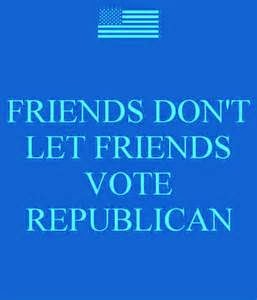
Do Not Vote Republican
It is not true that all politics is local. Voting for a Republican congressperson or senator means you are aiding and abetting a national party that is little more than a collection of far right wing lunatics who don't believe in man-made climate change (much less in mitigating it), the minimum wage (much less in increasing it), recklessness of Wall Street (much less in regulating it), immigration by people of color (much less in reforming it), gun control (much less in legislating it), or a woman's right to her own choice (not only to terminate a pregnancy but to use birth control).
The first one -- disbelief or even being agnostic on climate change -- should be enough to disqualify anyone from office. It is the single most critical issue of our time and you can't find one Republican candidate who is willing to admit the problem even exists much less willing to proffer a solution. A recent study found that 3% of current Republican members of Congress accept that climate change is real and caused by human beings. Think about that. Virtually every Republican in Congress and Republican hopeful refuse to accept the overwhelming consensus of the scientific community on climate change, often with the ridiculous refrain that they are not scientists themselves so how could they know. It really shouldn't be controversial to insist that our leaders rely on expertise in determining government policy. But I would venture that far more Republican members of Congress believe in the Biblical prophesy of End Times than they do in man-made climate change, and that's a big problem.
So what do they believe in? They believe the unemployed are lazy. They believe that terrorists are around every corner. They believe in deregulating Wall Street, and that all regulation is an anathema except when it comes to women's health. They believe that corporations are people too. They believe that advancing LGBT rights poses a threat to their way of life.
A sampling from a New York Times article on the rightward shift of GOP candidates is telling:
What would a Republican majority actually mean? Certainly we would have more gridlock, which if Republicans are passing bills would not be a bad thing. Whatever disastrous legislation reached the President's desk would thankfully get vetoed. On the other hand, Republicans would likely attach unacceptable riders to critical spending bills, creating even more chaos. Ezra Klein speculates that one thing that might pass is the Keystone XL pipeline, given its support among some Democrats. Not a problem, I suppose, if you don't believe in climate change.
With nothing better to do, we are sure to see more symbolic efforts to repeal Obamacare and, of course, the inevitable hearings on faux scandals. Can you say "Benghazi"?
An area in which a Republican Senate would make a significant difference is with Presidential nominations. While Obama in the past year has been successful in pushing through judicial nominations to fill vacancies and redress the imbalance in the judiciary caused by years of Republican intransigence, that would abruptly end. Most importantly, if a Supreme Court vacancy opens, Republicans would have the power to block any nominee who didn't meet their litmus test, which would be anyone to the left of Antonin Scalia.
So, even if you are a registered Republican, don't do it. Even if you aren't fond of your Democratic candidate, don't do it. Even if you believe in limited government, don't do it. Even if you oppose much of Obama's vision, don't do it. Voting Republican means voting for a dystopian world of ever-worsening environmental degradation, widening inequality with no safety net, more scandalous behavior from Wall Street and the prioritizing of fundamentalist Christian values for everyone. Don't do it.
What you must do, however is vote, and regardless of what the pundits say, this is a critical election. David Dayen has much more on why. And as he concludes:
The first one -- disbelief or even being agnostic on climate change -- should be enough to disqualify anyone from office. It is the single most critical issue of our time and you can't find one Republican candidate who is willing to admit the problem even exists much less willing to proffer a solution. A recent study found that 3% of current Republican members of Congress accept that climate change is real and caused by human beings. Think about that. Virtually every Republican in Congress and Republican hopeful refuse to accept the overwhelming consensus of the scientific community on climate change, often with the ridiculous refrain that they are not scientists themselves so how could they know. It really shouldn't be controversial to insist that our leaders rely on expertise in determining government policy. But I would venture that far more Republican members of Congress believe in the Biblical prophesy of End Times than they do in man-made climate change, and that's a big problem.
So what do they believe in? They believe the unemployed are lazy. They believe that terrorists are around every corner. They believe in deregulating Wall Street, and that all regulation is an anathema except when it comes to women's health. They believe that corporations are people too. They believe that advancing LGBT rights poses a threat to their way of life.
A sampling from a New York Times article on the rightward shift of GOP candidates is telling:
One nominee proposed reclassifying single parenthood as child abuse. Another suggested that four “blood moons” would herald “world-changing, shaking-type events” and said Islam was not a religion but a “complete geopolitical structure” unworthy of tax exemption. Still another labeled Hillary Rodham Clinton “the Antichrist.”Worried yet? Given demographics and gerrymandering, the House is sure to remain in Republican control for the foreseeable future. And without a late get-out-the-vote surge, it looks like the Senate may be in Republican hands for at least the next two years.
What would a Republican majority actually mean? Certainly we would have more gridlock, which if Republicans are passing bills would not be a bad thing. Whatever disastrous legislation reached the President's desk would thankfully get vetoed. On the other hand, Republicans would likely attach unacceptable riders to critical spending bills, creating even more chaos. Ezra Klein speculates that one thing that might pass is the Keystone XL pipeline, given its support among some Democrats. Not a problem, I suppose, if you don't believe in climate change.
With nothing better to do, we are sure to see more symbolic efforts to repeal Obamacare and, of course, the inevitable hearings on faux scandals. Can you say "Benghazi"?
An area in which a Republican Senate would make a significant difference is with Presidential nominations. While Obama in the past year has been successful in pushing through judicial nominations to fill vacancies and redress the imbalance in the judiciary caused by years of Republican intransigence, that would abruptly end. Most importantly, if a Supreme Court vacancy opens, Republicans would have the power to block any nominee who didn't meet their litmus test, which would be anyone to the left of Antonin Scalia.
So, even if you are a registered Republican, don't do it. Even if you aren't fond of your Democratic candidate, don't do it. Even if you believe in limited government, don't do it. Even if you oppose much of Obama's vision, don't do it. Voting Republican means voting for a dystopian world of ever-worsening environmental degradation, widening inequality with no safety net, more scandalous behavior from Wall Street and the prioritizing of fundamentalist Christian values for everyone. Don't do it.
What you must do, however is vote, and regardless of what the pundits say, this is a critical election. David Dayen has much more on why. And as he concludes:
The biggest stakes in this election concern what lessons will be drawn from it. It’s actually easy to call this a Seinfeldian election about nothing, because Democratic candidates have been so reluctant to stand for anything. They have offered little hope to a public made insecure by stagnant wages, soaring inequality and an economy insufficient to their needs. Implicit in this insecurity is the helplessness so many Americans feel about a political system that doesn’t seem within their grasp to affect, unless they have a spare billion dollars lying around.
When government fails for whatever reason, the perceived defenders of government suffer. And if those perceived defenders react by running away from any effort to use government levers to improve people’s lives, we will descend further into a Reagan-era miasma of market fundamentalism and corporate power.
Tags
climate
,
Congress
,
elections
,
judiciary
,
right wing
,
SCOTUS
,
women's rights
Monday, April 2, 2012
Progressive Lessons: Campaign Early And Often
Ilya Sheyman, the 25-year old former national mobilization director at MoveOn, ran an impressive grassroots progressive campaign to become the Democratic candidate for Congress in Illinois' newly drawn 10th Congressional District.
Sheyman mobilized more than 650 volunteers and nearly 20,000 individual donors. He garnered attention and support from progressives across the country and won the backing of the Progressive Change Campaign Committe, MoveOn and Democracy for America. He was endorsed by former DNC Chair Howard Dean, progressive icon former Senator Russ Feingold, the Sierra Club, labor leaders from AFSCME to the Illinois Federation of Teachers and the Steelworkers, and many others.
He even out-fundraised his primary opponents and was leading in the polls up to election day.
But Ilya Sheyman lost in the Democratic primary to businessman Brad Schneider by eight points. What happened?
Amanda Terkel summed it up: 1) low turnout; 2) negative advertising, painting Sheyman's opponent as more conservative then perhaps he was, backfired; and 3) the flaws inherent in a 25-year old candidate who looked even younger than 25.
Here's Sheyman's own analysis:
1) Late Money and Who Is the ProgressiveSheyman was quick to point out that the lesson was not that progressive campaigns don't work or that young people can't run for office. As he argues:
We ran on the same platform from day one: Put people back to work through federal jobs legislation, restore fairness to our tax system, and invest in America.
Our main opponent entered the race as a self-described "pro-business" moderate. Eventually, we pushed the whole field of candidates to come out for an agenda that looked a lot like ours -- ending the Bush tax cuts, eliminating the cap on income subject to Social Security taxes, and letting Medicare negotiate bulk rates on prescription drugs.
Our opponent then defined himself first as the progressive in the race, through a direct mail program starting two months before Election Day. Meanwhile, we held off on any paid communication with voters for an extra four weeks -- not knowing about the windfall of contributions that would come in at the end, which would have enabled us to have run as aggressive a mail program as he had.
So the takeaway isn't that a progressive can't win -- our opponent won because he ran as a progressive, thanks, in part, to the power of our campaign's message.
2) Astonishingly Low Voter Turnout
For the second election in a row, voter turnout hit a record-breaking low, not only in the 10th District, but all over the Chicagoland area, throwing off some of our targeting plans and strategy.
Illinois has a problem when it comes to voter disenfranchisement and civic engagement. A big reminder from this race is that if progressives are going to win, we need to focus on turning that trend around and getting voters to feel a stake in the political process again.
3) Last Minute Smear Campaigns Work
In the 10th District, Jewish voters are a key bloc. I should know -- I'm a product of that Jewish community, where my family and I have lived since arriving in this country as Jewish refugees from the former Soviet Union in 1991.
Despite my personal history and my pro-Israel positions, something happened in the final week of our race.
Those who opposed my candidacy sought to cast a shadow of doubt over my commitment to a Jewish democratic homeland in the State of Israel, through a dishonest whisper campaign, the extent of which I may never fully know.
This highly targeted effort -- in robocalls, emails, and synagogues -- combined with the very low voter turnout in the election, undoubtedly had a disproportionate effect on the outcome, and came too late for us to respond meaningfully. It also proves the importance of early voter-to-voter organizing. We had the truth on our side -- but we didn't organize as effectively in that community -- my community -- to deliver the facts and counteract the dishonest attacks.
If you've got an idea or a deeply held conviction, if you're going to run on progressive values, and work hard every day to build something real -- skip the line. Don't wait. Even if they say you're too young, or that it's not your turn.
The challenges this country faces are far too great to let something as arbitrary as age, or the conventional wisdom, stand in the way of you helping steer this country in a new direction.
Tags
elections
,
lovechilde
,
politics
,
Progressive
Wednesday, March 28, 2012
Let Political Ads Go The Way Of Cigarette Commercials
By Tina Dupuy, cross-posted from her website
When asked to report on the onslaught
of political ads on television words like “flood,” “deluge,” and
“torrent,” will suddenly pepper copy. A report from the Borrell Associates
estimates $9.8 billion will be spent on political advertising this
season. Nearly 60 percent of that will be on television. Phrases like
“secret money” and “shadow funders” also pop up. Conservatives,
traditionally, call for transparency when it comes to money in politics.
Liberals will call for limits. Right now we have neither. And nowhere
is that more apparent than on your teevee.
Ask anyone in even a slightly purple state or in an even slightly contested district: Political ads are a plague come election time. And what exactly are we getting for our (estimated) $42 per potential voter? Not much.
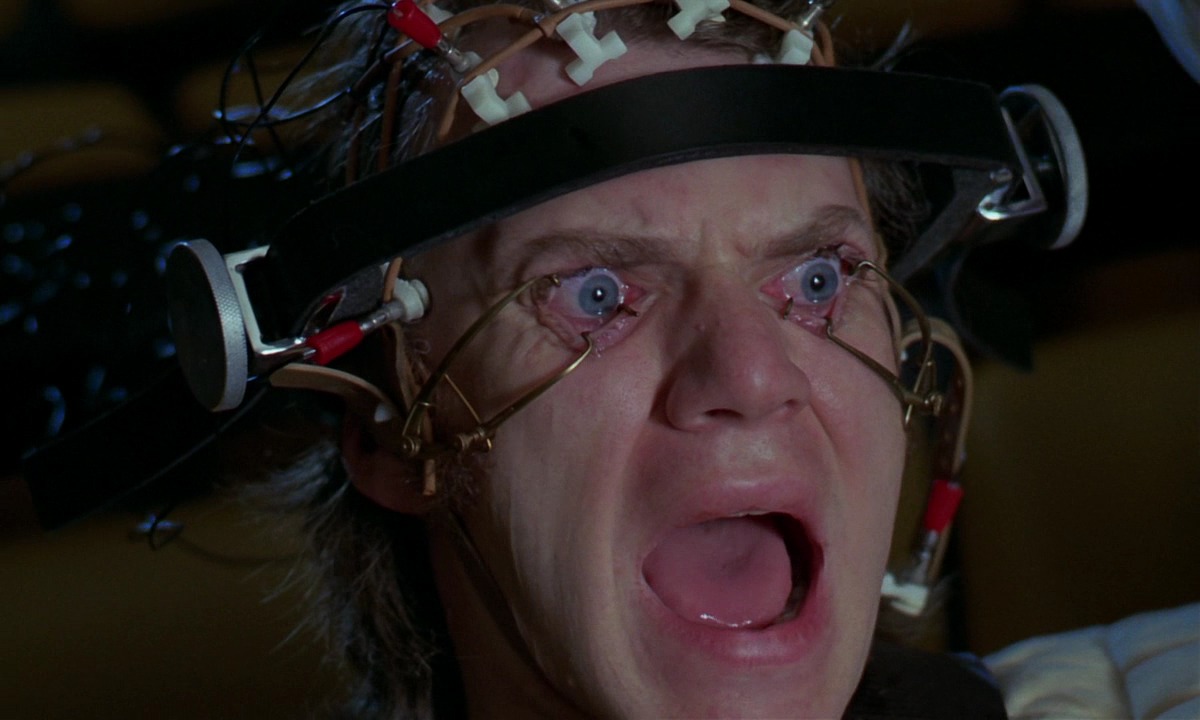
Ads are not transparent, not fact checked and in many cases not accountable. Voters get to feel like Alex DeLarge in “A Clockwork Orange” during his aversion therapy (eye drops, anyone?) without knowing who’s footing the bill.
A way to combat this Stanley Kubrick-esque torment is just ban all political advertisements on television.
“That’s an assault on free speech.”
First off television is not an unregulated utopia of free speech – that’s the Internet (for now, anyway). Television, like it or not, doesn’t allow everything to be broadcast. There are standards on television. Our mores may have changed over time but generally we’re still okay with decency standards for television. Speaking is speech. Broadcast is regulated.
And it’s worth noting, 99 percent of Americans have televisions in their homes. It’s still the broadest, most viewed medium we have. Which is why candidates and advocates for candidates invest billions into blanketing it.
We don’t allow tobacco companies, for example, to advertise on television. Why? Because their products are poisonous and harmful to our citizenry. The same could be said for Swift Boating, Demon Sheeping and whatever Herman Cain is doing.
These ads are supposed to sway public opinion. But these aren’t actually opinions being targeted – they’re emotions. Most Americans have less of an opinion when it comes to politics and more of a visceral reaction to issues. Which explains why your “political debate” over Thanksgiving dinner ended up with you being pummeled with green bean casserole.
And there’s no better example of where to start hysteria than in 30-second fear and loathing campaign spots. Does this elevate political discourse? Civic engagement? Sound policy? Hardly. These ads are doing what tobacco does: producing a carcinogenic cloud.
Tags
Citizens United
,
elections
,
media
,
presidential election
Friday, March 2, 2012
Drawing The Line With The Right
By Robert Borosage, cross-posted from Campaign for America's Future
We're headed into an election that will feature the clearest ideological divide since Goldwater-Johnson. Romney and Gingrich and Santorum paint America on the brink of ruin -- about to "descend" into becoming an "entitlement society, not an opportunity society," a "European welfare state," a "socialist," not a free market nation." This is the predicate for recycling the failed bromides of the right: tax cuts for the rich, more military spending, more corporate trade, more deregulation, and cuts in everything else from Medicare and Social Security to education and child nutrition.
For many months, the president chose not to engage this battle of ideas in the futile pursuit of bipartisan agreement. That began to change last Fall, when the President finally put forth his American Jobs Act and stumped for it across the country.
Now, in his recent speech to the United Auto Workers, the president is beginning to draw the line -- and develop the themes that will help frame the election. The entire speech is worth reading. Republicans immediately accused the president of delivering a campaign speech. Shocking, gambling in Casablanca. Here's the core of the argument:
President Obama: "Let me tell you, I keep on hearing these same folks talk about values all the time. You want to talk about values? Hard work -- that’s a value. (Applause.) Looking out for one another -- that’s a value. The idea that we're all in it together, and I'm my brother's keeper and sister's keeper -- that’s a value. (Applause.)
They're out there talking about you like you're some special interest that needs to be beaten down. Since when are hardworking men and women who are putting in a hard day's work every day -- since when are they special interests? Since when is the idea that we look out for one another a bad thing?
Tags
economy
,
elections
,
Obama
,
Progressive
,
right wing
Saturday, January 21, 2012
Citizens United In Their Disgust
By Isaiah J. Poole, cross-posted from Campaign for America's Future
Saturday is the two-year anniversary of the infamous Citizens United ruling by the Supreme Court that allowed corporations to spend unlimited amounts of money on political campaigns.
Since then, our democracy has been drowning in a tsunami of corporate special interest money. Our government is under the thumb of the Koch brothers and other corporate moguls instead of the hands of the people.
TAKE ACTION
Send your comment to tell the Securities and Exchange Commission to require public companies to disclose their political spending. Your comments will go directly to the SEC.
And citizens are uniting in their disgust. A poll released Thursday by Democracy Corps and the Public Campaign Action Fund, an organization that is rallying to counter the Citizens United ruling, said, "Americans across all parties oppose the ruling; among all voters, 62 percent oppose the decision and nearly half (46 percent) strongly oppose it. More than half of all voters say they would support a constitutional amendment to reverse the opinion."
Further, "Eight in ten voters say there is too much big money spent on political campaigns and elections today and that campaign contributions and spending should be limited." And the candidates who stand on the side of reining in corporate efforts to buy our political system will get more favor from voters than those who stand with the status quo.
The ultimate solution is getting two-thirds of the states to pass a constitutional amendment that declares what everyone except Mitt Romney seems to understand: corporations are not people and money is not speech. But that will take time.
Tags
Citizens United
,
elections
,
SCOTUS
Tuesday, January 17, 2012
Speaking Truthiness To Power: The Subversive Brilliance Of Stephen Colbert
I've always been more of a Jon Stewart fan than a Stephen Colbert fan. I sometimes find Colbert's "character," his faux Bill O'Reilly, over-the-top and exhausting, as the real O'Reilly must be. But Colbert has the ability to expose the absurdity of our politics and the media's complicity in it like no one else.
In 2006, at the height of George W. Bush's popularity, Colbert was invited to speak at the White House Correspondent's dinner where, staying in character, he literally spoke truth to power, courageously and hilariously skewering the President and mocking the all-too-compliant national press. And the beauty was that it was done in such a deadpan manner that a clueless Bush didn't get that he was the joke and lamely laughed along while the reporters squirmed uncomfortably.
As Frank Rich wrote, "the moment when the American news business went on suicide watch . . . [was] when Stephen Colbert, appearing at the annual White House Correspondents’ Association dinner, delivered a monologue accusing his hosts of being stenographers who had, in essence, let the Bush White House get away with murder (or at least the war in Iraq)."
His latest project is even more remarkable. Boldly illustrating the destructive consequences of the Supreme Court's Citizens United decision, he created his own Super PAC without much trouble. As Dan Froomkin and Paul Blumenthal at Huffington Post explain: Colbert "has managed to pierce the veil of dullness to actually demonstrate -- in an electrifying way -- just how dangerous and corrupt the current system of political campaign financing has become."
Colbert has spent much of the past year on a crusade to accept unlimited contributions from corporations, unions and individuals in order to make political statements and lavish himself with luxuries. In so doing, he may have helped bring the troubling issues surrounding campaign finance to the public's attention more than either the reform community or traditional media.He received approval in June 2011 for his Super PAC, and using this vehicle,
Colbert has exposed many of the potential dangers of the current campaign financing system, including the influence of PACs and unlimited-donation super PACs, secret contributions by big donors, the failure of regulators, and the coordination between campaigns and supposedly independent groups.
Tags
elections
,
lovechilde
,
media
,
politics
,
Stephen Colbert
Monday, January 9, 2012
Santorum's 'Freedom' Is Pretty Much Slavery
By Rick Perlstein, cross-posted from Crooks and Liars
Rick Santorum got high marks for his near-victory speech in Iowa. In the Washington Post, E.J. Dionne called it "by far the best speech Tuesday night." Santorum's address impressed me, too, but for a different reason: his astonishing endorsement of feudalism, wrapped up in a soaring tribute to something he called "freedom." A sharper illustration of the bad faith of at the heart of conservative rhetoric I never have seen in all my life.
He began by doing what conservative presidential candidates always do in this season of economic privation: talked about his family's one-time economic privation. It wasn't off the cuff. "As you know," he said, "I do not speak from notes, but there's a couple of things I want to say that are a little more emotional, so I'm going to read them as I wrote them." And what were the words he so carefully wrote to read at this, his moment of triumph? That his grandfather came to the United States from Italy in 1925: "because Mussolini had been in power now three years, and he had figured out that fascism was something that would crush his spirit and freedom and give his children something less than he wanted for them." He came because—why else?—he loved freedom.
(Brief digression: he says his grandpa came in 1925. Someone should look into this. The racist Immigration Act of 1924 had the previous year made it very, very difficult for anyone from such a dirty, disgusting, non-Anglo Saxon place like Italy to emigrate to the U.S. Maybe Santorum got the date wrong. In any event, the very fact of the 1924 law is another disturbance marring the official Republican cult of America-Is-And-Always-Has-Been-Perfect that I will be discussing below. End of digression.)
So, from the unfreedom of Mussolini, he marched into the rosy-fingered dawn of American freedom—which Santorum described thusly:
"He left to the coal fields of Southern Pennsylvania. He worked in the mine at a company town, got paid with coupons, he used to call them."
Let us dwell on that. Grandpa Santorum lived in a company town where he was paid in "scrip" in lieu of cash. That means what his grandson calls "freedom" was, well and truly, something more like slavery.
Friday, January 6, 2012
Armed With Naïvete
Time to Stop Being Cynical About Corporate Money in Politics and Start Being Angry
By Bill McKibben, cross-posted from Tom Dispatch
My resolution for 2012 is to be naïve -- dangerously naïve.
I’m aware that the usual recipe for political effectiveness is just the opposite: to be cynical, calculating, an insider. But if you think, as I do, that we need deep change in this country, then cynicism is a sucker’s bet. Try as hard as you can, you’re never going to be as cynical as the corporations and the harem of politicians they pay for. It’s like trying to outchant a Buddhist monastery.
Here’s my case in point, one of a thousand stories people working for social change could tell: All last fall, most of the environmental movement, including 350.org, the group I helped found, waged a fight against the planned Keystone XL pipeline that would bring some of the dirtiest energy on the planet from Canada through the U.S. to the Gulf Coast. We waged our struggle against building it out in the open, presenting scientific argument, holding demonstrations, and attending hearings. We sent 1,253 people to jail in the largest civil disobedience action in a generation. Meanwhile, more than half a million Americans offered public comments against the pipeline, the most on any energy project in the nation’s history.
And what do you know? We won a small victory in November, when President Obama agreed that, before he could give the project a thumbs-up or -down, it needed another year of careful review. (The previous version of that review, as overseen by the State Department, had been little short of a crony capitalist farce.) Given that James Hansen, the government’s premier climate scientist, had said that tapping Canada’s tar sands for that pipeline would, in the end, essentially mean “game over for the climate,” that seemed an eminently reasonable course to follow, even if it was also eminently political.
A few weeks later, however, Congress decided it wanted to take up the question. In the process, the issue went from out in the open to behind closed doors in money-filled rooms. Within days, and after only a couple of hours of hearings that barely mentioned the key scientific questions or the dangers involved, the House of Representatives voted 234-194 to force a quicker review of the pipeline. Later, the House attached its demand to the must-pass payroll tax cut.
That was an obvious pre-election year attempt to put the president on the spot. Environmentalists are at least hopeful that the White House will now reject the permit. After all, its communications director said that the rider, by hurrying the decision, “virtually guarantees that the pipeline will not be approved.”
As important as the vote total in the House, however, was another number: within minutes of the vote, Oil Change International had calculated that the 234 Congressional representatives who voted aye had received $42 million in campaign contributions from the fossil-fuel industry; the 193 nays, $8 million.
By Bill McKibben, cross-posted from Tom Dispatch
My resolution for 2012 is to be naïve -- dangerously naïve.I’m aware that the usual recipe for political effectiveness is just the opposite: to be cynical, calculating, an insider. But if you think, as I do, that we need deep change in this country, then cynicism is a sucker’s bet. Try as hard as you can, you’re never going to be as cynical as the corporations and the harem of politicians they pay for. It’s like trying to outchant a Buddhist monastery.
Here’s my case in point, one of a thousand stories people working for social change could tell: All last fall, most of the environmental movement, including 350.org, the group I helped found, waged a fight against the planned Keystone XL pipeline that would bring some of the dirtiest energy on the planet from Canada through the U.S. to the Gulf Coast. We waged our struggle against building it out in the open, presenting scientific argument, holding demonstrations, and attending hearings. We sent 1,253 people to jail in the largest civil disobedience action in a generation. Meanwhile, more than half a million Americans offered public comments against the pipeline, the most on any energy project in the nation’s history.
And what do you know? We won a small victory in November, when President Obama agreed that, before he could give the project a thumbs-up or -down, it needed another year of careful review. (The previous version of that review, as overseen by the State Department, had been little short of a crony capitalist farce.) Given that James Hansen, the government’s premier climate scientist, had said that tapping Canada’s tar sands for that pipeline would, in the end, essentially mean “game over for the climate,” that seemed an eminently reasonable course to follow, even if it was also eminently political.
A few weeks later, however, Congress decided it wanted to take up the question. In the process, the issue went from out in the open to behind closed doors in money-filled rooms. Within days, and after only a couple of hours of hearings that barely mentioned the key scientific questions or the dangers involved, the House of Representatives voted 234-194 to force a quicker review of the pipeline. Later, the House attached its demand to the must-pass payroll tax cut.
That was an obvious pre-election year attempt to put the president on the spot. Environmentalists are at least hopeful that the White House will now reject the permit. After all, its communications director said that the rider, by hurrying the decision, “virtually guarantees that the pipeline will not be approved.”
As important as the vote total in the House, however, was another number: within minutes of the vote, Oil Change International had calculated that the 234 Congressional representatives who voted aye had received $42 million in campaign contributions from the fossil-fuel industry; the 193 nays, $8 million.
Tags
#Occupy
,
Congress
,
Constitution
,
elections
,
environment
,
politics
,
Tar Sands
,
TomDispatch
Thursday, January 5, 2012
Citizens United Not Welcome In Montana
By Sam Ferguson, cross-posted from Truthout
In a rebuke to the United States Supreme Court, the Supreme Court of
Montana has held that Citizens United does not apply to Montana campaign
finance law.
Last Friday, the Montana Supreme Court upheld the constitutionality of a
1912 voter initiative - the Corrupt Practices Act - that prohibits
corporations from making contributions to or expenditures on behalf of
state political candidates and political parties. In 2010, the Supreme
Court ruled that a similar federal prohibition was unconstitutional,
prompting a wave of bills and court rulings that erased prohibitions on
corporate and union political expenditures around the country.
"For over 100 years, Montana has had an electoral system that preserves
the integrity of the political process, encourages full participation
and safeguards against corruption," state Attorney General Steve Bullock
said in a statement after the ruling, adding, "the [Montana] Supreme
Court's decision upholds that system and is truly a victory for all
Montanans."
The Montana Court cited the state's "unique" history, culture and
economy in justifying the decision not to follow Citizens United.
"With the infusion of unlimited corporate money in support of or
opposition to a targeted candidate," wrote Chief Justice Mike McGrath,
in a 5-2 decision, "the average citizen candidate would be unable to
compete against the corporate-sponsored candidate, and Montana citizens,
who for over 100 years have made their modest election contributions
meaningfully count would be effectively shut out of the process."
Under the First Amendment, limits on speech are justified only if the
government can demonstrate a "compelling" interest for the limitation.
The Montana high court ruled that the state had several compelling
interests: preventing the corrupting influence of large political
expenditures; guarding against Montana's susceptibility to corruption
because of its low-cost, grass roots political culture; and stemming the
threat posed by out-of-state economic interests that have a financial
stake in Montana's agriculture and resource-extraction based economy.
But in Citizens United, Justice Anthony Kennedy held that the
government may "not deprive the public of the right and privilege to
determine for itself what speech and speakers are worthy of
consideration." In other words, the government may not quiet the voice
of some speakers in an effort to boost the voice of others. The Supreme
Court also held that there is no compelling interest in limiting
so-called "independent expenditures," because such limitations do not
prevent corruption.
UCLA law Professor Eugene Volokh wrote on his influential legal blog, The Volokh Conspiracy,
that "the disagreement with Citizens United is so striking that it is
likely that the Supreme Court will agree to hear the case and will
reverse the Montana Supreme Court's decision."
Previously, a lower court in Montana ruled the state's law limiting
campaign spending unconstitutional, saying, "Citizens United is
unequivocal: the government may not prohibit independent and indirect
corporate expenditures on political speech."
Tags
Citizens United
,
elections
,
law and justice
,
SCOTUS
Monday, December 12, 2011
The 1% Election: Their Bread, Our Circus
By Tom Engelhardt, cross-posted from Tom Dispatch
Sometimes words outlive their usefulness. Sometimes the gap between changing reality and the names we’ve given it grows so wide that they empty of all meaning or retain older meanings that only confuse us. “Election,” “presidential election campaign,” and “democracy” all seem like obvious candidates for name-change.
I thought about this recently as President Obama hustled around my hometown, snarling New York traffic in the name of Campaign 2012. He was, it turned out, “hosting” three back-to-back fundraising events: one at the tony Gotham Bar and Grill for 45 supporters at $35,800 a head (the menu: roasted beet salad, steak and onion rings, with apple strudel, chocolate pecan pie, and cinnamon ice cream -- a meal meant to “shine a little light” on American farms); one for 30 Jewish supporters at the home of Jack Rosen, chairman of the American Jewish Congress, for at least $10,000 a pop; and one at the Sheraton Hotel, evidently for the plebes of the contribution world, that cost a mere $1,000 a head. (Maybe the menu there was rubber chicken.)
In the course of his several meals, the president pledged his support for Israel (in the face of Republican charges that he is eternally soft on the subject), talked about “taxes and the economy” to his undoubtedly under-taxed listeners, and made this stirringly meaningless but rousing comment: “No matter who we are, no matter where we come from, we're one nation. We're one people. And that's what's at stake in this election."
Outside his final event, Occupy Wall Street protesters saw something else at stake, dubbing him the “1% president.” The end result from a night’s heavy lifting: $2.4 million for his election campaign and the Democratic National Committee, nowhere close to 1% of what they will need for the next year.
Tags
#Occupy
,
Citizens United
,
elections
,
Obama
,
presidential election
,
TomDispatch
Thursday, December 1, 2011
This Is What A Progressive Looks Like
As I have previously written, you won't find a better progressive
candidate for Congress than Norman Solomon, who is running for a seat
from the newly drawn Second Congressional District in California.
Here are the details:
Solomon is one of a handful of Democrats who unequivocally supports Occupy Wall Street, stating, "We need democracy, not “corporatocracy.”
In a recent article, he made clear that his campaign is "very much in sync" with the Occupy movement. The issues that have been at the core of his campaign and that he has emphasized for years "are part of the OWS focus - Wall Street's undemocratic power, the widening disparities between the rich and the rest of us, the need to eject corporate money from politics."
Solomon has just released his "Economic Agenda for Main Street" which pretty much mirrors a wish list for progressives: (1) create new green jobs; (2) invest in our workers and communities; (3) stand up for workers, not Wall Street; (4) protect Social Security and Medicare; and (5) quality health care for all.
Here are the details:
Tags
economy
,
elections
,
politics
,
Progressive
,
Solomon
Monday, November 21, 2011
Finally, A Constitutional Amendment For The 99%
By Greg Colvin, cross-posted from Campaign For America's Future
[On Friday], Congressman Ted Deutch (D-FL) offered the strongest constitutional amendment introduced in either House of Congress so far to rectify the imbalance of power between the corporations and the people in our democracy.
As the struggle in the streets intensifies, and Occupy Wall Street refuses to remain silent, it’s good to know there are champions in Congress who have stepped up to the challenge of amending the US Constitution. It’s called OCCUPIED: Outlawing Corporate Cash Undermining the Public Interest in our Elections and Democracy.
The Supreme Court, in the 5-4 Citizens United decision of January 2010, declared that corporations have free speech rights like human beings and invalidated the ban on corporate election spending that Congress had enacted. Since then, a grassroots movement has emerged to generate popular support for a constitutional amendment to reverse that decision, including months of work by Move to Amend, Free Speech For People, Public Citizen, People For The American Way, Common Cause, and the Center for Media and Democracy.
Rep. Deutch’s amendment is a blend of the best ideas.
Tags
Citizens United
,
Constitution
,
elections
,
SCOTUS
Wednesday, November 9, 2011
Progressives Lose Out In San Francisco Elections
Ed Lee and George Gascon are on the verge of being elected mayor and district attorney, respectively, in San Francisco, beating more progressive candidates, notably John Avalos and David Onek.
Avalos and Onek both had enormous grassroots support and built coalitions from a wide and diverse array of community groups. They pushed progressive ideas which, hopefully, as Onek said, "left an indelible mark on San Francisco."
Avalos ran an amazing campaign, without anything close to the money and machinery of Lee or some of the other candidates. He actually garnered more votes from those voting at the polls on election day but lost because of the earlier absentee voting that went overwhelming to Lee. Nevertheless, as Tim Redmond put it, Avalos "moblized thousands of people and demonstrated how much of a force progressives can be."
David Onek, as I wrote here often, would have provided a thoughtful, progressive approach to criminal justice and public safety issues that I'm not sure we're going to see from Gascon, the former police chief. (See, e.g., Onek's the One, A True Criminal Justice Reformer.) Onek, like Avalos, made a strong second place showing, and also ran a phenomenal campaign.
Importantly, they both forced debate on progressive issues. As Avalos declared, "I’m proud that progressive taxation, municipal banking, and free Muni for kids found their way onto the platforms of some of the most moderate candidates." And Onek ensured that the District Attorney's race was not simply about law and order, but focused on juvenile justice, restorative justice and criminal justice reform.
Onek summed it up:
Our extraordinarily diverse coalition is a living testament to the importance of bringing law enforcement and community together. We defined the key issues of this campaign – from preventing crime, reforming our juvenile justice system and implementing restorative justice programs, to opposing the death penalty and reforming Three Strikes. These are issues many of us have fought for together for the past twenty years and will continue to fight for moving forward.
Tags
elections
,
Onek
,
Progressive
Next After The Ohio Victory: Run For America
By Robert Borosage, cross-posted from Campaign for America's Future
Yesterday, Ohio voters overwhelmingly rejected the effort to revoke basic worker rights, delivering a stunning rebuke to conservative Gov. John Kasich. That spark was lit in Madison, Wisconsin last winter when workers took over the state capitol and launched unprecedented recall elections that sobered right-wing Governor Scott Walker and the Republican state legislature. The Occupy Wall Street movement turned the spark into a conflagration, transforming the political horizon.
Now, a range of progressive groups, led by Progressive Majority, are calling on citizen activists to Run for America, announcing a plan to recruit 2,012 progressive candidates in 2012 to run for public office at every level—from school board to state legislatures to Congress.
Two years ago, the Tea Party turned protest into political power, fielding right-wing challengers to office holders of both parties. Public dismay with the failed economy enabled Republicans to capture the House of Representatives, and state houses and legislatures across the country. They captured 675 state legislative seats, the largest sweep since 1938. Shock-doctrine conservatives then used the crisis to cut taxes on corporations while savaging public services. They moved to roll back worker rights to weaken unions, their most organized opposition. Realizing they represented a minority position, they passed a range of laws seeking to constrict voting rights, requiring photo IDs, limiting early voting, etc. Then they went after women's rights, environmental protections and the poor while doing most of what the business lobby asked of them.
Now from Madison to Wall Street and across the country, the new populist uprising is challenging the failed conservative ideas and corporate interests that have dominated our politics to devastating effect. The question now is whether that uprising will generate progressive challengers to conservative office holders in both parties. That will take not just inspiration but organization as well.
To supply that, Progressive Majority has joined with Moveon.org, US Action, the Center for Community Change, Rebuild the Dream, the New Organizing Institute and other partners in the emerging American Dream Movement to set the goal of recruiting and supporting 2,012 candidates in 2012.
Progressive Majority, led by Gloria Totten, marks its tenth anniversary this year. (Full disclosure: I helped found PM and serve as its board chair.) It is the only national progressive organization dedicated to electing progressive champions at the state and local levels. Prior to 2010, it helped elect more than 400 progressives, serving to flip six state legislative chambers, and 40 local governments. PM has 500 candidates in its "farm team," preparing to run in 2012 and beyond. It provides citizen candidates with the support they need to run serious campaigns.
Tags
elections
,
politics
,
Progressive
Tuesday, November 8, 2011
Mississippi Egg-As-Person Amendment Defeated
By Jodi Jacobson, cross-posted from RH Reality Check
In a decisive and resounding victory in one of the most conservative states in the country, Mississippi voters defeated--by a margin of 57 percent to 43 percent
as of this writing--the dangerous Initiative 26, which would have
defined a fertilized egg as a person with full human rights. Had it
passed, Initiative 26 would have outlawed all forms of abortion and many
forms of birth control. The law would have made illegal many forms of
fertility treatment and would potentially have criminalized
miscarriage. It would also have endangered pregnant women by making
their rights to health, to health care and to bodily integrity
subservient to blastocysts, embryos, and fetuses no matter how dire the
woman's condition might be or what her situation.
At the same time, however, the outcome of 26 is bittersweet, given that as of this writing Mississippi voters also appear to have passed Initiative 27, a voter ID law that will disenfranchise many of the minority voters who already suffer discrimination in a state with a history of denying African Americans their right to vote.
In a decisive and resounding victory in one of the most conservative states in the country, Mississippi voters defeated--by a margin of 57 percent to 43 percent
as of this writing--the dangerous Initiative 26, which would have
defined a fertilized egg as a person with full human rights. Had it
passed, Initiative 26 would have outlawed all forms of abortion and many
forms of birth control. The law would have made illegal many forms of
fertility treatment and would potentially have criminalized
miscarriage. It would also have endangered pregnant women by making
their rights to health, to health care and to bodily integrity
subservient to blastocysts, embryos, and fetuses no matter how dire the
woman's condition might be or what her situation.At the same time, however, the outcome of 26 is bittersweet, given that as of this writing Mississippi voters also appear to have passed Initiative 27, a voter ID law that will disenfranchise many of the minority voters who already suffer discrimination in a state with a history of denying African Americans their right to vote.
Tags
abortion
,
elections
,
women's rights
Thursday, October 27, 2011
Warren Shows Her Occupy Wall Street Cred
With so many timid Democrats unsure of how to discuss the Occupy Movement, Elizabeth Warren shows them how it's done.
Warren initially drew fire from Republicans after stating she not only supports the movement, but that she, in fact, "created much of the intellectual foundation for what they do.”
And when attacked by the GOP for these remarks, did she walk them back or say she was only joking? Hardly. At most, she clarified that she did not mean to imply that she created the movement itself, which she recognized as an organic -- and perfectly appropriate -- grassroots response to the unaccountability and recklessness of Wall Street.
A spokesperson for the campaign followed up with this statement:
Elizabeth was making the point that she has been protesting Wall Street’s practices and policies for years – and working to change them. Wall Street’s tricks brought our economy to the edge of collapse, and there hasn’t been any real accountability. She understands why people are so angry and why they are taking their fight to the street. She has said repeatedly everyone has to abide by the law. Elizabeth is working for change in a different way, to take this fight to the United States Senate.Elizabeth, herself, remains unequivocal:
I've been protesting Wall Street for a very long time. And that I understand the frustration, I share their frustration, with what's going, that right now Washington is wired to work well for those on Wall Street who can hire lobbyists and lawyers and it doesn't work very well for the rest of us. That's what I'm talking about, that's why I'm running for office . . . Occupy Wall Street is an organic movement, it expresses enormous frustration and gives a great faith all across the country for people to talk about what's broken. So I am glad that that conversation is going forward and that it's going forward in an organic way.Listen and learn fellow Democrats.
Tags
#Occupy
,
Constitution
,
elections
,
Elizabeth Warren
,
politics
,
Progressive
,
Wall Street
Subscribe to:
Posts
(
Atom
)