"You know what? As it relates to my brother, there is one thing I know for sure, he kept us safe." So said Jeb! in response to a quip from Donald Trump about his brother's disastrous administration at the GOP debate. The audience at the Ronald Reagan Presidential Library, predictably, applauded.
In another mind-numbing experience in which none of the demonstrably false and often bat shit crazy responses by the candidates remained unchallenged (and were often met with cheers), Jeb!'s retort stood out as one of the more remarkably outrageous statements.
His brother kept us safe? Maybe he means his brother Neil. Because everyone except the foil helmet crowd that comprises the Fox News demographic knows about George W.'s safety record. He didn't keep safe the nearly 3000 people who perished in the terrorist attacks of 9/11/01, having, among countless failures, blown off classified briefings from U.S. intelligence agencies, including the one a few weeks before the attack entitled "“Bin Laden Determined to Strike in U.S.” And he didn't keep the nearly 4500 U.S. service members safe who were killed in Iraq, when he launched a war to topple a dictator who had nothing to do with 9/11. (I suppose we could talk about Katrina too, and all of the people of New Orleans who were not kept safe, but in fairness, Jeb! appeared to be referring to terrorism.)
If this is the one thing Jeb! knows for sure then he really knows nothing at all.
Showing posts with label Bush. Show all posts
Wednesday, September 16, 2015
Wednesday, May 27, 2015
Intelligence Failure, Memory Loss And The Truth About Bush's War
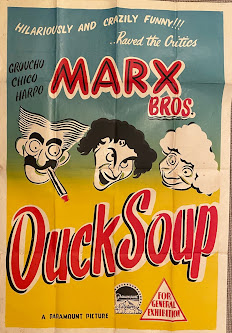
"Who are you going to believe, me or your own eyes?" -- Groucho Marx
"We're an empire now, and when we act, we create our own reality. And while you're studying that reality—judiciously, as you will—we'll act again, creating other new realities, which you can study too, and that's how things will sort out. We're history's actors…and you, all of you, will be left to just study what we do." -- Karl RoveWe aren't talking ancient history. We aren't debating the origins of the Peloponnesian War or the War of 1812 or even the Vietnam War. We are talking about the Iraq War. We were all there. Well, we weren't all over there -- we were here, where we experienced first hand the shameful manipulation of our post-9/11 trauma by the Bush Administration, the craven capitulation of the loyal opposition and mainstream media, and the disastrous consequences.
The latest focus on the question to, and remarkably inept responses by, yet another Bush running for president as to whether, knowing what we know now -- presumably, invading a country that was not a threat to us after lying about its head of state's complicity in 9/11 and the possession of weapons of mass destruction; destroying that country infrastructure, destabilizing the region and increasing the influence of that country's neighbors; using torture and committing other human rights abuses; and causing the deaths of thousands of Americans and hundreds of thousands of Iraqis -- he would have invaded Iraq as his brother did, ignores what was known then. This conveniently lets those complicit in the debacle off the hook, and does little to inform us about the qualifications for presidency of Jeb Bush or his cohorts.
It is rapidly becoming conventional wisdom, thanks to the same vapid punditry that was so acquiescent back then, that the Bush Administration was the victim of poor intelligence -- that they were misled into war, not that they misled us into a war they wanted to launch all along. But we know this is not true. We can recall how they seized on whatever tiny shred of evidence no matter how unreliable to bolster the answers they wanted about WMDs and a Iraq-9/11 connection and ignored the vast majority of credible evidence that pointed to contrary conclusion? Remember yellow cake, aluminum tubes, mushroom clouds? Bush, Cheney, Rumsfeld and Rice manipulated the intelligence to sell a war to the public.
Another revisionist trope is that everyone believed the intelligence about WMD. First, not everyone had the access to all of the intelligence that the Administration used and twisted for its purposes. Further, most members of Congress who voted to authorize the war (including Hillary Clinton) failed, as Peter Beinart points out, to read the full classified National Intelligence Estimate on Iraq's weapons of mass destruction -- a report that convinced, for example, Senators Leahy and Graham to vote against the Iraq War resolution. 21 other Senators and 133 Representatives also just said "no." And while some who voted "aye" may have done so because they believed the intelligence, most likely succumbed to coercive political pressure skillfully intensified by rhetoric out of the White House (e.g., you are "either with us or against us in the fight against terror.")
There was also some real journalism going on at the time -- from the reporters at Knight Ridder, for example -- who examined with skepticism the Bush Administrations' claims linking Saddam to 9/11 and WMDs.
As Matt Taibbi reminds us: "It was obvious even back then, to anyone who made the faintest effort to look at the situation honestly, that the invasion was doomed, wrong, and a joke."
First you had to accept a fictional implied connection between Saddam Hussein and 9/11. Then you had to buy that this heavily-sanctioned secular dictator (and confirmed enemy of Islamic radicals) would be a likely sponsor of radical Islamic terror. Then after that you had to accept that Saddam even had the capability of supplying terrorists with weapons that could hurt us (the Bush administration's analysts famously squinted so hard their faces turned inside out trying to see that one). And then, after all that, you still had to buy that all of these factors together added up to a threat so imminent that it justified the immediate mass sacrifice of American and Iraqi lives.But now we are having to witness a parade of the same hapless politicians, pundits and experts who told us they were certain that Saddam Hussein was hiding nuclear weapons and was involved with 9/11, that taking him out with shock and awe would be quick and painless -- for us -- that we would be greeted as liberators, and that the consequent reordering of the Middle East would bring peace and freedom. They were completely wrong about everything but are nevertheless unapologetically back on the airwaves and they are back advising Jeb Bush and the other Republican candidates. And if any of these candidates actually ascends to the White House, they would be back making and selling policy.
Instead of being asked about what they would have done in Iraq given what we know now, perhaps candidates could be asked under what circumstances they would use military force to overthrow a sovereign nation or whether they would manipulate intelligence if they believed it would convince the public to support their policy goals or under what conditions they would authorize torture.
What we knew then and what we surely know now is that the Iraq fiasco did not stem from intelligence failures but was a direct result of the reckless pursuit of a discredited neoconservative political theory. Unfortunately, none of the Republican candidates seems to have learned this or anything else that would allow them to avoid another unmitigated disaster when confronted with a national crisis.
Wednesday, December 17, 2014
Looking Forward To Torture
When President Ford pardoned Richard Nixon for "all offenses against the United States," he stated that it was out of concern for the "immediate future of this great country." He should have considered the longer term.
Inevitably, next came Iran-Contra. While the Republicans stacked the joint legislative committee undertaking the investigation with the conservative wing of their party (e.g., then-Representative Cheney), the Democrats relied mostly on moderates, and thus the committee members were skewed toward those who were disinclined to probe vigorously. By rashly granting immunity to key witnesses such as Ollie North, the committee undermined prosecutions by an independent counsel. The Iran-Contra Affair culminated in the pardon by first President Bush of several participants who had been implicated. The lesson was that the president and his circle had nothing to fear from abuse of power.
With the next Bush came more abuses, including the use of torture (and, by the way, illegal wiretapping). But President Obama refused to seek any meaningful investigation, much less prosecution, of those who authorized or committed torture. Much like President Ford, Obama claimed that “nothing will be gained by spending our time and energy laying blame for the past.” And more recently, he appeared to rationalize away the use of torture against "some folks" given the stress our "folks" were under in the wake of 9/11.
The Senate Intelligence Committee's report, which has just laid out in gory detail the CIA's many shades of torture as well as making the case that these techniques were ineffective and counterproductive in obtaining useful intelligence, is perceived as a partisan attack on patriotic Americans who were trying to keep us safe.
In response, former Vice President Dick Cheney and his co-conspirators in the Bush Administration were permitted to flood the airwaves, where they were able to lie, literally with impunity. They applauded torture's efficacy and provide the most offensive and amoral justifications for it without the kind of meaningful rebuttal that is anathema to network television. Cheney was not merely unrepentant; he was positively boastful, gleefully acknowledging that despite 1/4 of tortured detainees being innocent of wrongdoing, no "seed of doubt" was planted in his soulless mind. Indeed, he said, “I’d do it again in a minute.”
And as vile and odious as Cheney is, the Republican leadership (John McCain being the notable exception that proves the rule) has essentially endorsed his repugnant world view -- that anything to keep Americans out of danger as long as it isn't worse than what the terrorists did to us on 9/11 is morally acceptable, and that despite all evidence to the contrary, torture worked. In essence, they would all "do it again in a minute." (Significantly, Obama's CIA Director, John Brennan, isn't far from this position. While he acknowledged the "shortcomings" of the torture program, he insisted that it resulted in obtaining intelligence that "saved lives.")
Thanks to the torture-enablers media blitz and Obama's acquiescence, a recent Washington Post poll showed that "by a margin of almost 2 to 1 . . . those interviewed said that they support the CIA’s brutal methods, with the vast majority of supporters saying that they produced valuable intelligence."
President Obama came into office and, giving in to his bipartisan fetish, insisted on looking forward, not backward. But, of course, we are not moving forward. Without a true reckoning that confirms once and for all the immorality and illegality of torture, a reckoning that holds those responsible accountable, we remain stuck in a debate framed by self-serving Bush officials and their fellow travelers in the Republican Party about its efficacy. And the winners of the debate will be whoever happens to inhabit the White House next.
Inevitably, next came Iran-Contra. While the Republicans stacked the joint legislative committee undertaking the investigation with the conservative wing of their party (e.g., then-Representative Cheney), the Democrats relied mostly on moderates, and thus the committee members were skewed toward those who were disinclined to probe vigorously. By rashly granting immunity to key witnesses such as Ollie North, the committee undermined prosecutions by an independent counsel. The Iran-Contra Affair culminated in the pardon by first President Bush of several participants who had been implicated. The lesson was that the president and his circle had nothing to fear from abuse of power.
With the next Bush came more abuses, including the use of torture (and, by the way, illegal wiretapping). But President Obama refused to seek any meaningful investigation, much less prosecution, of those who authorized or committed torture. Much like President Ford, Obama claimed that “nothing will be gained by spending our time and energy laying blame for the past.” And more recently, he appeared to rationalize away the use of torture against "some folks" given the stress our "folks" were under in the wake of 9/11.
The Senate Intelligence Committee's report, which has just laid out in gory detail the CIA's many shades of torture as well as making the case that these techniques were ineffective and counterproductive in obtaining useful intelligence, is perceived as a partisan attack on patriotic Americans who were trying to keep us safe.
In response, former Vice President Dick Cheney and his co-conspirators in the Bush Administration were permitted to flood the airwaves, where they were able to lie, literally with impunity. They applauded torture's efficacy and provide the most offensive and amoral justifications for it without the kind of meaningful rebuttal that is anathema to network television. Cheney was not merely unrepentant; he was positively boastful, gleefully acknowledging that despite 1/4 of tortured detainees being innocent of wrongdoing, no "seed of doubt" was planted in his soulless mind. Indeed, he said, “I’d do it again in a minute.”
And as vile and odious as Cheney is, the Republican leadership (John McCain being the notable exception that proves the rule) has essentially endorsed his repugnant world view -- that anything to keep Americans out of danger as long as it isn't worse than what the terrorists did to us on 9/11 is morally acceptable, and that despite all evidence to the contrary, torture worked. In essence, they would all "do it again in a minute." (Significantly, Obama's CIA Director, John Brennan, isn't far from this position. While he acknowledged the "shortcomings" of the torture program, he insisted that it resulted in obtaining intelligence that "saved lives.")
Thanks to the torture-enablers media blitz and Obama's acquiescence, a recent Washington Post poll showed that "by a margin of almost 2 to 1 . . . those interviewed said that they support the CIA’s brutal methods, with the vast majority of supporters saying that they produced valuable intelligence."
President Obama came into office and, giving in to his bipartisan fetish, insisted on looking forward, not backward. But, of course, we are not moving forward. Without a true reckoning that confirms once and for all the immorality and illegality of torture, a reckoning that holds those responsible accountable, we remain stuck in a debate framed by self-serving Bush officials and their fellow travelers in the Republican Party about its efficacy. And the winners of the debate will be whoever happens to inhabit the White House next.
Tags
Bush
,
Cheney
,
GWOT
,
human rights
,
Obama
Friday, September 26, 2014
Barbara Lee Continues To Speak For Me
That the President is authorized to use all necessary and appropriate force against those nations, organizations, or persons he determines planned, authorized, committed, or aided the terrorist attacks that occurred on September 11, 2001, or harbored such organizations or persons in order to prevent any future acts of international terrorism against the United States by such nations, organizations or persons -- Authorization for the Use of Military Force ("AUMF")After the attacks of 9/11, Congress gave President Bush carte blanche to use military force. Only one member of Congress -- one -- had the integrity, the courage and the wisdom to just say "no." Congresswoman Barbara Lee -- my Congressperson I'm proud to say --warned her colleagues to be "careful not to embark on an open-ended war with neither an exit strategy nor a focused target" and explained that the AUMF "was a blank check to the president to attack anyone involved in the September 11 events—anywhere, in any country, without regard to our nation's long-term foreign policy, economic and national security interests, and without time limit."
Congresswoman Lee, as we now know, was prescient. Neither President Bush nor his successor, I'm afraid, could be trusted with such authorization, which has been used to justify warrantless wiretapping, indefinite detention at Guantanamo, various and sundry military actions, armed drones and, most recently, airstrikes against our newest terrorist enemy.
Congresswoman Lee has issued a statement expressing grave concern "about the expansion of U.S. airstrikes into Syria and continuation of airstrikes in Iraq."
It is clear we are rapidly becoming more involved in another war in the Middle East.Barbara Lee was right in 2001. She is right in 2014.
President Obama has put together a strong international and regional coalition to address the ISIS threat. We must now leverage this regional coalition to achieve the political solution that will end this crisis. Only a political solution that respects the rights of all Iraqis and Syrians will ultimately dismantle ISIS
I have called and will continue to call for a full congressional debate and vote on any military action, as required by the Constitution. The American people deserve a public debate on all the options to dismantle ISIS, including their costs and consequences to our national security and domestic priorities.
he rapid escalation of another war in the Middle East underscores the danger of the blank check for endless war passed by Congress in 2001. I could not support this blank check for endless war or the 2002 blank check for war in Iraq. I have introduced legislation to repeal the 2001 and 2002 authorizations for the use of military force and continue to build bipartisan support for their repeal.
There is no military solution to the crisis in Iraq and Syria. In fact, continued U.S. military action will result in unintended consequences. We must remember the roots of ISIS - President Bush’s ill-begotten war.Congress needs to debate the political, economic, diplomatic and regionally-led solutions that will ultimately be the tools for U.S. and regional security.
Tags
Bush
,
Congress
,
Guantanamo
,
GWOT
,
Obama
,
war and peace
Thursday, May 31, 2012
Portrait Of A Failed Presidency
![]() |
| Robbie Conal |
Tags
Bush
,
lovechilde
Thursday, May 24, 2012
How To Forget On Memorial Day
![]() |
| Crosses of Lafayette |
By Tom Engelhardt, cross-posted from TomDispatch
It’s the saddest reading around: the little announcements that dribble out of the Pentagon every day or two -- those terse, relatively uninformative death notices: rank; name; age; small town, suburb, or second-level city of origin; means of death (“small arms fire,” “improvised explosive device,” “the result of gunshot wounds inflicted by an individual wearing an Afghan National Army uniform,” or sometimes something vaguer like “while conducting combat operations,” “supporting Operation Enduring Freedom,” or simply no explanation at all); and the unit the dead soldier belonged to. They are seldom 100 words, even with the usual opening line: “The Department of Defense announced today the death of a soldier who was supporting Operation Enduring Freedom.” Sometimes they include more than one death.
They are essentially bureaucratic notices designed to draw little attention to themselves. Yet cumulatively, in their hundreds over the last decade, they represent a grim archive of America’s still ongoing, already largely forgotten second Afghan War, and I’ve read them obsessively for years.
Into the Memory Hole
May is the official month of remembrance when it comes to our war dead, ending as it does on the long Memorial Day weekend when Americans typically take to the road and kill themselves and each other in far greater numbers than will die in Afghanistan. It’s a weekend for which the police tend to predict rising fatalities and news reports tend to celebrate any declines in deaths on our roads and highways.
Quiz Americans and a surprising number undoubtedly won’t have thought about the “memorial” in Memorial Day at all -- especially now that it’s largely a marker of the start of summer and an excuse for cookouts.
How many today are aware that, as Decoration Day, it began in 1865 in a nation still torn by grief over the loss of -- we now know -- up to 750,000 dead in the first modern war, a wrenching civil catastrophe in a then-smaller and still under-populated country? How many know that the first Decoration Day was held in 1865 with 10,000 freed slaves and some Union soldiers parading on a Charleston, South Carolina, race track previously frequented by planters and transformed in wartime into a grim outdoor prison? The former slaves were honoring Union prisoners who had died there and been hastily buried in unmarked graves, but as historian Kenneth Jackson has written, they were also offering “a declaration of the meaning of the war and of their own freedom.”
Those ceremonies migrated north in 1866, became official at national cemeteries in 1868, and grew into ever more elaborate civic remembrances over the years. Even the South, which had previously marked its grief separately, began to take part after World War I as the ceremonies were extended to the remembrance of all American war dead. Only in 1968, in the midst of another deeply unpopular war, did Congress make it official as Memorial Day, creating the now traditional long holiday weekend.
And yet, when it comes to the major war the United States is still fighting, now in its 11th year, the word remembrance is surely inappropriate, as is the “Memorial” in Memorial Day. It’s not just that the dead of the Afghan War have largely been tossed down the memory hole of history (even if they do get official attention on Memorial Day itself). Even the fact that Americans are still dying in Afghanistan seems largely to have been forgotten, along with the war itself.
As the endlessly plummeting opinion polls indicate, the Afghan War is one Americans would clearly prefer to forget -- yesterday, not tomorrow. It was, in fact, regularly classified as “the forgotten war” almost from the moment that the Bush administration turned its attention to the invasion of Iraq in 2002 and so declared its urge to create a Pax Americana in the Greater Middle East. Despite the massive “surge” of troops, special operations forces, CIA agents, and civilian personnel sent to Afghanistan by President Obama in 2009-2010, and the ending of the military part of the Iraq debacle in 2011, the Afghan War has never made it out of the grave of forgetfulness to which it was so early consigned.
Tags
Afghanistan
,
Bush
,
Iraq
,
Obama
,
TomDispatch
,
war and peace
Monday, May 7, 2012
Poor, Poor, Pitiful Colin Powell And The "Blot" That Will -- And Should -- Always Be Attached To Him
By Meteor Blades, cross-posted from Daily Kos
Former Bush era Secretary of State Colin Powell has a new book out May 22. As with so many political celebs, it's a book written "with" a professional person who does the actual writing. But it includes quotations from the guy who was once seen as potential presidential or vice presidential material. Based on uncorrected proofs released in advance, what we get once again is Powell lamenting the stain he can't get rid of because of the dead-wrong 85-minute speech he gave to the United Nations Feb. 5, 2003. There he declared convincingly that the United States had irrefutable evidence that Iraq had weapons of mass destruction.
Within five months, that claim had been convincingly refuted.
Except, not quite. Because Powell keeps changing his story about his interactions in the White House. In 2005, he told Barbara Walters that he was "right there with" the president on the use of force in Iraq. In 2007, he told a group of heavyweights at a conference in Aspen, Colo., that he had spent two-and-a-half hours trying to talk Bush out of using force.
This latest iteration isn't the first time Powell has tried to lay the blame for his bogus U.N. speech on intelligence failures well down the chain of command. Not only has he never held his bosses to account for intentionally distorting what they knew to be untrue, he hasn't owned up to his own distortions.
For instance, he knew full well from his own intelligence source that the aluminum tubes Dick Cheney and Donald Rumsfeld and Condoleeza Rice were claiming as proof of Saddam Hussein's intent to make a nuclear weapon couldn't be used for that purpose. But he didn't pass that information along in his U.N. speech. Or anywhere else.
Most of all, for somebody so concerned about his reputation now, he didn't resign in protest when he learned that what he had said at the U.N. was false. In fact he said in the Walters' interview:
All we get from Powell is a rancid woe-is-me sidestep from responsibility. As he enters his dotage, he claims it was all due to the lack of courage on the part of lower-downs and the failure of his normally good instincts that caused him to make an uncharacteristically bad judgment call.
Stunningly laughable for a guy whose "instincts" led to this remarkable fantasy recounted in the new book:
Former Bush era Secretary of State Colin Powell has a new book out May 22. As with so many political celebs, it's a book written "with" a professional person who does the actual writing. But it includes quotations from the guy who was once seen as potential presidential or vice presidential material. Based on uncorrected proofs released in advance, what we get once again is Powell lamenting the stain he can't get rid of because of the dead-wrong 85-minute speech he gave to the United Nations Feb. 5, 2003. There he declared convincingly that the United States had irrefutable evidence that Iraq had weapons of mass destruction.
Within five months, that claim had been convincingly refuted.
“Yes, a blot, a failure will always be attached to me and my UN presentation,” the former U.S. secretary of state writes in a new book of leadership parables that draws frequently on his Iraq war experience. “I am mad mostly at myself for not having smelled the problem. My instincts failed me.” Powell, 75, laments that no intelligence officials had the “courage” to warn that he was given false information that Iraq had such weapons during preparations for his February 2003 speech before the U.S. invasion the following month.We've been hearing this crap from the guy for seven years now. It's tedious. It's sickening. It's self-serving. It's bullshit. It's the same old, same old.
Except, not quite. Because Powell keeps changing his story about his interactions in the White House. In 2005, he told Barbara Walters that he was "right there with" the president on the use of force in Iraq. In 2007, he told a group of heavyweights at a conference in Aspen, Colo., that he had spent two-and-a-half hours trying to talk Bush out of using force.
This latest iteration isn't the first time Powell has tried to lay the blame for his bogus U.N. speech on intelligence failures well down the chain of command. Not only has he never held his bosses to account for intentionally distorting what they knew to be untrue, he hasn't owned up to his own distortions.
For instance, he knew full well from his own intelligence source that the aluminum tubes Dick Cheney and Donald Rumsfeld and Condoleeza Rice were claiming as proof of Saddam Hussein's intent to make a nuclear weapon couldn't be used for that purpose. But he didn't pass that information along in his U.N. speech. Or anywhere else.
Most of all, for somebody so concerned about his reputation now, he didn't resign in protest when he learned that what he had said at the U.N. was false. In fact he said in the Walters' interview:
"I'm not a quitter. And it wasn't a moral issue, or an act of a failure of an active leadership. It was knowing what we were heading into, and when the going got rough, you don't walk out."Fabricating evidence to start a war is not a moral issue? Better to be the good soldier than to be good, eh? Hundreds of thousands dead or maimed, millions exiled, trillions of dollars spent. For lies. How about a lament for that from the secretary?
All we get from Powell is a rancid woe-is-me sidestep from responsibility. As he enters his dotage, he claims it was all due to the lack of courage on the part of lower-downs and the failure of his normally good instincts that caused him to make an uncharacteristically bad judgment call.
Stunningly laughable for a guy whose "instincts" led to this remarkable fantasy recounted in the new book:
Powell, who served as national security adviser to President Ronald Reagan, recalls a morning in 1988 when he went to see Reagan and described a problem that needed to be solved that day. Reagan gazed past him at squirrels picking up nuts he had put out for them in the morning by the Rose Garden. It was a lesson in delegating authority and trusting his team to make the right decision, Powell says. “The president was teaching me: ‘Colin, I love you and I will sit here as long as you want me to, listening to your problem. Let me know when you have a problem that I have to solve,’” Powell writes.He can perhaps be excused for believing that a quarter-century ago. But knowing what we know now about the health of Reagan's brain, Powell's continuing view that he was being mentored by a squirrel-gazing president is as ludicrous as the rest of his tales about what put that unerasable blot on his reputation.
Tags
Bush
,
GWOT
,
Iran
,
war and peace
Friday, May 4, 2012
Getting Away With Torture
![]() |
| DonkeyHotey |
[He] was denied contact with his lawyer, his family or anyone else outside the military brig for almost two years and kept in detention for almost four. His jailers made death threats, shackled him for hours, forced him into painful stress positions, subjected him to noxious fumes that hurt his eyes and nose and deafening noises at all hours, denied him care for serious illness and more.Padilla was eventually tried in federal court on criminal conspiracy charges and found guilty in 2007 for conspiring to kill people in an overseas jihad and to fund and support overseas terrorism. He was neither charged or convicted of planning to detonate a dirty bomb. He was sentenced to 17 years and four months in prison.
Padilla sued John Yoo, the former Bush Administration official who authored the infamous torture memos. (Padilla sought damages of $1.) In case you've forgotten:
A Yoo memo from 2001 advised that the military could use “any means necessary” to hold terror suspects.The Ninth Circuit reversed a 2009 ruling by federal district court judge who had held that the lawsuit could go forward. According to the Ninth Circuit, Yoo was not personally liable because "regardless of the legality of Padilla's detention and the wisdom of Yoo's judgments, at the time he acted the law was 'not sufficiently clear that every reasonable official would have understood that what he was doing violated' [Padilla's] rights."
A 2002 memo to then-White House Counsel Alberto Gonzales advised that treatment of suspected terrorists was torture only if it caused pain levels equivalent to “organ failure, impairment of bodily function or even death.”
Yoo also advised that the president might have the constitutional power to allow torturing enemy combatants.
Most famously, Yoo was the principal author of a memo sent to the CIA in August 2002 authorizing “waterboarding,” in which water is poured over the face of a bound detainee and simulates drowning.
The Court assumed that Padilla was tortured but found that Yoo had qualified immunity for two reasons:
First, . . . it was not “beyond debate” at that time that Padilla . — who was not a convicted prisoner or criminal defendant, but a suspected terrorist designated an enemy combatant and confined to military detention by order of the President — was entitled to the same constitutional protections as an ordinary convicted prisoner or accused criminal.This nearly insurmountable burden, of having to establish that a government official's violation of a citizens rights was "beyond debate" stems from the U.S. Supreme Court's decision last year, in Ashcroft v. Al-Kidd. The Times explains why this standard is unworkable:
Second, although it has been clearly established for decades that torture of an American citizen violates the Constitution, and we assume without deciding that Padilla’s alleged treatment rose to the level of torture, that such treatment was torture was not clearly established in 2001-03.
The Bush administration manufactured both “debates” — about torture and enemy combatants. Any future government can rely on this precedent to pull the same stunt as cover for some other outrage.Yoo, minimizing his role as limited to providing "legal advice that the Constitution allows the military detention of Americans who join al Qaeda," complains in the Wall Street Journal that the Obama Administration failed to defend him in the lawsuit. He is concerned that "worrying about future lawsuits will distort official decision-making, which should balance the costs and benefits to the national interest and not worry about personal liability."
By using the “enemy combatant” category, the Bush administration stirred debate that had not existed about whether rights of an American citizen in custody depend on how he is classified. By coming up with offensive rationalizations for torturing detainees, it dishonestly stirred debate about torture’s definition when what it engaged in plainly included torture.
As an amicus brief filed by law professors explained, “Yoo did not merely give ‘wrong’ advice in performing customary legal duties," rather "he acted outside of his legal role altogether by participating directly in the formulation of policy that gave rise to the deprivation of [Padilla’s] constitutional rights and by creating legal cover for unlawful detention and interrogation policies.”
As the Times concludes, the Ninth Circuit was wrong to "dwell on whether Mr. Padilla’s mistreatment was torture. Even if somehow it did not qualify, its cruel, inhumane and shocking nature badly violated his rights as a citizen — and international law on the treatment of detainees. Even at the time, the issue was beyond debate, and Mr. Yoo should have known that."
Tags
Bush
,
GWOT
,
law and justice
,
lovechilde
,
SCOTUS
Wednesday, April 11, 2012
Quote Of The Day
“I wish they weren’t called the Bush tax cuts. If they’re called some other body’s tax cuts, they’re probably less likely to be raised.”George W. Bush, Bush Institute Conference on Taxes and Economic Growth
"So there you have it," as Hunter at Daily Kos puts it: "Bush finally expresses some remorse for something, but it turns out it's not over his stupid tax cuts wrecking the budget, ballooning the deficit, and generally prepping America for it's uncomfortable handbasket ride to the netherworld. No, it's because the Bush family name sucks so bad (for some unknown reason that he cannot possibly fathom) that things associated with it are less popular than they really ought to be."
Tags
Bush
,
quote of the day
,
taxes
Thursday, March 22, 2012
Voters Get It, Elites Not So Much
By Mike Lux, cross-posted from Crooks and Liars
Throughout American history, some of our greatest political thinkers have understood that at the end of the day, democracy works better when average Americans rather than elites run things, because regular people instinctively get the truth of what is going on in the real world — on Main Street — more than out-of-touch elites. Thomas Jefferson, Benjamin Franklin, and Thomas Paine got this; as did Abe Lincoln, who believed in a government of, by, and for the people. So did the reformers and organizers of the 20th Century like Saul Alinsky and Walter Reuther. They all knew that the people might get things wrong some of the time, but that ultimately it was better to trust and empower regular folks because the elites generally messed up a lot more of the time than democracy did.
When I read the great memos and reams of data that Stan Greenberg and James Carville at Democracy Corps put out, and read focus group and polling reports from other pollsters I respect, I am reminded of that truth once again. It is striking how much better regular folks understand, than most of the elites in this country, what is really going on with this economy. They aren’t following the moment-to-moment blips in the job or GDP numbers so much as they know deep in their guts that the American middle class is in real danger, that it is on a long downhill decline, and that there needs to be big fundamental changes. This has big implications for the 2012 election.
The swing voters swing because they go back and forth on whom to blame more — Wall Street and big business or the government — and what then to do about it. They think both sides of that equation are bad: that Wall Street screwed up the economy, and that government can’t succeed because it is bought off by Wall Street and other wealthy special interests. They think both political parties are bad. And they for the most part aren’t feeling like the economy is getting much better, or that, as President Obama put it in his State of the Union address, “America is back!” They are pessimists (at least in the short term), populists, alienated from the establishment. That is why I continue to fear a more upbeat message on how the economy really is getting better from the Obama team will cause him to lose. Stan and James reminded me recently of the last ad we ran in the 1992 Clinton campaign, the single most effective ad we ran that fall. I wish I could find the video for you, but I haven’t been able to. It was a 15-second ad that had a clip of George Bush talking about how the economy really was getting better and jobs were starting to pick up again (both of which were technically true), and then the screen just cut to lettering and a voice saying “How ya doing?” People responded strongly to it, feeling in their gut that the economy the last four years had not been getting better, and that Bush was out of touch for saying so. It turned a race that had been tightening into an easy six-point win.
My concern isn’t just, as I have written about before, that the Obama team doesn’t brag too much about economic improvements that most voters aren’t feeling yet. My bigger worry is that Obama, other Democrats, and the broad progressive movement will just miss the moment we are in: middle-class voters have a deep understanding that something is profoundly wrong with the direction our economy has been heading for the last 30 years. They understand, far better than most elites, the underlying trends that are grinding middle-class families into the dirt, and are making it harder and harder for poor people and young people to climb the ladder into the middle class. They are cynical about politicians bragging about job growth because they know that most new jobs don’t pay what the ones that were lost used to, or are temp jobs that will be gone all too fast. They know that wage growth is flat, housing prices are down, and the costs of necessities — gas, groceries, health care — keep going up. They worry about being able to retire with enough money to live on, about taking care of their elderly parents and grandparents, and about sending their kids to college with tuition rates skyrocketing.
This kind of frame of mind for voters makes things challenging for an incumbent President trying to win re-election, but it also presents an opportunity. The Osawatomie, Kansas speech, where Obama cast himself as the fighter for the middle class in tough times, is a part of the answer, and I am glad he has taken on that mantle. But I think he needs to be more explicit and more expansive in creating the narrative, telling the story, of how we got here. The 30-year frame is helpful in part because that is clearly where voters are — that our problems started quite a while back and we have been in decline too long — and in part because it doesn’t make it seem like Obama is just trying to blame Bush, which feels too partisan and blame-gamy. (I also like the fact that it is true. It was Reagan’s policies 30 years ago which decimated our manufacturing base, started us on our current path of massive trade deficits year after year, began the massive deregulation of the financial sector, and embraced supply side economics that first led to massive tax cuts for the wealthy, big budget deficits, and a concentration of both income at the top and industry concentration in one sector of the economy after another.)
Throughout American history, some of our greatest political thinkers have understood that at the end of the day, democracy works better when average Americans rather than elites run things, because regular people instinctively get the truth of what is going on in the real world — on Main Street — more than out-of-touch elites. Thomas Jefferson, Benjamin Franklin, and Thomas Paine got this; as did Abe Lincoln, who believed in a government of, by, and for the people. So did the reformers and organizers of the 20th Century like Saul Alinsky and Walter Reuther. They all knew that the people might get things wrong some of the time, but that ultimately it was better to trust and empower regular folks because the elites generally messed up a lot more of the time than democracy did.
When I read the great memos and reams of data that Stan Greenberg and James Carville at Democracy Corps put out, and read focus group and polling reports from other pollsters I respect, I am reminded of that truth once again. It is striking how much better regular folks understand, than most of the elites in this country, what is really going on with this economy. They aren’t following the moment-to-moment blips in the job or GDP numbers so much as they know deep in their guts that the American middle class is in real danger, that it is on a long downhill decline, and that there needs to be big fundamental changes. This has big implications for the 2012 election.
The swing voters swing because they go back and forth on whom to blame more — Wall Street and big business or the government — and what then to do about it. They think both sides of that equation are bad: that Wall Street screwed up the economy, and that government can’t succeed because it is bought off by Wall Street and other wealthy special interests. They think both political parties are bad. And they for the most part aren’t feeling like the economy is getting much better, or that, as President Obama put it in his State of the Union address, “America is back!” They are pessimists (at least in the short term), populists, alienated from the establishment. That is why I continue to fear a more upbeat message on how the economy really is getting better from the Obama team will cause him to lose. Stan and James reminded me recently of the last ad we ran in the 1992 Clinton campaign, the single most effective ad we ran that fall. I wish I could find the video for you, but I haven’t been able to. It was a 15-second ad that had a clip of George Bush talking about how the economy really was getting better and jobs were starting to pick up again (both of which were technically true), and then the screen just cut to lettering and a voice saying “How ya doing?” People responded strongly to it, feeling in their gut that the economy the last four years had not been getting better, and that Bush was out of touch for saying so. It turned a race that had been tightening into an easy six-point win.
My concern isn’t just, as I have written about before, that the Obama team doesn’t brag too much about economic improvements that most voters aren’t feeling yet. My bigger worry is that Obama, other Democrats, and the broad progressive movement will just miss the moment we are in: middle-class voters have a deep understanding that something is profoundly wrong with the direction our economy has been heading for the last 30 years. They understand, far better than most elites, the underlying trends that are grinding middle-class families into the dirt, and are making it harder and harder for poor people and young people to climb the ladder into the middle class. They are cynical about politicians bragging about job growth because they know that most new jobs don’t pay what the ones that were lost used to, or are temp jobs that will be gone all too fast. They know that wage growth is flat, housing prices are down, and the costs of necessities — gas, groceries, health care — keep going up. They worry about being able to retire with enough money to live on, about taking care of their elderly parents and grandparents, and about sending their kids to college with tuition rates skyrocketing.
This kind of frame of mind for voters makes things challenging for an incumbent President trying to win re-election, but it also presents an opportunity. The Osawatomie, Kansas speech, where Obama cast himself as the fighter for the middle class in tough times, is a part of the answer, and I am glad he has taken on that mantle. But I think he needs to be more explicit and more expansive in creating the narrative, telling the story, of how we got here. The 30-year frame is helpful in part because that is clearly where voters are — that our problems started quite a while back and we have been in decline too long — and in part because it doesn’t make it seem like Obama is just trying to blame Bush, which feels too partisan and blame-gamy. (I also like the fact that it is true. It was Reagan’s policies 30 years ago which decimated our manufacturing base, started us on our current path of massive trade deficits year after year, began the massive deregulation of the financial sector, and embraced supply side economics that first led to massive tax cuts for the wealthy, big budget deficits, and a concentration of both income at the top and industry concentration in one sector of the economy after another.)
Tags
Bush
,
economy
,
jobs
,
Obama
,
presidential election
,
Reagan
,
Wall Street
Monday, March 19, 2012
Quote Of The Day
"If Iraq taught us nothing else, it should have taught us this: Before you deploy the troops, deploy the fact-checkers."
Bill Keller, New York Times
Keller, the former executive editor of the Times, was one of "Bush's Useful Idiots," a liberal hawk whose support for the Iraq War gave the Bush Administration critical cover. Keller has since expressed some measure of regret, which proved unsatisfying to many. In any event, he is at least asking some of the important questions this time around. -- Lovechilde
Tags
Bush
,
Iraq
,
media
,
quote of the day
Nine Years After We Were Lied Into War With Iraq
Those Who Objected Deserve Some Praise
By Meteor Blades, cross-posted from Daily Kos
Monday marks the ninth anniversary of the beginning of the Iraq war and occupation.
The rationale for that war was fabricated in the highest reaches of the U.S. leadership.
First came the lies, so many it was impossible to keep up. Then came the shock and awe, the crudely invented Iraqi jubilation, the torture, the renditions, the secret prisons, the indefinite detentions, the deluge of unaccounted-for cash, the no-bid contracts, the flaccid media, the spectacle of "mission accomplished," the smug claims that there was no insurgency, the lousy armor ...
The endless flow of blood.
There is now a long list of the dead who would not be dead were it not for this war initiated out of bravado, rancid ideology and doctored "evidence." Thousands of dead Americans and allied troops. And, at the very least, 120,000 dead Iraqis, perhaps several hundred thousand. Deaths in any war are terrible enough. Deaths in a war of choice, a concocted war, an illegal preventive war, count as nothing short of murder. The list of the maimed, the widowed, the orphaned is far longer, the list of the psychologically impaired longer still.
Before George W. Bush was voted 5-4 by the Supreme Court into the presidency, those who lied us into this war were already plotting their justification for sinking deeper military and economic roots into the Middle East—petropolitics and neo-imperialist sophistry interlaced with arrogant disdain for Iraqis and Americans alike. When they stepped into office in the footsteps of the mediocrity they had chosen to manipulate, terrorism gave them no worries, as Richard Clarke later explained to us. They focused, as former Treasury Secretary Paul O'Neill later informed us, on finding the right excuse to persuade the American people to go to war with Saddam Hussein. This they perceived and planned as a prelude for going to war with some of his neighbors. Less than nine months later, the excuse dropped into their laps in the form of Osama bin Laden's kamikaze crews.
From that terrible day forward, Richard Cheney and Donald Rumsfeld and their fellow rogues engineered the invasion with eager nods from Bush. They saw the chance to carry out their invasion plan and moved every obstacle—most especially the truth—out of their way to make it happen.
It didn't have to. They could have been blocked. Due diligence and some spinal fortitude in Congress might have stopped the war in its tracks. But in October 2002, the Senate and the House voted for the Authorization for Use of Military Force Against Iraq Resolution. Five months and one week later, the bombs began falling on Baghdad.
The blame for that is widespread. But we typically forget those who voted against it.
On this ninth anniversary of the beginning of that atrocity, that series of atrocities, the 156 Congresspeople and Senators who voted against the AUMF deserve to be remembered. This isn't meant as praise for everything they ever did, before or since, merely acknowledgment that, on this, they were right when so many were so very, very wrong.
By Meteor Blades, cross-posted from Daily Kos
![]() |
| Rep. Pete Stark |
The rationale for that war was fabricated in the highest reaches of the U.S. leadership.
First came the lies, so many it was impossible to keep up. Then came the shock and awe, the crudely invented Iraqi jubilation, the torture, the renditions, the secret prisons, the indefinite detentions, the deluge of unaccounted-for cash, the no-bid contracts, the flaccid media, the spectacle of "mission accomplished," the smug claims that there was no insurgency, the lousy armor ...
The endless flow of blood.
There is now a long list of the dead who would not be dead were it not for this war initiated out of bravado, rancid ideology and doctored "evidence." Thousands of dead Americans and allied troops. And, at the very least, 120,000 dead Iraqis, perhaps several hundred thousand. Deaths in any war are terrible enough. Deaths in a war of choice, a concocted war, an illegal preventive war, count as nothing short of murder. The list of the maimed, the widowed, the orphaned is far longer, the list of the psychologically impaired longer still.
Before George W. Bush was voted 5-4 by the Supreme Court into the presidency, those who lied us into this war were already plotting their justification for sinking deeper military and economic roots into the Middle East—petropolitics and neo-imperialist sophistry interlaced with arrogant disdain for Iraqis and Americans alike. When they stepped into office in the footsteps of the mediocrity they had chosen to manipulate, terrorism gave them no worries, as Richard Clarke later explained to us. They focused, as former Treasury Secretary Paul O'Neill later informed us, on finding the right excuse to persuade the American people to go to war with Saddam Hussein. This they perceived and planned as a prelude for going to war with some of his neighbors. Less than nine months later, the excuse dropped into their laps in the form of Osama bin Laden's kamikaze crews.
From that terrible day forward, Richard Cheney and Donald Rumsfeld and their fellow rogues engineered the invasion with eager nods from Bush. They saw the chance to carry out their invasion plan and moved every obstacle—most especially the truth—out of their way to make it happen.
It didn't have to. They could have been blocked. Due diligence and some spinal fortitude in Congress might have stopped the war in its tracks. But in October 2002, the Senate and the House voted for the Authorization for Use of Military Force Against Iraq Resolution. Five months and one week later, the bombs began falling on Baghdad.
The blame for that is widespread. But we typically forget those who voted against it.
On this ninth anniversary of the beginning of that atrocity, that series of atrocities, the 156 Congresspeople and Senators who voted against the AUMF deserve to be remembered. This isn't meant as praise for everything they ever did, before or since, merely acknowledgment that, on this, they were right when so many were so very, very wrong.
Tags
Bush
,
Cheney
,
Congress
,
Iraq
,
war and peace
Wednesday, March 14, 2012
Housing Solutions: Principal Reduction And DeMarco Removal
The housing crisis remains one of the biggest drags on the economic recovery. Nearly 12 million Americans live in homes financed through Fannie Mae or Freddie Mac who owe more on their mortgage than their homes are worth.
The solution is Principal Reduction, which would reduce mortgages to their fair market value.
The primary obstacle is Edward DeMarco, the Acting Director of the Federal Housing Finance Agency, who, as Isaiah Poole explains, "is a Bush administration holdover who is still in his position because Republicans in the Senate blocked the person President Obama nominated as his replacement."
DeMarco remains stubbornly resistant in the face of increasing demands for him to help end the housing crisis by allowing principal to be reduced for struggling homeowners with Fannie Mae and Freddie Mac mortgages.
The Congressional Progressive Caucus has urged DeMarco to act or be removed, backed up by the new America Underwater partnership between progressive grassroots groups Rebuild the Dream and the New Bottom Line.
But it isn't only progressives. As Bill Scher writes, "Mortgage Bankers Association CEO David Stevens last week lent his support for principal reductions, saying they would put "cash flow into the hands of families." He joins other Wall Street voices such as famed hedge fund manager Greg Lippman, the world's largest bond fund, Pimco and the mortgage analysts at Amherst Securities."
An article in The Atlantic authored by analysts from the Center for American Progress noted the "growing consensus among economists, investors, academics, and consumer advocates that more 'principal reduction' -- writing off a portion of a mortgage that exceeds a home's value in exchange for a higher likelihood of repayment -- can help avoid another wave of costly and economy-crushing foreclosures." As they write, that's "good for homeowners and lenders, and because millions of underwater mortgages are controlled by the government, it's also good public policy."
Still DeMarco won't budge. And since, he won't move, it is time for the President to remove him and use a recess appointment to replace him. As Robert Borosage urges:
The solution is Principal Reduction, which would reduce mortgages to their fair market value.
The primary obstacle is Edward DeMarco, the Acting Director of the Federal Housing Finance Agency, who, as Isaiah Poole explains, "is a Bush administration holdover who is still in his position because Republicans in the Senate blocked the person President Obama nominated as his replacement."
DeMarco remains stubbornly resistant in the face of increasing demands for him to help end the housing crisis by allowing principal to be reduced for struggling homeowners with Fannie Mae and Freddie Mac mortgages.
The Congressional Progressive Caucus has urged DeMarco to act or be removed, backed up by the new America Underwater partnership between progressive grassroots groups Rebuild the Dream and the New Bottom Line.
But it isn't only progressives. As Bill Scher writes, "Mortgage Bankers Association CEO David Stevens last week lent his support for principal reductions, saying they would put "cash flow into the hands of families." He joins other Wall Street voices such as famed hedge fund manager Greg Lippman, the world's largest bond fund, Pimco and the mortgage analysts at Amherst Securities."
An article in The Atlantic authored by analysts from the Center for American Progress noted the "growing consensus among economists, investors, academics, and consumer advocates that more 'principal reduction' -- writing off a portion of a mortgage that exceeds a home's value in exchange for a higher likelihood of repayment -- can help avoid another wave of costly and economy-crushing foreclosures." As they write, that's "good for homeowners and lenders, and because millions of underwater mortgages are controlled by the government, it's also good public policy."
Still DeMarco won't budge. And since, he won't move, it is time for the President to remove him and use a recess appointment to replace him. As Robert Borosage urges:
The President has the power to right this wrong. He has used recess appointments before to stand up to obstructionist conservatives. Now he needs to act again. And he needs to hear from us. It is time to move.Click here to tell President Obama: Fire Edward DeMarco and replace him with a recess appointment.
Tags
Bush
,
Congress
,
economy
,
foreclosures
,
housing
,
lovechilde
,
Obama
,
politics
Wednesday, March 7, 2012
Un-Cheating Justice: Two Years Left To Prosecute Bush
By David Swanson, cross-posted from War Is A Crime.org
Elizabeth Holtzman knows something about struggles for justice in the U.S. government. She was a member of Congress and of the House Judiciary Committee that voted for articles of impeachment against President Richard Nixon in 1973. She proposed the bill that in 1973 required that "state secrets" claims be evaluated on a case-by-case basis. She co-authored the special prosecutor law that was allowed to lapse, just in time for the George W. Bush crime wave, after Kenneth Starr made such a mockery of it during the Whitewater-cum-Lewinsky scandals. She was there for the creation of the Foreign Intelligence Surveillance Act (FISA) in 1978. She has served on the Nazi War Crimes and Japanese Imperial Government Records Interagency Working Group, bringing long-escaped war criminals to justice. And she was an outspoken advocate for impeaching George W. Bush.
Holtzman's new book, coauthored with Cynthia Cooper, is called "Cheating Justice: How Bush and Cheney Attacked the Rule of Law and Plotted to Avoid Prosecution -- and What We Can Do About It." Holtzman begins by recalling how widespread and mainstream was the speculation at the end of the Bush nightmare that Bush would pardon himself and his underlings. The debate was over exactly how he would do it. And then he didn't do it at all.
Holtzman ends her book by pointing out that legal accountability can come after many years, as in the case of various Nazis, or of Chilean dictator Augusto Pinochet, or of the murderers of civil rights activists including Medgar Evers.
In between, for the bulk of the book, Holtzman, a former district attorney, lays out the prospects for a prosecution of Bush and others on charges of lying to Congress about the grounds for war, wiretapping Americans, and conspiring to torture. This is an excellent sampling of the many horrors on the list of Bush's abuses, and clearly the three areas in which Holtzman believes a prosecution would stand the best chance of success. Her analysis of the war lies parallels and builds on that of Elizabeth de la Vega, another former prosecutor who has written on the topic. Holtzman adds an analysis of the steps Bush took to protect himself from prosecution in this and each other area. She also examines his possible legal defenses, finding some of them strong and others easily overcome.
In each area Holtzman finds charges that would stick, if our laws were enforced. She also finds charges that would have stuck, had the statute of limitations not elapsed, and others for which a couple of years yet remain. Holtzman believes charges for conspiring to defraud the government with war lies could be brought until January 20, 2014. She also believes that charges for violation of FISA could be brought until that same date, pointing out that changes made to the law have not provided immunity for prior violations of what the law used to be, and that immunity has been granted from civil suits but not from criminal prosecution. Charges of torture, Holtzman concludes, could be brought at any time in the future.
Elizabeth Holtzman knows something about struggles for justice in the U.S. government. She was a member of Congress and of the House Judiciary Committee that voted for articles of impeachment against President Richard Nixon in 1973. She proposed the bill that in 1973 required that "state secrets" claims be evaluated on a case-by-case basis. She co-authored the special prosecutor law that was allowed to lapse, just in time for the George W. Bush crime wave, after Kenneth Starr made such a mockery of it during the Whitewater-cum-Lewinsky scandals. She was there for the creation of the Foreign Intelligence Surveillance Act (FISA) in 1978. She has served on the Nazi War Crimes and Japanese Imperial Government Records Interagency Working Group, bringing long-escaped war criminals to justice. And she was an outspoken advocate for impeaching George W. Bush.
Holtzman's new book, coauthored with Cynthia Cooper, is called "Cheating Justice: How Bush and Cheney Attacked the Rule of Law and Plotted to Avoid Prosecution -- and What We Can Do About It." Holtzman begins by recalling how widespread and mainstream was the speculation at the end of the Bush nightmare that Bush would pardon himself and his underlings. The debate was over exactly how he would do it. And then he didn't do it at all.
Holtzman ends her book by pointing out that legal accountability can come after many years, as in the case of various Nazis, or of Chilean dictator Augusto Pinochet, or of the murderers of civil rights activists including Medgar Evers.
In between, for the bulk of the book, Holtzman, a former district attorney, lays out the prospects for a prosecution of Bush and others on charges of lying to Congress about the grounds for war, wiretapping Americans, and conspiring to torture. This is an excellent sampling of the many horrors on the list of Bush's abuses, and clearly the three areas in which Holtzman believes a prosecution would stand the best chance of success. Her analysis of the war lies parallels and builds on that of Elizabeth de la Vega, another former prosecutor who has written on the topic. Holtzman adds an analysis of the steps Bush took to protect himself from prosecution in this and each other area. She also examines his possible legal defenses, finding some of them strong and others easily overcome.
In each area Holtzman finds charges that would stick, if our laws were enforced. She also finds charges that would have stuck, had the statute of limitations not elapsed, and others for which a couple of years yet remain. Holtzman believes charges for conspiring to defraud the government with war lies could be brought until January 20, 2014. She also believes that charges for violation of FISA could be brought until that same date, pointing out that changes made to the law have not provided immunity for prior violations of what the law used to be, and that immunity has been granted from civil suits but not from criminal prosecution. Charges of torture, Holtzman concludes, could be brought at any time in the future.
Tuesday, February 28, 2012
Republican Means Never Having To Say You're Sorry
Being self reflective, expressing remorse, apologizing for causing harm. These are characteristics of an evolved, mature person. Right? We certainly would want our political leaders to have the strength and confidence to be able to admit their own and the nation's mistakes, shoulder blame when warranted, and change course when necessary. Wouldn't we? Unfortunately, these qualities are not a part of the Republican DNA. For them they are signs of weakness, hewing too close to what Jeanne Kirkpatrick criticized as the unforgivable sin of "blaming America first."
The last Republican Administration lied and manipulated us into a war based on grounds that proved illusory, approved torture and other human rights abuses, unnecessarily cost our country billions of dollars, caused untold numbers of casualties, and undermined their own avowed goal of thwarting the terrorist group responsible for the 9/11 attacks. Did they ever admit their mistakes much less apologize for their monumentally destructive conduct?
On the contrary, since leaving office Bush, Cheney, Rumsfeld and Rice have bragged and boasted about their policies, and have tried to take credit for whatever success President Obama has had. And when they were still in power we were treated to this, um, awkward moment:
It doesn't get any better with the current crop of Republican leaders. Mitt Romney's book is actually called "No Apology," in which he falsely accuses President Obama of going around the world apologizing for America, a dubious claim he repeats often on the campaign trail. ("Never before in American history has its president gone before so many foreign audiences to apologize for so many American misdeeds, both real and imagined.")
President Obama did apologize for the burning of copies of the Koran by American personnel at a NATO military base in Afghanistan. In the wake of increasing violence over the incident, Obama expressed "deep regret," extended his "sincere apologies" to Hamid Karzai and the Afghan people, and promised "to take the
appropriate steps to avoid any recurrence, to include holding
accountable those responsible."
This was too much for the GOP.
Newt Gingrich is not one to apologize for anything. (Recall his rationalization for an extra-marital affair -- that it was due to his excessive patriotism.) He said Obama's apology was an “outrage,” and later gave this advice to the Afghans, “You know, you’re going to have to figure out how to live your own miserable life… Because you clearly don’t want to learn from me how to be unmiserable."
Mitt Romney was also troubled, saying that for many people the apology "sticks in their throat." According to Romney, since we have done so much for the Afghan people in helping them "achieve freedom," to "apologize at a time like this is something which is very difficult for the American people to countenance."
And then there was Rick Santorum, spewing his typically illogical and sanctimonious claptrap
I'll leave it to Amy Davidson to expound:
The last Republican Administration lied and manipulated us into a war based on grounds that proved illusory, approved torture and other human rights abuses, unnecessarily cost our country billions of dollars, caused untold numbers of casualties, and undermined their own avowed goal of thwarting the terrorist group responsible for the 9/11 attacks. Did they ever admit their mistakes much less apologize for their monumentally destructive conduct?
On the contrary, since leaving office Bush, Cheney, Rumsfeld and Rice have bragged and boasted about their policies, and have tried to take credit for whatever success President Obama has had. And when they were still in power we were treated to this, um, awkward moment:
It doesn't get any better with the current crop of Republican leaders. Mitt Romney's book is actually called "No Apology," in which he falsely accuses President Obama of going around the world apologizing for America, a dubious claim he repeats often on the campaign trail. ("Never before in American history has its president gone before so many foreign audiences to apologize for so many American misdeeds, both real and imagined.")
This was too much for the GOP.
Newt Gingrich is not one to apologize for anything. (Recall his rationalization for an extra-marital affair -- that it was due to his excessive patriotism.) He said Obama's apology was an “outrage,” and later gave this advice to the Afghans, “You know, you’re going to have to figure out how to live your own miserable life… Because you clearly don’t want to learn from me how to be unmiserable."
Mitt Romney was also troubled, saying that for many people the apology "sticks in their throat." According to Romney, since we have done so much for the Afghan people in helping them "achieve freedom," to "apologize at a time like this is something which is very difficult for the American people to countenance."
And then there was Rick Santorum, spewing his typically illogical and sanctimonious claptrap
I don’t think the president should apologize for something that was clearly inadvertent. What you should lay out is the president saying this was inadvertent. This was a mistake and there was no deliberate act, there was no meant to disrespect. This was something that, that occurred that, that should not have occurred, but it was an accident and leave it at that. I think you highlight it when you, when you apologize for it. You, you make it sound like it was something that you should apologize for. And there is not—there was no act that needed an apology. It was an inadvertent act and it should be left at that and I think the response has—needs to be apologized for by, by Karzai and the Afghan people of, of attacking and killing our men and women in uniform and, and overreacting to this, to this inadvertent mistake. That, that is, that is the real crime here, not what our soldiers did.
Maybe Santorum and his fellow-candidates have been trapped in the kindergarten-delinquent classroom of the Republican primaries for so long that they think the same rules, and illogic, that help decide who the not-Romney of the week is apply everywhere. But Afghanistan is a real and dangerous place; more than two dozen people have died in the violence, including two Americans, who were assassinated in the Interior Ministry. (The Afghan government reportedly did apologize for that.) The senselessness of the response does not take away from the necessity of an apology, or from its grace.
U.S. Commander in Afghanistan, General John Allen, stated what should be obvious: "We admit our mistake, we ask for forgiveness, we seek to move on." And, as Amy Davidson concludes:
In apologizing, we remind ourselves who we are. We also learn more about where we are, who we are talking to, and our circumstances. Having done so—done the right thing—we may reasonably conclude that we can make our apologies, and leave.
Tags
Afghanistan
,
Bush
,
Cheney
,
GWOT
,
lovechilde
,
Mitt Romney
,
Newt Gingrich
,
Santorum
,
war and peace
Thursday, February 23, 2012
The Global War On Terror: From Liberation To Assassination
By Andrew Bacevich, cross-posted from Tom Dispatch
With the United States now well into the second decade of what the Pentagon has styled an “era of persistent conflict,” the war formerly known as the global war on terrorism
(unofficial acronym WFKATGWOT) appears increasingly fragmented and
diffuse. Without achieving victory, yet unwilling to acknowledge
failure, the United States military has withdrawn from Iraq. It is
trying to leave Afghanistan, where events seem equally unlikely to yield
a happy outcome.
Elsewhere -- in Pakistan, Libya, Yemen, and Somalia, for example -- U.S. forces are busily opening up new fronts. Published reports that the United States is establishing “a constellation of secret drone bases” in or near the Horn of Africa and the Arabian Peninsula suggest that the scope of operations will only widen further. In a front-page story, the New York Times described plans for “thickening” the global presence of U.S. special operations forces. Rushed Navy plans to convert an aging amphibious landing ship into an “afloat forward staging base” -- a mobile launch platform for either commando raids or minesweeping operations in the Persian Gulf -- only reinforces the point.
Yet as some fronts close down and others open up, the war’s narrative has become increasingly difficult to discern. How much farther until we reach the WFKATGWOT’s equivalent of Berlin? What exactly is the WFKATGWOT’s equivalent of Berlin? In fact, is there a storyline here at all?
Viewed close-up, the “war” appears to have lost form and shape. Yet by taking a couple of steps back, important patterns begin to appear. What follows is a preliminary attempt to score the WFKATGWOT, dividing the conflict into a bout of three rounds. Although there may be several additional rounds still to come, here’s what we’ve suffered through thus far.
With the United States now well into the second decade of what the Pentagon has styled an “era of persistent conflict,” the war formerly known as the global war on terrorism
(unofficial acronym WFKATGWOT) appears increasingly fragmented and
diffuse. Without achieving victory, yet unwilling to acknowledge
failure, the United States military has withdrawn from Iraq. It is
trying to leave Afghanistan, where events seem equally unlikely to yield
a happy outcome.Elsewhere -- in Pakistan, Libya, Yemen, and Somalia, for example -- U.S. forces are busily opening up new fronts. Published reports that the United States is establishing “a constellation of secret drone bases” in or near the Horn of Africa and the Arabian Peninsula suggest that the scope of operations will only widen further. In a front-page story, the New York Times described plans for “thickening” the global presence of U.S. special operations forces. Rushed Navy plans to convert an aging amphibious landing ship into an “afloat forward staging base” -- a mobile launch platform for either commando raids or minesweeping operations in the Persian Gulf -- only reinforces the point.
Yet as some fronts close down and others open up, the war’s narrative has become increasingly difficult to discern. How much farther until we reach the WFKATGWOT’s equivalent of Berlin? What exactly is the WFKATGWOT’s equivalent of Berlin? In fact, is there a storyline here at all?
Viewed close-up, the “war” appears to have lost form and shape. Yet by taking a couple of steps back, important patterns begin to appear. What follows is a preliminary attempt to score the WFKATGWOT, dividing the conflict into a bout of three rounds. Although there may be several additional rounds still to come, here’s what we’ve suffered through thus far.
Tags
Afghanistan
,
Bush
,
drones
,
GWOT
,
Iraq
,
Pentagon
,
TomDispatch
,
war and peace
Friday, February 10, 2012
Baltasar Garzón And The Politics Of Justice
Spanish judge Baltasar Garzón is a heroic figure who gained international notoriety in 1998, when he ordered the arrest of Chilean
dictator Augusto Pinochet for the alleged deaths and torture of Spanish citizens. Ten years later, he tried to fill a vacuum left by the Obama Administration by seeking to investigate whether six senior Bush administration officials, the Bush Six, were responsible for "an authorized and systematic plan for torture" at Guantanamo. (See No Spain, No Gain) The torture investigation languished when Garzon was suspended after being charged with abusing his powers to investigate Spanish Civil War atrocities, and the case was assigned to another judge. As Pia Navazo writes below, Garzon's efforts to investigate killings of
civilians during the era of General Franco’s dictatorship has made him a
legal target, raising profound legal and moral issues. -- Lovechilde
By Pia Navazo, cross-posted from openDemocracy
The well-known and high-profile Spanish judge Baltasar Garzón faces a private prosecution over his attempt to investigate crimes committed under the regime of Francisco Franco, which ruled Spain for thirty-six years following his forces’ victory in the civil war of 1936-39.
Garzón is accused on three separate charges of “malfeasance” for having exceeded his powers and contravened Spain’s amnesty law, passed in 1977 - two years after Franco’s death, and in the early stages of the country’s transition to democracy. Garzón himself and Spain’s state prosecutor appealed to Spain’s supreme court to dismiss the case against him, but on 31 January 2012 the judges on the court voted ↑ (by a four-to-three margin) to reject requests from both. This ruling is independent of the final ruling on the merits of the charges.
A prosecution of judges for malfeasance is very rare in Spain. It is equally rare for the state prosecutor to support a defendant’s request for dismissal. Still, the supreme court dismissed the arguments put forward by Judge Garzón on the grounds that “they didn’t have sufficient weight”. As a result, the private prosecution of Garzón was allowed and the trial began immediately.
Judge Garzón told ↑ the court that he did what he felt compelled to do in pursuing the investigations. He drew on precedents set by the Scilingo case ↑ when the Argentine military officer Adolfo Scilingo was convicted by the Spanish supreme court for attempted genocide and other crimes committed during Argentina’s “dirty war” of 1976-83. The state prosecutor initially challenged that investigation but changed its position and supported the case on the basis that the crimes being investigated were crimes against humanity. At the time, the supreme court affirmed the judge’s obligation to investigate facts that could amount to such crimes.
Judge Garzón argued that he had received reports regarding detailed events that took place during and after the civil war, which involved alleged crimes such as extra-judicial executions, enforced disappearances and torture. He argued further that the amnesty law only applies to crimes “of a political nature”, meaning crimes with a political connection, and - on the grounds that crimes against humanity cannot be considered political acts - rejected the allegation that he had the intention to proceed in violation of the amnesty law in investigating these crimes.
By Pia Navazo, cross-posted from openDemocracy
The well-known and high-profile Spanish judge Baltasar Garzón faces a private prosecution over his attempt to investigate crimes committed under the regime of Francisco Franco, which ruled Spain for thirty-six years following his forces’ victory in the civil war of 1936-39.
Garzón is accused on three separate charges of “malfeasance” for having exceeded his powers and contravened Spain’s amnesty law, passed in 1977 - two years after Franco’s death, and in the early stages of the country’s transition to democracy. Garzón himself and Spain’s state prosecutor appealed to Spain’s supreme court to dismiss the case against him, but on 31 January 2012 the judges on the court voted ↑ (by a four-to-three margin) to reject requests from both. This ruling is independent of the final ruling on the merits of the charges.
A prosecution of judges for malfeasance is very rare in Spain. It is equally rare for the state prosecutor to support a defendant’s request for dismissal. Still, the supreme court dismissed the arguments put forward by Judge Garzón on the grounds that “they didn’t have sufficient weight”. As a result, the private prosecution of Garzón was allowed and the trial began immediately.
Judge Garzón told ↑ the court that he did what he felt compelled to do in pursuing the investigations. He drew on precedents set by the Scilingo case ↑ when the Argentine military officer Adolfo Scilingo was convicted by the Spanish supreme court for attempted genocide and other crimes committed during Argentina’s “dirty war” of 1976-83. The state prosecutor initially challenged that investigation but changed its position and supported the case on the basis that the crimes being investigated were crimes against humanity. At the time, the supreme court affirmed the judge’s obligation to investigate facts that could amount to such crimes.
Judge Garzón argued that he had received reports regarding detailed events that took place during and after the civil war, which involved alleged crimes such as extra-judicial executions, enforced disappearances and torture. He argued further that the amnesty law only applies to crimes “of a political nature”, meaning crimes with a political connection, and - on the grounds that crimes against humanity cannot be considered political acts - rejected the allegation that he had the intention to proceed in violation of the amnesty law in investigating these crimes.
Tags
Bush
,
GWOT
,
human rights
,
law and justice
,
openDemocracy
,
Spain
Friday, January 13, 2012
"Is Our Child Learning?" Bush Remains Clueless As He Praises 10 Years Of No Child Left Behind
By Laura Clawson, cross-posted from Daily Kos
Former President George W. Bush has emerged to defend one of his signature "accomplishments": No Child Left Behind. In an interview with Time's Andrew Rotherham, Bush heaps on the superlatives that no one else is applying to NCLB. He's "extremely proud." It's "one of the really positive things our Administration accomplished" and "it's time to celebrate excellence" on the law's 10th anniversary. With that, he has some words of advice for President Obama:
It's not just the racial gaps that are at issue, either. As Diane Ravitch, an education expert who at this point basically lives her life doing penance for having supported NCLB at the time it was passed, wrote in 2010, rounded education has in many schools been abandoned for test preparation focusing on specific tests in narrow subject areas (generally just math and reading, as if those are the only components of an education).
Yet:
But if there's someone Obama should not listen to on education, it's the president who set us down this disastrous path to begin with. So, President Obama: You're going to have to be very firm in resisting the temptation to take the easy path. You have to take the lead and say, Wait a minute, No Child Left Behind and Race to the Top have not worked. Let’s scrap them and start over.
Former President George W. Bush has emerged to defend one of his signature "accomplishments": No Child Left Behind. In an interview with Time's Andrew Rotherham, Bush heaps on the superlatives that no one else is applying to NCLB. He's "extremely proud." It's "one of the really positive things our Administration accomplished" and "it's time to celebrate excellence" on the law's 10th anniversary. With that, he has some words of advice for President Obama:
The President is going to have to be very firm in resisting the temptation to take the easy path. The President has to take the lead and say, Wait a minute, No Child Left Behind has worked. Let’s not weaken it.Are you fucking kidding me? Even by Bush standards, the claim that No Child Left Behind has worked is shocking. Bush specifically cites "a noticeable change in achievement, particularly among minority groups," but between 1992 (10 years before passage of NCLB) and 2007 (five years after), the black-white achievement gap on the National Assessment of Educational Progress, called "the nation's report card," narrowed in only 15 states for fourth grade math and just four states for eighth grade math. In reading, the fourth grade gap narrowed in just three states, and the eighth grade gap narrowed in none. Data on the Hispanic-white achievement gap is less complete, but in most states for which there is data, the gap remains essentially unchanged.
It's not just the racial gaps that are at issue, either. As Diane Ravitch, an education expert who at this point basically lives her life doing penance for having supported NCLB at the time it was passed, wrote in 2010, rounded education has in many schools been abandoned for test preparation focusing on specific tests in narrow subject areas (generally just math and reading, as if those are the only components of an education).
Yet:
Despite the time and money invested in testing, scores on NAEP have increased slowly or not at all. In mathematics the rate of improvement was greater before NCLB was passed. In reading there have been gains in fourth grade, but the national scores for eighth graders were essentially the same in 2009 as they were in 1998.The sad fact is that President Obama's education funding policy, Race to the Top, is no better than No Child Left Behind. It, too, is founded on an obsession with forms of testing and measurement that have not been proven effective. It has accelerated the growth of often profit-driven charter schools. In short, it keeps many of the worst features of NCLB while adding in some equally bad ones.
But if there's someone Obama should not listen to on education, it's the president who set us down this disastrous path to begin with. So, President Obama: You're going to have to be very firm in resisting the temptation to take the easy path. You have to take the lead and say, Wait a minute, No Child Left Behind and Race to the Top have not worked. Let’s scrap them and start over.
Wednesday, January 11, 2012
Unhappy Anniversary, Gitmo
Ten years ago today the first twenty prisoners arrived at Guantanamo. As the ACLU writes, "since it opened, almost 800 men have passed through Guantánamo’s
cells. Today, 171 men remain imprisoned there; 89 of those men have
been unanimously cleared by intelligence and military officials, but
remain at the prison camp." Amy Davidson notes that "only six prisoners were ever convicted by a military commission."
A new ACLU infographic provides the disturbing facts and figures about Guantánamo.
For a more humanizing perspective, you can read this heartbreaking op-ed in the New York Times by Lakhdar Boumediene, a Bosnian citizen who unfairly imprisoned at Guantánamo for seven and a half years without charge or trial. And another by Murat Kurnaz, a man of Turkish descent who lived in Germany, imprisoned for five years. There are countless other such stories that have received less prominence.
For good reason, as human rights activist Aisha Maniar writes at openDemocracy, Guantánamo "has become a synonym for torture, arbitrary detention and illegality. It is perhaps the most powerful and flagrant symbol of injustice this century."
While initially a product of the disastrous Bush Administration's War on Terror, Obama has hewed closely to his predecessor's policies. Maniar asserts that "under Obama’s leadership, very few prisoners have left Guantánamo, military commissions have been reinstated, convictions have been made on the basis of torture evidence and the first war crimes tribunal involving offences allegedly committed by a minor since World War II has been held." And then, last month, Obama signed a defense bill codifying indefinite detention into law.
Maniar concludes that it is up to us to demand a change to these shameful policies:
For a more humanizing perspective, you can read this heartbreaking op-ed in the New York Times by Lakhdar Boumediene, a Bosnian citizen who unfairly imprisoned at Guantánamo for seven and a half years without charge or trial. And another by Murat Kurnaz, a man of Turkish descent who lived in Germany, imprisoned for five years. There are countless other such stories that have received less prominence.
For good reason, as human rights activist Aisha Maniar writes at openDemocracy, Guantánamo "has become a synonym for torture, arbitrary detention and illegality. It is perhaps the most powerful and flagrant symbol of injustice this century."
While initially a product of the disastrous Bush Administration's War on Terror, Obama has hewed closely to his predecessor's policies. Maniar asserts that "under Obama’s leadership, very few prisoners have left Guantánamo, military commissions have been reinstated, convictions have been made on the basis of torture evidence and the first war crimes tribunal involving offences allegedly committed by a minor since World War II has been held." And then, last month, Obama signed a defense bill codifying indefinite detention into law.
Maniar concludes that it is up to us to demand a change to these shameful policies:
The passage of time, the apparent normalization of the abnormal and its codification in law do not suddenly make the indefensible defensible. The campaign to close Guantánamo will go on. The failure of politicians to rise to the challenge in over ten years means that ordinary people should take the lead in defending those values and principles protected by law for centuries which are far too precious to be undone in such a short space of time for what appears to be little more than political expediency.Indeed. For a start, you can click here to ask President Obama to close Guantánamo, once and for all.
Tags
Bush
,
Guantanamo
,
GWOT
,
law and justice
,
lovechilde
,
Obama
Monday, December 26, 2011
As We Leave Iraq, Remember How We Got In
By Eric Alterman. This article was published by Center for American Progress
Two weeks ago in this space [at Center for American Progress], I employed the 70th anniversary of the Japanese attack on Pearl Harbor to examine the unhappy precedent set by President Franklin D. Roosevelt in failing to level with the American people about the level of conflict between the United States and the Axis Powers that preceded the attack.
Using this analogy, and speaking of the manner in which President Lyndon B. Johnson deliberately deceived the nation about the imaginary second Gulf of Tonkin incident and thereby entangled the nation in the unwinnable Vietnam War, I noted Sen. J. William Fulbright later remarked that “FDR’s deviousness in a good cause made it much easier for [LBJ] to practice the same kind of deviousness in a bad cause.”
The consequences of President Johnson’s campaign of deliberate deception regarding Vietnam could hardly have been more catastrophic for the nation, the military, the president, his party, and the presidency itself. And while there is no reason to minimize either the level of lying or its consequences, one cannot be impressed by the refusal of President George W. Bush and Vice President Dick Cheney to learn from his mistake.
As we salute the final American soldiers leaving Iraq, we also remember the enormous costs paid not only by our soldiers and our nation but also denizens of the region, millions of whom were turned into refugees and injured, hundreds of thousands of whom were killed, and countless who were tortured or otherwise abused. But it behooves us to recall the underhanded manner in which President Bush and Vice President Cheney manipulated a quiescent press corps into making it appear as if an American invasion of a nation that had no intention of harming us (and next-to-no capacity to do so, regardless of intentions, as it turned out) was warranted.
At the same time, if we care about our nation’s ability to act as a democracy, we need to ask ourselves and our mainstream media hard questions about how it happened. To do so, I return to some of the research I undertook for When Presidents Lie (where specific citations for all of the quotes below can be found).
The almost ostentatious lack of concern for veracity was evident in almost every area of governance but was most prominent in the administration’s foreign policy pronouncements. Recall the famous (albeit anonymous) Bush press aide who, in response to a string of revelations of falsehoods relating to the president’s reasons for the invasion, replied, “The President of the United States is not a fact-checker.”
Yet the case President Bush made to convince the nation to embark on its first-ever “preventative” war was riddled with deception from start to finish. The examples of purposeful fraud in the Bush White House’s portrayal of the level of alleged threat to Americans’ safety and security posed by Iraq’s Saddam Hussein are so extensive that only a few examples can be offered here.
Two weeks ago in this space [at Center for American Progress], I employed the 70th anniversary of the Japanese attack on Pearl Harbor to examine the unhappy precedent set by President Franklin D. Roosevelt in failing to level with the American people about the level of conflict between the United States and the Axis Powers that preceded the attack.
Using this analogy, and speaking of the manner in which President Lyndon B. Johnson deliberately deceived the nation about the imaginary second Gulf of Tonkin incident and thereby entangled the nation in the unwinnable Vietnam War, I noted Sen. J. William Fulbright later remarked that “FDR’s deviousness in a good cause made it much easier for [LBJ] to practice the same kind of deviousness in a bad cause.”
The consequences of President Johnson’s campaign of deliberate deception regarding Vietnam could hardly have been more catastrophic for the nation, the military, the president, his party, and the presidency itself. And while there is no reason to minimize either the level of lying or its consequences, one cannot be impressed by the refusal of President George W. Bush and Vice President Dick Cheney to learn from his mistake.
As we salute the final American soldiers leaving Iraq, we also remember the enormous costs paid not only by our soldiers and our nation but also denizens of the region, millions of whom were turned into refugees and injured, hundreds of thousands of whom were killed, and countless who were tortured or otherwise abused. But it behooves us to recall the underhanded manner in which President Bush and Vice President Cheney manipulated a quiescent press corps into making it appear as if an American invasion of a nation that had no intention of harming us (and next-to-no capacity to do so, regardless of intentions, as it turned out) was warranted.
At the same time, if we care about our nation’s ability to act as a democracy, we need to ask ourselves and our mainstream media hard questions about how it happened. To do so, I return to some of the research I undertook for When Presidents Lie (where specific citations for all of the quotes below can be found).
The almost ostentatious lack of concern for veracity was evident in almost every area of governance but was most prominent in the administration’s foreign policy pronouncements. Recall the famous (albeit anonymous) Bush press aide who, in response to a string of revelations of falsehoods relating to the president’s reasons for the invasion, replied, “The President of the United States is not a fact-checker.”
Yet the case President Bush made to convince the nation to embark on its first-ever “preventative” war was riddled with deception from start to finish. The examples of purposeful fraud in the Bush White House’s portrayal of the level of alleged threat to Americans’ safety and security posed by Iraq’s Saddam Hussein are so extensive that only a few examples can be offered here.
Tags
Bush
,
Cheney
,
GWOT
,
Iraq
,
war and peace
Subscribe to:
Posts
(
Atom
)