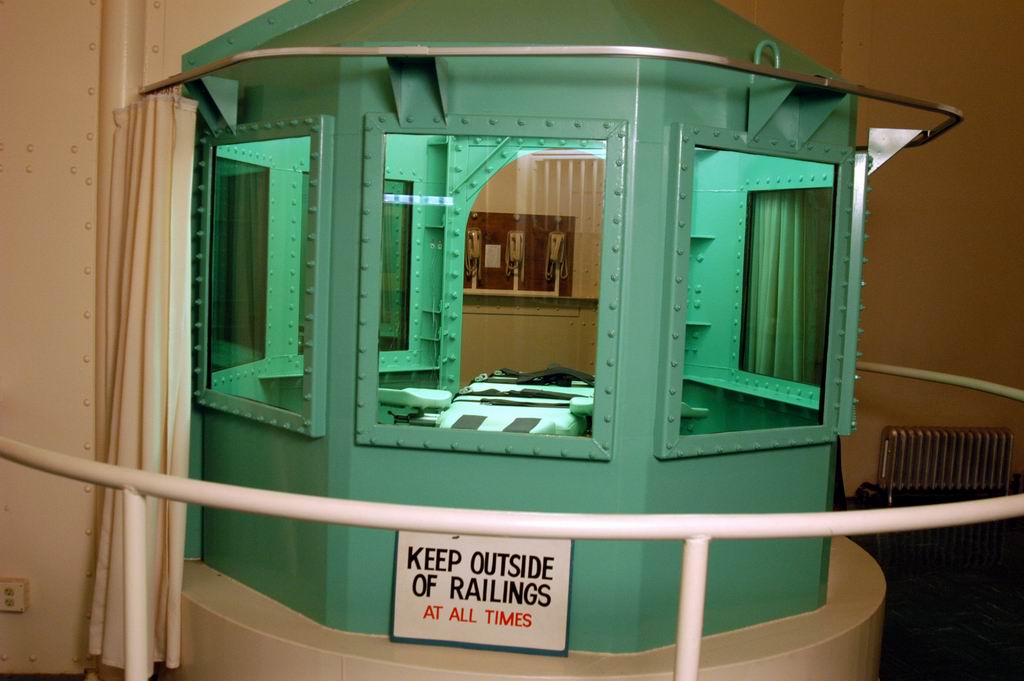
Showing posts with label California. Show all posts

Monday, July 17, 2017

The Arbitrary Execution of Tom Thompson

I knew if I wanted to see Tom one last time I had to leave for the prison soon. It was already late in the afternoon and at 6:00 pm, he would be taken from the visiting area to the death watch cell for his last meal. There he would remain until 25 minutes before midnight when he would be led to the execution chamber next door. There wasn’t anything left for me to do anyway, so I left my San Francisco office and drove over the Golden Gate Bridge to San Quentin State Prison.

The parking lot to the East Gate of the prison is just a few yards from the San Francisco Bay. Even after countless visits the contrast between the sweeping vista of the coastline and the grim reality inside the prison’s peach colored concrete walls is striking. I passed through security and walked slowly down the long path leading to the Main Visiting Room. I was let in through the two sets of heavy doors, and saw Tom, surrounded by family and close friends, presiding over a gathering that could only be described as surreal. Tom had been on death row for fourteen years, and the prison guards who knew him well seemed as traumatized as everyone else. They were overly solicitous, awkward, almost apologetic. Instead of the usual vending machine fare there was a platter of cold cuts for sandwiches and sodas on a long table. Although in a matter of hours he was going to be strapped to a gurney and lethally injected with poison, it was Tom who was trying to keep things light, with the corny jokes and over-the-top impersonations – Steve Martin as the “Wild and Crazy Guy” and Mike Myers as Austin Powers – with which I had become all too familiar.

Behind his silliness, Tom was thoroughly depleted from being the center of a spectacle that surrounded him as the fifth man about to be executed in California since the death penalty was re-instituted in 1977. A physically healthy 43 year old was going through the process of dying, and it was disorienting and  unbearably stressful. He had been enduring emotionally-charged visits from his friends and loved ones, for whom he felt the need to constantly perform. He met often with me and other members of the legal team to approve a list of execution witnesses (he was entitled to five) and to be kept abreast of last minute developments – of which there were few. He had been under 24 hour surveillance from guards for the past five days, making sleep impossible. In accordance with prison rules, he had been stripped of his “non-legal property.” He had no reading or writing material. He was denied his art supplies, which he had used for surprisingly impressive paintings over the years, including a portrait of Billy Idol he had given me a few months earlier.

We had been preparing for this moment for far too long, having gone through a similar process one year earlier when, despite a stay of execution, prison personnel proceeded methodically with its execution protocol until, with six hours to spare, they were finally assured that the Supreme Court would not disturb the stay. There was not much left to say. Tom, although hampered by waist chains, enveloped me as best he could in a big bear hug, and thanked me for all I had done. He told me that I should feel proud about putting up such a good and righteous fight. I replied that it had been an honor to have worked with him. I exchanged tearful goodbyes with his sister and mother. I walked out of the prison and returned to my office where I continued to file court papers with little chance of success and railed to reporters about injustice. All to no avail. Six minutes after midnight on July 14, 1998, Tom Thompson was dead.

*          *          *          *

Tom Thompson had no criminal record or history of violence when he was tried for the murder of Ginger Fleischli in 1984.  He was found guilty of murder and sentenced to death based largely on the false testimony of jailhouse snitches and the failure of his trial lawyer to challenge the bogus evidence of rape invented by the prosecutor.  (The rape special-circumstance provided the basis for the death penalty.)

An explosive scandal involving the Orange County D.A.'s office has only recently shed light on the extent of the unethical behavior routinely engaged in by its prosecutors to secure death sentences.  And Michael Jacobs -- the prosecutor in Tom's case -- has been revealed to be one of the more notorious.  Jacobs was fired in 2001 for insubordination and dishonesty.  The litany of his misconduct over several cases includes presenting false testimony, using unreliable informants, and hiding exculpatory evidence -- all of which he did in Tom's case.  And there was more.  Jacobs used contradictory evidence and arguments in two separate trials to convict first Tom and then Tom's roommate, David Leitch -- the victim's former boyfriend and a man with a violent past -- on inconsistent theories.  The reliability of many other Orange County cases has been called into question since the D.A. scandal broke -- and one murder conviction based on the false testimony of one of the very same snitches who testified against Tom has been reversed.  Of course, this all comes too late for Tom.

There are approximately 750 men and women on death row in California.  Tom Thompson is one of 13 who have been executed since the death penalty was reinstated 40 years ago.  While others sentenced to death around the same time languished on death row (several of whom continue to languish), his case jumped to the head of the class for no discernible reason.  And then a series of safeguards designed to ensure that the death penalty is fairly and reliably imposed -- state and federal appellate review and clemency -- completely and utterly failed. 

All death sentences in California are automatically reviewed by the California Supreme Court.  Tom's appeal was heard in 1988, two years after three liberal justices were recalled by the voters and replaced by an ultra-conservative governor with ultra-conservative justices.  The Court was thereby transformed almost overnight from one that was appropriately open to reversing cases based on meritorious claims to one that essentially rubber-stamped death penalty cases by finding virtually every error alleged in virtually every case to be harmless.  Accordingly, Tom's conviction and sentence were affirmed.

The case then moved to federal court, where in 1995, Tom's death sentence and rape-related charges were reversed based on a finding of ineffective assistance of trial counsel for counsel's inexcusable failure to adequately rebut the snitch testimony and other evidence that purported to establish rape.  The state appealed this decision to the U.S. Court of Appeals for the Ninth Circuit. 

It is not much of an exaggeration to say that the composition of the randomly drawn three-judge panel in the federal appellate courts is the most important factor in determining the life and death of a condemned inmate.  If at least two of the judges on the panel are essentially liberal, the death penalty will likely be reversed; if they are conservative it usually will be upheld. It is simply luck of the draw and, unfortunately, Tom got a very, very bad draw.  Despite what at the time was a majority of liberal judges on the Ninth Circuit, all three judges on Tom’s panel were extremely conservative Reagan appointees.  It was therefore not surprising -- but wholly arbitrary -- when the panel reversed the district court's ruling in 1996.

To mitigate such arbitrariness is another important safeguard -- en banc review, in which an 11-judge Ninth Circuit panel has the option to review a 3-judge panel's ruling.  Court papers were filed requesting rehearing en banc, which can only be granted after one of the active judges who sits on the Ninth Circuit calls for a vote and a majority of those judges then vote in favor of rehearing. Given the number of liberal judges on the Ninth Circuit at that time it would be unusual for there not to at least be one judge calling for a vote in a death penalty case.  However, on March 6, 1997, an order issued stating that the request for en banc review was denied because not one judge asked for a vote to rehear the case. After the U.S. Supreme Court denied review, an execution date was set for August 5, 1997. 

In the months that followed, evidence surfaced that corroborated Tom's long-standing version of events -- that he and the victim had consensual sex on the night of her death.  This included a statement from Tom's roommate, David Leitch, that was never turned over to the defense.  Such evidence completely undermined the prosecutor's rape-murder theory and called into question the credibility and integrity of the prosecutor's entire case.   Unfortunately, presenting this new evidence was severely hampered by a federal law that had just been enacted in the wake of the Oklahoma City bombing.  The Anti-Terrorism and Effective Death Penalty Act of 1996 ("AEDPA") was designed to thwart "frivolous appeals" but it cast far too wide a net and created virtually insurmountable hurdles to presenting new claims in federal court.  Another problem was that the federal judge who had originally granted relief had passed away and the case was assigned to a far more conservative judge who was completely unreceptive to this new evidence and rejected the claim. 

Another purported safeguard is clemency, a process in which the governor is empowered to act when the judicial system breaks down.  No California governor since Ronald Reagan, however, has seen fit to grant clemency in a capital case, and in Tom's case, Governor Pete Wilson proved no exception. Despite powerful and emotional pleas from family and loved ones, the lack of any prior criminal history, testimonials from prison guards about Tom's exemplary conduct at San Quentin, and serious doubts raised regarding the fairness of the trial and the subsequent judicial proceedings, Wilson denied clemency.  He ultimately based his decision on nothing more than a determination that Tom could not prove his innocence ("But at the end of it all, I am absolutely confident that he raped and murdered Ginger Fleischli").

On August 3, 1997, one night before Tom's execution was scheduled to take place, an 11-judge en banc panel of the Ninth Circuit issued a dramatic order.  The court explained that it was taking the highly unusual step of ruling after its earlier denial of review because of “exceptional circumstances” caused by a malfunction in the court’s review process -- a glitch in the court's communication system that resulted in the failure of any judge voting to review the case en banc the first time -- and because “we are convinced that the panel committed fundamental errors of law that would result in a manifest injustice.” The Ninth Circuit then vacated the three-judge panel opinion, and reversed the death sentence, holding that trial counsel's ineffectiveness was prejudicial and that the prosecutor’s use of fundamentally inconsistent theories at Tom and David’s separate trials was fundamentally unfair.

The state sought review in the U.S. Supreme Court, while the prison proceeded with its execution protocol.  With six hours to spare, the Supreme Court refused the state's invitation to summarily reverse the Ninth Circuit and allow the execution to go forward.  But it did agree to hear the state's appeal on December 9, 1997. 

The grand stairway of 53 steps, the massive Corinthian marble columns, the grandeur of the Great Hall, and all the pomp and circumstance attending the Supreme Court are surely designed to give lawyers a sense of awe and wonder as they go through the red-curtained entrance into the courtroom and sit just a few short feet from the nine justices.  One comes completely down to earth, however, as it becomes clear that at least a majority of those justices intend to make sure one’s client is executed. This seemed like a foregone conclusion in Tom’s case. When the high court decides to intervene in a Ninth Circuit case that has reversed a death sentence it is usually not to approve its ruling.  And thus, another safeguard proved ephemeral.  On April 29, 1998, by a bare 5-to-4 majority, the Court reversed the Ninth Circuit and ordered it to reinstate Tom's death sentence. Justice Kennedy (a former Ninth Circuit judge, himself) wrote the majority opinion, finding a “grave abuse of discretion” in the Ninth Circuit’s handling of  the case, and stressed the importance of “finality” of state judgments. Thus, even though Tom was not at fault, the Court rejected Tom’s claims on the technicality that the Ninth Circuit had waited too long to grant en banc review.  The Court never even addressed the validity of Tom’s substantive claims.  A new execution date was set for July 14, 1998.

The last hope was the separate appeal of the federal judge's rejection of the newly discovered evidence of innocence.  The case was heard by the same en banc panel that had granted relief earlier, but the court was no longer receptive.  It seemed chastened by the lashing it had received by the Supreme Court and shackled by the barriers to relief imposed by AEDPA.  At 11:00 p.m., on July 11, 1998, the court denied relief. Tom was executed two nights later.


*          *          *          *

Tom Thompson was represented by a trial lawyer who failed to take the steps required to afford minimally competent representation in a capital case. He was convicted and sentenced to death in a county where a cynical prosecutor could pick and choose among jail inmates who were willing and able to manufacture evidence to support the prosecution’s theory of the case. His death sentence was affirmed by a state court that at the time refused to meaningfully review death penalty cases. Relief in federal court was first denied because he unluckily drew a conservative panel and later because of legal technicalities that had nothing to do with the merits of his claims. Despite obtaining new evidence that suggested he was innocent, Tom was precluded from obtaining a new trial because of insurmountable legal procedures and the paramount importance of closure. 

Almost twenty years later, poor defense lawyers, unsavory prosecutors, disinterested courts and impenetrable procedural hurdles remain all too common elements in capital cases.  They are inherent aspects of an irreparably broken system.  Apart from the barbarity of the death penalty, the absence of meaningful safeguards to ensure that death sentences are not unreliably and arbitrarily imposed and carried out should be deeply disturbing to anyone who cares about fairness and justice. 


Meanwhile, here in California, the state supreme court is weighing whether to implement vote-approved Proposition 66, a cynical initiative that would do absolutely nothing to address the root problems with California's death penalty – arbitrariness and unreliability -- the problems which led to Tom Thompson's execution.  Worse, it would further undermine the already tenuous ability of the legal system to ensure that death sentences are fairly and consistently imposed and that innocent men and women are not executed.  If the challenges to Proposition 66 are rejected, it will pave the way for more Tom Thompsons.

(Originally published on December 18, 2015; here are other pieces on Tom Thompson -- My Opposite and  Final Hours)

Wednesday, September 21, 2016

California's Death Penalty Cannot Be Reformed; It Must Be Replaced: Yes on 62 And No on 66

Voters have an opportunity to finally put an end to California's failed experiment with the death penalty by passing Proposition 62, and replacing it with a sentence of life without the possibility of parole.

The history of California's death penalty is like a dystopian Goldilocks and the Three Bears story.  Its original death penalty law, codified in the late 1800s, was too hot -- with no guidelines for how or under what circumstances to impose death, it gave juries too much discretion.  It was struck down as unconstitutional in 1972. The next version was too cold -- taking the opposite approach with a mandatory death sentence that automatically imposed death when a defendant was found guilty of first degree murder, it provided for no discretion at all.  That law was found unconstitutional too. But unlike with Goldilocks, the death penalty scheme passed by California voters in 1978 -- the present law -- is far from just right.

As recently described in a Los Angeles Times editorial, California's death penalty is a "dysfunctional mess."  It has proven to be ineffective, unreliable and arbitrarily applied.  And it cannot be fixed. 

Among the many problems with California’s death penalty is that it leaves far too much power in the hands of individual prosecutors in individual county district attorney’s offices to decide which cases are "death worthy."  Indeed, one of the critical factors that determines who receives a death sentence is not the nature of the crime or record of the defendant but a wholly arbitrary one -- the county in which the crime happens to have been committed.  Remarkably, there are only a tiny fraction of counties -- sixteen -- in the entire country that account for most current death sentences, and five of them are here in California (Los Angeles, Orange, Riverside, San Bernardino and Kern). 

Another factor leading to arbitrariness is the quality of the defense team.  It has long been understood that the death penalty is generally reserved for those with the worst lawyer, not those who commit the worst crimes.  Defendants who are represented at trial by experienced, well-trained capital defense attorneys, particularly in public defender offices, are far less likely to get the death penalty than those represented by private lawyers who often suffer from conflicts of interest when it comes to spending time and money on developing a defense.  The differences are stark.  In Los Angeles, for example, thirty defendants represented by private attorneys have received a death sentence compared with four represented by public defenders. 

And, one can't talk about the systemic problems with the death penalty without talking about race.  It is simply a reality that one who kills a white person is far more likely to be subject to the death penalty than one who kills a person of color.  Add the ability of prosecutors to use peremptory jury challenges to strike African Americans and Latinos from juries, and the fact that most judges and prosecutors in counties where the death penalty is most frequently sought are white, and we are left with a system that is plagued by racial bias.

In sum, California’s current death penalty has proven to be an arbitrary and unreliable government program that has cost taxpayers $5 billion dollars while resulting in "just" thirteen executions – none in the past ten years.  All the while, 746 men and women languish on the largest death row in the country – a volume of death sentences that has clearly overwhelmed the judicial system. 

There are two death penalty initiatives on November’s ballot:  Proposition 62 will repeal the death penalty while Proposition 66 purports to reform it.

The backers of Proposition 66 are pushing another fairy tale.  In reality, Proposition 66 would take a broken system and make it worse by shifting the costs and burdens to ill-equipped lower courts and unqualified attorneys. It purports to speed up appellate review of death sentences by adding new bureaucratic layers to the process -- saddling local trial courts with the responsibility of adjudicating capital appeals and forcing attorneys with no experience with capital cases to take them.  A recent San Francisco Chronicle editorial called Proposition 66 a “highly complex, probably very expensive and constitutionally questionable scheme.”

Proposition 66 would do nothing to address the root problems with California's death penalty – ineffectiveness, arbitrariness, racial bias and unreliability. 

And even worse, Proposition 66’s proposed changes would actually slow down, not speed up, an appellate process that already takes 25 years or more. The nearly 750 people on death row are all entitled to qualified attorneys to handle their post-conviction challenges -- but there are simply not enough lawyers ready and, more importantly, able to do so.  But the answer isn't lowering the bar for the appointment of hundreds of untrained attorneys and increasing the number of courts that can consider challenges as Proposition 66 would do.  This would only lead to more problems, more delay and more unreliability -- and more costs.

And even assuming Proposition 66 could miraculously speed up the first part of the appellate process in state court, there is a second layer of mandated review in federal court after the state process concludes -- another bottleneck in which over 200 of California death row inmates are seeking review (a number that is itself larger than just about every other state's death row).  Proposition 66 does nothing to address the delays in federal court – and thus the delays in the system overall -- because California voters can’t set rules for the federal post-conviction process.

The Los Angeles Times described Proposition 66 as “a menu of mostly distasteful ideas” that is unlikely to “achieve the kind of fast-tracking” its proponents promise while likely to make the system “even more expensive.” It would undermine the already tenuous ability of the legal system to ensure that death sentences are fairly and consistently imposed and that innocent men and women are not executed.  This attempt at streamlining justice will simply not fix the intractable flaws of California's death penalty.

Proposition 62 provides a simple, commonsense solution to an unfixable death penalty system.  Replacing the death penalty with life without the possibility of parole, according to the non-partisan Legislative Analyst’s Office, will save taxpayers $150 million every year.  More importantly, Proposition 62 will finally put an end to this risky, discriminatory, arbitrary and dysfunctional mess. 

To volunteer, donate and/or learn more about Prop 62, click here. 


[Read more:  The Arbitrary Execution of Tom Thompson;  Another Poster Child For California's Dysfunctional Death Penalty]

Monday, April 4, 2016

The Unnatural Death Of Bernard Hamilton


After 35 years on death row, Bernard Hamilton died of "natural causes" at the age of 64.  How profoundly messed up is our system of criminal justice that I could even write such a sentence?  What an enormous waste of judicial resources.  What an enormous waste of taxpayer money.  What an enormous waste of time, emotion and hard work for the countless people who have tried to kill him and for those who tried to save him. 

California's death penalty system is so dysfunctional that even after 35 years, issues regarding the reliability of his conviction and the fairness of his death sentence have not been resolved.  And now they never will be because Bernard Hamilton has died of "natural causes" at the age of 64.

What madness.
 
In 1981, Bernard Hamilton was found guilty of the murder of a woman named Eleanore Buchanan and sentenced to death.  Although the facts of the crime are quite gruesome, the trial itself was a travesty.  (Most notably, Bernard was shackled throughout the trial, originally at his own lawyer's suggestion, calling into question both whether his lawyer could possibly represent him impartially and whether the jury would view him as anything but uncontrollably dangerous.) 

In the early 1990s, as a relatively young lawyer, I was assigned to work on Bernard's case.  By then, there had already been several dramatic twists and turns that were not untypical of the death penalty post-conviction process in California.

In 1985, the California Supreme Court reversed Bernard's death sentence because the jury was never instructed that it had to find an intent to kill before finding him eligible for the death penalty.  (The jury had found him guilty of intent to rob and kidnap, but not that the murder itself was intentional.)  The U.S. Supreme Court vacated that decision and sent the case back to the California Supreme Court for reconsideration.  Unfortunately by the time the case returned, the California Supreme Court's three liberal justices, including Chief Justice Rose Bird, had been recalled and replaced with three extremely conservative justices.  Not surprisingly, the newly transformed court reinstated Bernard's death sentence.

After state court remedies are exhausted, challenges can be made in federal court and that is where I became involved.  Ultimately, in 1994, we were able to win a reversal of Bernard's death sentence based on another instructional error.  The federal appellate court (The Ninth Circuit) agreed that the jury sentenced Bernard to death after having been misled about the likelihood that the governor could commute his sentence if the jury gave him LWOP instead of death.  (In fact, the governor did not have the power to do so.)

The San Diego District Attorney did not have to seek another death sentence.  Had he done nothing, Bernard would have been sentenced to LWOP.  Even back then, Bernard was in very poor physical health and showed signs of serious mental illness.  And despite the fears that led to his shackling during the first trial, Bernard had been a model prisoner in his years on the row.  But the D.A. sought death again, and Bernard was retried in 1995.  Remarkably, despite his impairments, he was permitted to represent himself and was again sentenced to death.  It took another 14 years for the California Supreme Court to review and uphold his death sentence on appeal.  Substantial challenges to his conviction and sentence were pending when he died. 

In 2008, the California Commission for the Fair Administration of Justice (CCFAJ), after its extensive study of the state's death penalty system, concluded that the process for reviewing death sentences was “plagued with excessive delay” in the appointment of post-conviction counsel and a “severe backlog” in the California Supreme Court's review.  Since the publication of this report, it has only gotten worse.  For the reasons explained here, California's death penalty scheme is irrevocably broken and the delay is due to the inherently dysfunctional nature of the process.

U.S. Court of Appeals Judge Arthur L. Alarcon and law professor Paula Mitchell  co-authored a ground-breaking study in 2011, concluding that "since reinstating the death penalty in 1978, California taxpayers have spent roughly $4 billion to fund a dysfunctional death penalty system that has carried out no more than 13 executions."  A year later, an updated study revealed that "if the current system is maintained, Californians will spend an additional $5 billion to $7 billion over the cost of LWOP to fund the broken system between now and 2050. In that time, roughly 740 more inmates will be added to death row, an additional fourteen executions will be carried out, and more than five hundred death-row inmates will die of old age or other causes before the state executes them."

There are currently nearly 750 men and women on California's death row.  Like Bernard, they are far more likely to die of natural causes than to be executed.  Indeed, since 1978, 70 condemned inmates have died from natural causes and 8 from other causes.  25 have committed suicide.  13 have been executed.

What madness.

California's death penalty is a costly government program that doesn't work and can't be fixed.  But it can be replaced.  Headed for the ballot in 2016 is the Justice That Works initiative to replace the death penalty with LWOP - - and require defendants sentenced to LWOP to work in prison, with 60% of their wages going to victim restitution.  A Legislative Analyst's Office has determined that replacing the death penalty with LWOP would save California $150 million a year, by reducing the costs of trials and subsequent appeals.

To find out more, to volunteer and/or to donate click on this link:  Justice That Works.

[See also The Arbitrary Execution of Tom Thompson]

Monday, November 23, 2015

California's Dysfunctional Death Penalty Can't Be Fixed

California's death penalty scheme is a costly government program that doesn't work.  The approximately 750 men and women on death row are far more likely to die of natural causes than be executed.  Their legal claims, if considered at all, take roughly three decades to resolve, an excruciatingly long period of time that is due to the inherently dysfunctional nature of the process and not, as is commonly believed, from frivolous claims raised by zealous lawyers taking advantage of the process.

Paula Mitchell, a professor at Loyola Law School, recently published an article, Frivolity and the Death Penalty, demonstrating that the inordinate delay in death penalty cases is in large part caused by the adversarial nature of the system itself where "prosecutors . . .  typically do everything within their power to forestall or prevent discovery in post-conviction investigations, which is often what is needed during the appeals process to ensure that everyone has been playing by the rules."

Professor Mitchell's piece focuses on the Georgia case recently argued in the U.S. Supreme Court involving the prosecutor's use of juror challenges to strike all the African Americans from serving on the jury. As Mitchell explained, the case took close to thirty years to be heard because of the resistance of the prosecution to provide their files -- files which, when finally handed over twenty years after trial, appear to undermine the race-neutral reasons that were originally proffered for striking the jurors. 

The obstacles to obtaining critical information about the homicide, the police investigation and the trial from the prosecution (as well as from law enforcement) is certainly not unique to Georgia. Take Kenneth Clair, an African American languishing on death row for an Orange County murder that took place in 1984, where the lone eyewitness claimed the killer was white.  More than 30 years later, his lawyers are still fighting to obtain evidence in possession of the prosecution, including DNA results that could establish the identity of the actual perpetrator.

Delay caused by the resistance from prosecutors comes not only from their multi-faceted attempts to deny or at least narrow the requests for their files.  The California Attorney General also relies on a remarkably Byzantine post-conviction process, using every possible procedural loophole to avoid litigating the cases on their merits that results in years and years of delay.

For example every claim raised in post-conviction must be "exhausted' in state court before it can be presented in a habeas corpus petition in federal court.  However, the California Supreme Court is notoriously stingy when it comes to funding investigation and expert assistance so that it is often only once a case moves from state court into federal court that attorneys are able to develop critical evidence.  But if a federal claim includes even one newly discovered fact to strengthen it, the AG will insist that the case return to state court for exhaustion purposes rather than litigate the claim's underlying merits.  Then, after such claims are denied in state court -- which eventually and inevitably they are -- and the case returns to federal court, the AG will launch a new series of procedural arguments having nothing to do with the claim's substance as a basis for dismissal.

This is just one example of the countless ways the prosecution uses extremely complicated provisions to endlessly litigate procedural issues that have nothing to do with the ultimate issues of the case.  And because of this complexity and the many pitfalls waiting for an unwary attorney -- deadly pitfalls which can lead to the wholesale waiver of critical claims -- only attorneys with specialized knowledge and experience can be qualified to represent death row inmates on appeal and in post-conviction habeas proceedings.  But given the extensive training needed, the decades-long commitment, the stressful and high-stakes nature of litigating life and death issues, and the intensity of having to identify every potentially viable claim while struggling to obtain adequate funding, there is hardly a plethora of attorneys willing and, more importantly, able to do so.  And most of those who are willing and able already represent several of the vast number of inmates already on death row and are understandably reluctant to take on any more cases. 

This provides an additional basis for delay.  Indeed, after an inmate is sentenced to death in California it takes more than five years to find a qualified lawyer to handle the appeal (involving issues that arise from the trial itself) and several more years to find one to handle the habeas corpus proceedings (involving issues that must be independently and painstakingly investigated). 

Professor Mitchell, it should be remembered, co-authored a ground-breaking study in 2011, concluding that California's death penalty system was costing the state about $184 million per year.  The study found  that "since reinstating the death penalty in 1978, California taxpayers have spent roughly $4 billion to fund a dysfunctional death penalty system that has carried out no more than 13 executions."  A year later, an updated study revealed that "if the current system is maintained, Californians will spend an additional $5 billion to $7 billion over the cost of [life without possibility of parole] to fund the broken system between now and 2050. In that time, roughly 740 more inmates will be added to death row, an additional fourteen executions will be carried out, and more than five hundred death-row inmates will die of old age or other causes before the state executes them."

Delay is an inherent part of capital litigation.  For the foregoing reasons and particularly in California, where virtually every homicide is eligible for the death penalty -- resulting in the largest death row in the country -- a fair, just and reliable review of death sentences is incompatible with a speedy, expedited process. 

California's death penalty can't be fixed; but it can be replaced with life without possibility of parole ("LWOP").  An initiative to do just that - - and that would require defendants sentenced to LWOP to work in prison, with 60% of their wages going to victim restitution -- may be headed for the ballot in 2016.  A Legislative Analyst's Office has determined that replacing the death penalty with LWOP would save California $150 million a year, by reducing the costs of trials and subsequent appeals.

On the other hand, a pro-death penalty group calling itself Californians for Death Penalty Savings and Reform has proposed its own ballot measure that clumsily attempts to solve the system's intractable problems without dealing with any of the root issues.  It would expand the pool of attorneys available to represent death row inmates and decentralize and streamline the process once attorneys are assigned.  Nothing in the proposal would provide funding to train this new group of lawyers.  And the so-called streamlining would not ease the procedural quagmire that causes so much of the delay.  Nor would it address the prosecution's resistance to providing its trial files.  What it would do is shorten the time to investigate and present claims, and limit possible avenues of revenue.  It thus promises to speed things up while providing less review and less skilled and experienced lawyers to navigate an impossibly complex process.  What could go wrong?

Friday, February 13, 2015

California's Death Penalty, Like Pennsylvania's, Is "Ineffective, Unjust And Expensive" (Only Moreso)

Governor Tom Wolf has imposed a moratorium on executions in Pennsylvania pending review of a task force report, stating that capital punishment “has been proven to be ineffective, unjust, and expensive."  Pennsylvania has 186 inmates on death row, and has executed three men since the death penalty was reinstated.  Former federal judge Timothy K. Lewis, who consulted with the Governor regarding the power to impose a moratorium stated that "at a minimum, we must take a step back to examine the effectiveness of a system fraught with racial disparity, constant reversals, and the infinite warehousing of prisoners who await a punishment that hasn't been imposed in our State in 15 years."

California has strikingly similar problems but on a far larger scale. Death sentences are more likely to be imposed not based on the severity of the crime but on race, county and the effectiveness of defense counsel. Approximately 750 men and women languish on death row for decades, costing taxpayers billions of dollars. There have been 13 executions since the reinstatement of our death penalty in 1977, and none since 2006. 

One difference from Pennsylvania is that California's scheme has been extensively studied and its dysfunction conclusively established.  In 2008, the bipartisan California Commission for the Fair Administration of Justice (CCFAJ) issued its report which found California's death penalty is “plagued with excessive delay.” According to CCFAJ's report, the lapse of time from sentence of death to execution constitutes the longest delay of any death penalty state and “most California death sentences are actually sentences of lifetime incarceration.  The defendant will die in prison before he or she is ever executed.”  At bottom there are just too many cases and not enough qualified lawyers to handle them.

Those findings were made seven years ago and the problems have only worsened.  More recently, U.S. District Judge Cormac J. Carney held in one capital case that the administration of California's death penalty is irrevocably dysfunctional, resulting in systemic delays in which only the "random few" are executed in violation of the Eighth Amendment’s prohibition against cruel and unusual punishment.  (This ruling is currently under appeal.)  Of the over 900 people that have been sentenced to death, 13 have been executed, 94 have died of other causes.  The process for reviewing their death sentences takes an average of 25 years and is getting longer -- delays, as the court found, that are inherent in the system and not the fault of inmates themselves.

In 2011, an extensive study headed Judge Arthur Alarcon determined that California's death penalty system has cost taxpayers roughly $4 billion "to fund a dysfunctional death penalty system."  But despite these vast expenditures, the current Chief Justice of the State of California
Tani Cantil-Sakauye acknowledged, the death penalty is not effective and fixing its problems would require "structural changes" that the State cannot afford.

Governor Wolf joins the governors of Washington, Oregon and Colorado who, recognizing the inherent flaws in their capital punishment systems, have issued moratoriums in recent years.  Eighteen other states have abolished the death penalty outright.  It is well past time that California follows suit and replaces the death penalty with a more effective, just, less costly -- and more humane -- system.

Tuesday, July 22, 2014

An Open Letter To Kamala Harris

Dear Madam Attorney General:

I write to urge you to not appeal Jones v. Chappell, the recent federal court decision holding that the administration of California's death penalty is irrevocably dysfunctional, resulting in systemic delays in which only the "random few" are executed in violation of the Eighth Amendment’s prohibition against cruel and unusual punishment. 

As U.S. District Judge Cormac J. Carney found, of the over 900 people that have been sentenced to death since the adoption of the death penalty in 1978, 13 have been executed, 94 have died of other causes.  There are currently 748 death row inmates. The process for reviewing their death sentences takes an average of 25 years and is getting longer -- delays, as the court found, that are inherent in the system and not the fault of inmates themselves.

I had the good fortune of meeting you in 2007, at a Death Penalty Focus Awards Dinner when, as San Francisco District Attorney, you were given the Mario Cuomo Acts of Courage Award for declining to authorize death penalty prosecutions. 

Subsequently, when you campaigned for Attorney General, you acknowledged that California's death penalty system is flawed.  You argued that the death penalty has not made us safer and that the money spent every year on the death penalty could be far more productively used to fund programs which aim to stop recidivism. As you put it, "not housing octogenarians on Death Row could put 1,000 more cops on the street."

I imagine as Attorney General you now have an even clearer sense of how broken and how costly the death penalty is.  As the bipartisan California Commission on the Fair Administration of Justice found, the system continues to be "plagued with excessive delay in the appointment of counsel" and "a severe backlog in the review" of cases before the California Supreme Court.  

An extensive study headed Judge Arthur Alarcon determined that California's death penalty system has cost taxpayers roughly $4 billion "to fund a dysfunctional death penalty system that has carried out no more than 13 executions."  But despite these vast expenditures, the current Chief Justice of the State of California Tani Cantil-Sakauye acknowledged, the death penalty is not effective and fixing its problems would require "structural changes" that the State cannot afford. Her predecessor, Ron George, who was Chief Justice for 15 years, came to the same conclusion, describing California's death penalty scheme as "dysfunctional."

The infrequency of executions and the randomness with regard to which condemned inmates actually will be executed have made a mockery of the supposedly rational justifications for the death penalty – deterrence and retribution.  In a well-reasoned and well-documented opinion, a federal judge has now agreed:  "For all practical purposes ... a sentence of death in California is a sentence of life imprisonment with the remote possibility of death -- a sentence no rational legislature or jury could ever impose."

As Attorney General, representing the People of California, you have a duty to enforce and apply the law.  But where a court has found that law to be unconstitutional, you are well within your discretion to abide by the court's decision.  By not appealing a ruling that confirms what you have long stated -- that California's death penalty is broken -- you will again be taking the kind of principled position for which you were honored when we met years ago and for which you are so admired.


(Related post:  California's Cruel and Unusual Death Penalty)

Saturday, February 15, 2014

The Death Penalty's Death Rattle

Three Ex-California Governors

Popular support for the death penalty has fallen significantly.  Six states have repealed it over the last six years, leaving 32 states with the death penalty on their books.  In three other states, most recently in Washington, governors have imposed moratoriums on executions.  The rate of executions around the country is rapidly declining and imposition of death sentences is at a historic low.  Meanwhile ever more exonerations are showing deep flaws in the criminal justice system  Evolving standards of decency, indeed.

Meanwhile, those still clamoring for the death penalty are making gruesome spectacles of themselves.  With pharmaceutical companies balking at having their products used in executions, there is a nationwide shortage of the drugs formerly used for lethal injection -- drugs which were combined in a cocktail already fraught with serious problems.  This has led officials in various states to call for a return to the firing squad or gas chamber, or more commonly to act like junior chemists, cobbling together their own unregulated and untested lethal combinations.  Inevitably, on January 16, 2014, Dennis McGuire was executed in Ohio with a new drug protocol that resulted in an agonizing fifteen minute ordeal in which McGuire gasped, choked  and struggled before dying.  While Ohio's governor ordered a stay for the next scheduled inmate to allow for further review of the state's procedures, other states are moving forward with their own experiments -- some of which are being halted by the courts and some aren't.

And then there is California, where three miserable former Governors just announced a proposed ballot initiative designed to speed up the death penalty appeals process.  Having apparently not done enough damage while they were in office, George Deukmejian, Pete Wilson and Gray Davis, are backing a measure that will do nothing to address a hopelessly dysfunctional system that has cost taxpayers $4 billion, but is sure to add more delay, more costs, and more unreliability.

Morality aside, the arbitrariness of the death penalty is one of its more disturbing and intractable problems. Death sentences are not imposed on the so-called worst of the worst.  Far more significant factors in determining who gets a death sentence are the quality of the lawyers, the geographic location of the crime, and the race of the perpetrator and victim.   

This new initiative would exacerbate these problems. It would limit state appeals for death row inmates to five years where now it takes at least that long to appoint a qualified lawyer willing and able to take on such cases.  Another brilliant idea is to bypass the California Supreme Court which now hears all death penalty appeals directly and spread the cases to the lower courts of appeal around the state -- a state which already possess a gross geographical imbalance with virtually all death sentences coming from the south.

The thrust of the ballot measure would thus be to speed up and decentralize the process, limit avenues of review, and provide less skilled lawyers.  What could go wrong?

The fundamental problem, of course, is that California's death penalty system is broken beyond repair.  It is costly, arbitrary, discriminatory, and unworkable.  With over 700 inmates on death row, it serves no useful purpose while diverting needed resources from true public safety programs.  An initiative to replace the death penalty with life without parole and thereby not only move towards a more just and sane justice system but save millions of dollars every year barely lost in November 2012.  A similar effort is sure to be successful in the near future.

In the meantime, like a macabre game of whack-a-mole, we need to beat down these destructive proposals when they appear, and refocus on meaningful criminal justice reforms including an end to the death penalty.  Click here to join the fight. 

Friday, June 29, 2012

California's Cruel And Unusual Death Penalty 40 Years And $4 Billion After Furman v. Georgia

San Quentin State Prison
40 years ago today, the United States Supreme Court decided Furman v. Georgia, which struck down existing death penalty laws as unconstitutional in violation of the Eighth Amendment's cruel and unusual clause.  California's death penalty was quickly reinstated.

Attempting to comply with Furman, the new statute made the death penalty mandatory for certain first degree murders and other crimes.  But in 1976, the U.S. Supreme Court struck down death penalty laws that provided for mandatory death sentences. The California Supreme Court, relying on the high court's ruling, once again found the state's statute to be unconstitutional.

Undeterred, the California legislature passed a new death penalty law in 1977.  This was followed in 1978 by a ballot proposition, known as the Briggs Amendment, which was similar but more expansive version that sought to encompass more -- virtually all -- categories of murder (including unintentional murders committed during certain felonies).  Briggs passed and it is the law we are living with, so to speak, today.   

Forty years after Furman: $4 billion dollars, over a thousand death sentences, over 720 currently on death row, and 13 executions, none since January 2006.

Tani Cantil-Sakauye, after one year as the Chief Justice of the State of California, has concluded that the state's capital punishment system is "not effective" and requires "structural changes" that the State cannot afford.  Her predecessor, Ron George, who was Chief Justice for 15 years, came to the same conclusion, describing California's death penalty scheme as "dysfunctional."

An extensive study by Arthur Alarcon, long-time judge of the Ninth Circuit Court of Appeal, who, together with law professor Paula Mitchell, determined that California's death penalty system is currently costing the state about $184 million per year.  They concluded that "since reinstating the death penalty in 1978, California taxpayers have spent roughly $4 billion to fund a dysfunctional death penalty system that has carried out no more than 13 executions."

Justice Byron White observed in Furman that:
When imposition of the penalty reaches a certain degree of infrequency, it would be very doubtful that any existing general need for retribution would be measurably satisfied.  Nor could it be said with confidence that society’s need for specific deterrence justifies death for so few when for so many in like circumstances life imprisonment or shorter prison terms are judged sufficient, or that community values are measurably reinforced by authorizing a penalty so rarely invoked.” 
The infrequency of executions and the randomness with regard to which condemned inmates actually will be executed have made a mockery of the supposedly rational justifications for the death penalty.  In addition, given the current backlog and the serious problems identified by the California Commission for the Fair Administration of Justice (CCFAJ) -- problems that would require an enormous influx of state funds to fix -- it simply is not possible that defendants who are only now being sentenced to death will have their death sentences carried out.  Because it is “so wantonly and so freakishly” used, California’s death penalty has become a wholly arbitrary punishment in the same sense as the death penalty laws that were struck down in Furman.

Justice Potter Stewart famously characterized the Texas and Georgia statutes at issue in Furman as being “cruel and unusual in the same way that being struck by lightning is cruel and unusual.”  What he meant was that of all those who committed death eligible crimes, the petitioners were “among a capriciously selected random handful upon whom the sentence of death has in fact been imposed . . . [and] the Eighth and Fourteenth Amendments cannot tolerate the infliction of a sentence of death under legal systems that permit this unique penalty to be so wantonly and so freakishly imposed.”

Application of Furman’s benchmark for determining arbitrariness demonstrates that only a “capriciously selected random handful” of death-sentenced inmates in California will actually be executed.  A new death row prisoner would have to get in line behind 720 condemned inmates.  He or she would then have to wait years for appointment of appellate counsel (currently a 5 year wait) and even longer for the appointment of state habeas counsel (8-10 years).  Even after these lawyers are appointed and appellate briefs and habeas petitions are filed, the case will not be heard and decided before the several hundreds of cases that have preceded it.  And then, after all this time and expense, the California Supreme Court, in virtually every case regardless of the merits, will uphold the death sentence.   Then the case moves on to federal court, which has its own backlog, and often requires new counsel, with proceedings currently averaging over six years in district court followed by over four years of appellate review. 

Justice White noted in Furman that where the “penalty is so infrequently imposed that the threat of execution is too attenuated to be of substantial service to criminal justice” it is unconstitutional.  As he stated, when the death penalty “ceases realistically to further [the social ends it was deemed to serve] . . .  its imposition would then be the pointless and needless extinction of life with only marginal contributions to any discernible social or public purposes.  A penalty with such negligible returns to the State would be patently excessive and cruel and unusual punishment violative of the Eighth Amendment.”

We have far surpassed this point in California.

The SAFE California Act is on the November ballot.  If it passes it would replace California's multi‑billion dollar death penalty with life imprisonment without parole and require those convicted of murder to work and pay restitution to victim families through the victim compensation fund.  It would also set aside $100 million in budget saving for local law enforcement for the investigation of unsolved rape and murder cases.

Please join the effort to replace the death penalty by clicking here:  SAFE California.

Wednesday, May 16, 2012

Since When Don't We Put A Price Tag On Justice?

By Ty Alper, cross-posted from Huffington Post

Faced with unassailable evidence that the death penalty in California costs hundreds of millions of dollars per year, death penalty supporters tend to respond with what is intended to be a conversation stopper: "You can't put a price tag on justice."

But wait a minute. Don't we already? Only in a world with unlimited resources could we run government programs with no regard for their price tags. Unfortunately, that is not where we live today. Consider Governor Jerry Brown's latest budget proposal as reported by the New York Times:
Struggling to contain mounting state budget shortfalls, Gov. Jerry Brown on Monday proposed $8.3 billion in spending cuts, including slashing state employees pay and spending on social programs and prisons. He warned that California would have to impose another $6 billion in cuts on public schools and higher education if voters fail to approve his initiative this fall to raise sales and income taxes.
My kids go to public school in California and I teach at a public law school. I would love to be able to say, "You can't put a price tag on an education." But that would be ridiculous. It happens all the time.

The implication in the death penalty context, of course, is that only the most heartless among us would relish telling the mother of a murder victim that the person who killed her child is not going to be executed because, well, it just costs too much.

But here's what we need to remember: about half of all rapes and murders in California go unsolved. A 2009 survey asked law enforcement officials what interfered with effective law enforcement. The number one answer was lack of resources. (Last on the list was "insufficient use of the death penalty.") Thousands of rape kits across the state sit unexamined, because there is no money to conduct DNA testing.

The victims of unsolved murders and rapes are no less deserving of justice than the victims of solved crimes. The SAFE California initiative that will be on the ballot in November would eliminate the death penalty, save $1 billion that we desperately need over the next five years, and create a "$100 million fund to be distributed to law enforcement agencies to help solve more homicide and rape cases."

The next time you hear someone say that you can't put a price tag on justice, ask them if they would say the same thing to the family members of victims of the 1,000 murders that go unsolved in California each year.

I'd love to live in a California with no price tags. Until then, the price tag on the death penalty is busting our state's budget.

Ty Alper is an assistant clinical professor of law at the University of California, Berkeley, School of Law.

Tuesday, April 24, 2012

It's Official! The Initiative To Replace California's Death Penalty Qualifies For The November Ballot

The SAFE California Act, the initiative to replace California's multi-billion dollar death penalty with life in prison with no possibility of parole, has qualified for the November ballot.  This is epic.

With a death row population over 720, it is undisputed that California's death penalty system is broken beyond repair.  Despite over 30 years of sentencing more and more people to death, only about 1% of them have actually been executed –  a total of 13 executions since 1978, and none since 2006. It is a costly (an exhaustive study concluded that "California taxpayers have spent roughly $4 billion), time-consuming, unreliable and unworkable system that serves no useful purpose. Meanwhile, it drains judicial resources and diverts much-needed funds from truly effective public safety programs.

When it passes, SAFE California will require those convicted of murder to work and pay restitution to victim families through the victim compensation fund. And it sets aside $100 million in budget savings for local law enforcement for the investigation of unsolved rape and murder cases. Because while we spend time and resources on those already tried and convicted, in an average year, 46% of murders cases in California remain unsolved and 56% of reported rapes.

Recent polls show California voters are ready to replace the death penalty, and join a nationwide trend.  (Connecticut is on the verge of becoming the fifth state in five years to replace the death penalty, following Illinois, New Jersey, New Mexico and New York.)  Both the Public Policy Institute of California and Field Poll have found that when given the option, more California voters opted for life in prison without the possibility of parole over the death penalty.

As Jeanne Woodford the former Warden at San Quentin State Prison, and current Executive Director at Death Penalty Focus, put it, this is a "game-changer of massive proportions."
SAFE California is a historic campaign that will change California forever – for the better. Once we replace the death penalty in November, we will save millions in public safety dollars and California will never again risk executing an innocent person. We’ll soon have the opportunity to use  hundreds of millions of dollars in budget savings to improve personal safety for families across our state.

Thursday, April 19, 2012

Death Penalty Proponents Lose Another Argument

Those of us representing defendants who have killed understand the utter fallacy of the argument that the death penalty deters killing.  It is nonsensical to think that when one is suffering from whatever disturbed state of mind that leads him or her to intentionally cause another's death they carefully weigh beforehand whether to do so based on what ultimate punishment they may receive (i.e., "Yes, I will kill because the worst that could happen is I get life without parole.")

Indeed, while it has long been argued by death penalty proponents that capital punishment is necessary to deter crime, it has never been conclusively proven to have a deterrent effect.  In fact, it has long been true that the states with capital punishment also have the most crimes of violence.

Albert Camus’ essay against the death penalty, Reflections on the Guillotine (1957), includes a refutation of the deterrence argument that remains salient today.  Camus, citing an earlier study which described pickpockets plying their trade at the public hanging of other pickpockets, goes on to explain that  the complexity of human nature is not so easily controlled by law: “When law ventures, in the hope of dominating, into the dark regions of consciousness, it has little chance of being able to simplify the complexity it wants to codify.”

And now we have more proof - - or lack of proof.  As reported in the Los Angeles Times, a panel of independent experts convened by the National Research Council released a report finding that the studies on the alleged deterrent effect of the death penalty contain fundamental flaws that render them meaningless.  For example, the studies fail to consider whether other forms of punishment, such as life without parole, may also act as a deterrent. The studies don’t “consider how the capital and noncapital components of a regime combine in affecting the behavior of potential murderers.”

More fundamentally, the research underlying deterrence studies is based on the assumption that those who kill can or even try to accurately calculate their risk of being executed if they were convicted.  But, as the chairman of the committee acknowledged, "nothing is known about how potential murderers actually perceive their risk of punishment.”

It  has become increasingly clear that capital punishment is not a productive tool for fighting crime and, indeed, undermines personal and public safety by draining needed resources from more effective methods.

Many people who have devoted their lives and careers to law enforcement, public safety and victims' rights, including former San Quentin Warden Jeanne Woodford, former Los Angeles D.A. Gil Garcetti, Supervisor Ron Briggs whose family created California's death penalty law, and Don Heller, who wrote it, have come to realize that the death penalty is counterproductive, that the old arguments in favor of its continued use no longer apply, and that the time has come to replace it.

The SAFE California Act is about to qualify for the November 2012 ballot.  If it passes it would replace California's multi‑billion dollar death penalty with life imprisonment without parole and require those convicted of murder to work and pay restitution to victim families through the victim compensation fund.  It would also set aside $100 million in budget saving for local law enforcement for the investigation of unsolved rape and murder cases.

Click here for more information on the SAFE California campaign and on how you can join the effort to replace the death penalty and enhance our personal and public safety.

Friday, April 6, 2012

Evolving Standards Of Decency: Who's Next?

I have previously written about the phrase, "evolving standards of decency," which is used in Eighth Amendment jurisprudence to analyze whether a given practice is cruel and unusual.  While the Supreme Court has so far refused to find that capital punishment offends "the evolving standards of decency that mark the progress of a maturing society," there has been a strong trend away from capital punishment on the state level, as the death penalty is increasingly seen as too fallible and too costly to remain on the books.

Connecticut is on the verge of becoming the fifth state in five years to replace the death penalty (following Illinois, New Jersey, New Mexico and New York).  Yesterday, a bill passed Connecticut's State Senate.  It is expected to pass the House, and Governor Daniel P. Malloy has already agreed to sign it.

(The legislation would not affect the sentences of the 11 inmates now on Connecticut’s death row, although it should be noted that the state has executed only one inmate in the last fifty-one years; Michael Ross was executed in 2005, after he gave up his right to appeal.)

Who's next?  As the New York Times reports, "repeal proposals are also pending in several other states, including Kansas and Kentucky, while advocates in California have gathered enough signatures to put an initiative to throw out the death penalty before voters in November."

The SAFE California Act would replace California's multi‑billion dollar death penalty with life imprisonment without parole and require those convicted of murder to work and pay restitution to victim families through the victim compensation fund.  It would also set aside $100 million in budget saving for local law enforcement for the investigation of unsolved rape and murder cases.

Former San Quentin warden Jeanne Woodford points out that:  “Connecticut’s estimated $5 million in annual death penalty costs pale in comparison to California’s $184 million per year. Spending on the death penalty for the entire state of Connecticut comes to about 3% of what we spend in California in one year.”  As Woodford says, Californa's death penalty is a failed system "that is extremely costly, harms public safety and always carries the risk of executing an innocent person. We have over 700 death row prisoners in California. It is the largest and costliest system in the country ‑‑ and the world."

We, as a nation, are clearing evolving when it comes to the death penalty.  There continue to be fewer death sentences imposed and fewer executions carried out each year.  There are also fewer states retaining capital punishment.  

Who's next?  You can help make it be California by joining the campaign.  For more information click here.

Tuesday, March 6, 2012

The Dismantling Of California's Schools

By Rose Aguilar, cross-posted from Al Jazeera

I recently invited University of California-Davis sophomore Sarena Grossjan-Navarro to join my radio show - focusing on the Occupy Education actions taking place across the country, and the recent plan to descend on Sacramento to Occupy the Capitol, but she wasn't available. She's taking a heavy load this term, hoping to incur as little debt as possible. She was almost forced to drop out last term because the financial aid she receives is not enough to cover the basics. She's currently sleeping on friends' couches because she can't afford housing.

Grossjan-Navarro was one of the UC-Davis students who got pepper-sprayed by a police officer wearing riot gear during a peaceful protest on November 18, 2011. The students were speaking out against tuition hikes and the brutal treatment of Occupy demonstrators at UC-Berkeley, who were beaten and billy-clubbed a week earlier.

You've might have seen the video, which went viral and received international outrage. Nineteen UC-Davis students and alumni recently sued the University for constitutional violations over the incident, which was not only traumatising, but caused them burning sensations for days.

To say that students and faculty are angry and fed up is putting it lightly. Over the past year, we've seen students across the United States protest, hold walk-outs and teach-ins, and even shut down freeways and bridges. The Occupy movement has energised and yes, even radicalised, a new generation of students who haven't been politically active until now.

They're barely making ends meet. They're going to the school food pantry because they can't afford enough food. They're either racking up debt or are on the verge of dropping out because of ongoing tuition hikes. They deserve better.

Monday, March 5, 2012

"I Am Here For Our History"

By Tony Platt, cross-posted from his blog, GoodToGo

A sharp chill cuts through the balmy air on Tuesday morning (February 28) as a sizable crowd assembles at an iconic landmark for a ceremony marking the issue of an express mail stamp honoring the Carmel Mission on the northern California coast.

Recognized for its dome-shaped bell tower and star-shaped window, and as the burial place of Father Junipero Serra, founder of the California mission system, the Carmel Mission draws some 150,000 tourists annually. In vivid colors reminiscent of a vintage poster, the new stamp depicts the façade of the church and a courtyard ringed by verdant flowers. It commemorates a place, not the thousands of native people who lived and died there.

Before the ceremony, I am invited to join Louise J. Miranda Ramirez, tribal chairwoman of the Ohlone/Costanoan-Esselen Nation, as she conducts a blessing over the “graves of the ancestors” in the cemetery behind the basilica. This small plot of land includes headstones for the Spanish priests buried here and a series of gravesites, ringed by abalone shells, “in memory of the Christian Indians” stacked in pits between 1771 and 1833. The Indians are anonymous, the priests named. A few yards away, Father Serra is interred in a large crypt.

 “These graves for the Indians are just decorative and symbolic,” says Ramirez, as she burns a sage stick and sprinkles tobacco over the ground. “Thousands of Indians are buried in the mission’s grounds. Everywhere we walk there are bodies beneath us.” As we follow her around the small cemetery, she studies the ground carefully, stooping every few minutes to pick up items at her feet. “Look,” she says, “these are human bones dug up by gophers. I’ve asked them to bring in soil and cover the graves with some protection, but they don’t do anything.” It’s hard for me to look at the pieces of bone. Ramirez is almost matter-of-fact. “I do this every time I come here, every time.”

We return to the courtyard for the stamp’s dedication. Louise Miranda Ramirez takes her place on the stage next to the other speakers. Each is given five minutes for their talk. The scripted ceremony goes according to plan until it’s her turn to speak.

Wednesday, February 29, 2012

Capital Punishment Is A Dying Institution

The traditional arguments against the death penalty are familiar:  It is morally wrong; it is uncivilized and inhumane as reflected by its disuse by every other western nation; it is all too fallible resulting in the execution of the innocent; it is a legacy of the more shameful aspects of our nation's past (e.g., slavery and lynching); and it is applied in an arbitrary and discriminatory manner.

But what about the reasons for maintaining it?  As David Garland explains in his remarkable book, Peculiar Institution, capital punishment was initially seen as an essential instrument of state power by emerging, fragile governments and used ritualistically and brutally against perceived enemies of the state.  Once nations achieved more legitimacy and stability, executions were used primarily as a means of crime control due in large part to the absence of an established prison system or extensive police force.  With the development in the 19th Century and early 20th Century of a criminal justice apparatus, including police, courts and penitentiaries, the death penalty was no longer penalogically necessary either.

By the 1970s, it was clear, as Garland points out, that the death penalty was not an effective crime-fighting tool and its deterrent effect was uncertain at best.  (It has long been true that the states with capital punishment also have the most crimes of violence.)   Nevertheless, in 1976, when the United States Supreme Court upheld the constitutionality of the death penalty, it cited deterrence as well as retribution as the penalty's two worthy social goals.  Whether these were ever legitimate bases for imposing the death penalty, however, they surely have become meaningless in today's system in which crime and ultimate punishment are so far removed from each other.

In California, there are over 720 men and women on death row.  No executions have taken place since 2006, and there have been a total of 13 executions since the death penalty was reinstated in 1977.  It takes over five years for a condemned inmate to get a lawyer to handle his appeal, and cases take up to thirty years to be resolved.  As the California Commission for the Fair Administration of Justice concluded after its extensive review in 2008 of the state's death penalty system, death sentences are unlikely ever to be carried out (with extremely rare exceptions) because of a process “plagued with excessive delay” in the appointment of post-conviction counsel and a “severe backlog” in the California Supreme Court's review of death judgments.  According to CCFAJ's report, the lapse of time from sentence of death to execution constitutes the longest delay of any death penalty state.

With such long delays plaguing a dysfunctional system, any retributive or deterrent effect certainly loses its force.  In a case the U.S. Supreme Court did not take up, involving the constitutionality of executing someone who had been on death row for 17 years, Justice John Paul Stevens wrote a memorandum in which he noted that "after such an extended time, the acceptable state interest in retribution has arguably been satisfied by the severe punishment already inflicted," and that "the additional deterrent effect from an actual execution now, on the one hand, as compared to 17 years on death row followed by the prisoner's continued incarceration for life, on the other, seems minimal."