Showing posts with label Citizens United. Show all posts
Monday, February 1, 2016
If You Have Nothing Nice To Say . . .
I wrote this piece five years ago, after the New York Times reported that it had been five years since Justice Clarence Thomas uttered a word from bench during oral argument. Today, the Times reminds us that the silent treatment has now reached ten years.
In a front page story in the New York Times, it was reported that Clarence Thomas has not spoken during a court argument in five years, an unprecedented silence from a Supreme Court justice. The problem, however, isn't that Justice Thomas doesn't speak; it is to whom he speaks when he does. As previously reported, Thomas (as well as Justices Alito and Scalia) have attended, headlined and spoken at political fund-raising events for right wing organizations, raising serious concerns about, at minimum, the appearance of impropriety.
Justice Thomas's ethics have come under further scrutiny lately. Both he and Justice Scalia were featured guests at a retreat of wealthy Republicans and conservative leaders organized by Charles and David Koch, the brothers who finance right wing causes from the money they have made from their energy conglomerate. One of the Koch brothers pet causes had long been ending financial regulations on elections. Indeed, according to Common Cause, they funded many of the groups who filed amicus briefs in the Citizens United case. What is so unseemly about the appearances of Thomas and Scalia at the Koch Industries-sponsored event is that it occurred while Citizens United was pending before the Court. Furthermore, while a spokesperson for Thomas asserted that the Justice merely made a “brief drop-by” at the event, his financial disclosure forms revealed that he was reimbursed for an undisclosed amount for four days of “transportation, meals and accommodations” over the weekend of the retreat. Hardly, a drop-by.
Then there are the myriad issues involving Thomas' wife. An outspoken conservative in her own right, Ginni Thomas set up a political consulting business, Liberty Central, which, as the Times describes, touted her on the organization's website as an an advocate for “liberty-loving citizens” and promised to use her “experience and connections” to help clients raise money and increase their political impact. What connections would that be? In any event, Liberty Central benefited greatly from the Citizens United decision, with Ms. Thomas accepting "large, unidentified contributions" for the company. Perhaps not coincidentally, Justice Thomas omitted his wife's employment on financial disclosure forms for the past six years. He ultimately was forced to acknowledge this error, claiming it was due to "a misunderstanding of the filing instructions.”
Thomas's conduct would clearly seem to violate the Code of Conduct for U.S. Judges, but for the fact that the Justices have exempted themselves from the ethical rules governing other federal judges. Nevertheless, his conduct should come under scrutiny. Common Cause, accordingly, has written a well-documented letter to the Attorney General requesting an investigation to determine whether Justices Thomas and Scalia should have recused themselves from the Citizens United case. It requests, in the event the Justice Department determines either Justice should have disqualified themselves, that the Solicitor General seek to have Citizens United decision vacated.
As for cases yet to be decided by the Court, Ginni Thomas stepped down from her role at Liberty Central after a memo surfaced which called for the repeal of health care reform because of its unconstitutionality. Given the increasing likelihood that the Court will take up a case involving the Affordable Care Act, 74 Democrats in the House of Representatives sent Thomas a letter requesting his recusal. As the letter states: "From what we have already seen, the line between your impartiality and you and your wife's financial stake in the overturn of healthcare reform is blurred."
I am glad that Justice Thomas doesn't ask questions during oral argument, and I wish Justice Scalia would ask far fewer. It is better to have more time to address questions from the Justices who actually might be persuadable. The problem is not what these extremely partisan Justices do when they are on the bench but what they do when they are off of it.
Tags
Citizens United
,
politics
,
right wing
,
SCOTUS
Monday, June 25, 2012
Supreme Court Politics
![]() |
| DonkeyHotey |
And, not surprisingly, Scalia's obeisance to states' rights was nowhere in evidence in another case decided today, a case in which a 5-4 majority struck down Montana’s 100-year-old anti-corruption law banning corporate spending on elections without ever hearing arguments in the case. As Nicole Flatow at American Constitution Society summarized: "Although Montana’s law was intended to combat corruption in election spending, the five-justice majority held in a paragraph-long decision that this case was controlled by Citizens United, which found that independent expenditures by corporations 'do not give rise to corruption.'”
Flatow points out that, "A supermajority of Montanans thought otherwise when they passed the Corrupt Practices Act in 1912," and as Justice Stephen Breyer wrote in his dissent, “Montana’s experience, like considerable experience elsewhere since the Court’s decision in Citizens United, casts grave doubt on the Court’s supposition that independent expenditures do not corrupt or appear to do so.”
Breyer's dissent, joined by Justices Ginsburg, Kagan and Sotomayor, pointedly concluded as follows:
Were the matter up to me, I would vote to grant the petition for certiorari in order to reconsider Citizens United or, at least, its application in this case. But given the Court’s per curiam disposition, I do not see a significant possibility of reconsideration. Consequently, I vote instead to deny the petition.And there you have it. As Amy Davidson notes, "Breyer is saying that he does not trust the majority enough to even listen, and would rather that it not hear the case at all; since he was joined by Ruth Bader Ginsburg, Sonia Sotomayor, and Elena Kagan, that means the four of them didn’t believe that a single of the other five Justices had been at all chastened by the consequences of Citizens United."
And so, E.J. Dionne pleads:
Will everyone please finally admit conservatives actually don’t care a whit about states’ rights unless invoking states’ rights happens to be helpful to the conservative agenda? Conservatives on the court have become complete and utter hypocrites on the matter of what states can and can’t do.James Fallows recently wrote with regard to the Affordable Care Act case that "confidence in the very idea that the Roberts majority will approach this as a "normal" legal matter, rather than as one more Bush v. Gore front in the political wars, grows ever harder to maintain."
This has stuck in my craw for a long time. Recall that the Supreme Court had absolutely no qualms about telling the state of Florida in 2000 that there was no way it could recount its votes in a fashion that would be satisfactory, and never mind that the Florida Supreme Court had ruled in favor of recounts. Those recounts might have gotten in the way of George W. Bush’s elevation to the presidency. Face it: If states’ rights are inconvenient to the outcome conservatives want, conservative justices will find a way to supersede them.
Which leads Ed Kilgore to draws what to me is the most critical lesson, whatever happens with the health care decision:
But it’s becoming more obvious each day that the judicial counter-revolutionaries of the Supreme Court don’t need the crisis atmosphere that they used to justify Bush v. Gore to continue its legacy. Indeed, it seems to have become the only precedent the majority reliably respects. Maybe they will surprise us all on Thursday and step back from the brink. But without question, if another seat on the Court falls their way, the constitutional substructure of every 20th century social accomplishment from the New Deal to the Civil Rights Act to the Clean Air Act to the right to an abortion is in immediate danger. And anyone who remembers that strange night in 2000 when the Court’s Republican appointees decided to seize the opportunity to choose a president should not be surprised.
Tags
ACS
,
Citizens United
,
health care
,
law and justice
,
politics
,
SCOTUS
Thursday, June 7, 2012
The Big Lie Coup d'Etat
By Robert Reich, cross-posted from his website
JP Morgan Chase, Goldman Sachs, BP, Chevron, WalMart,
and billionaires Charles and David Koch are launching a multi-million
dollar TV ad buy Tuesday blasting President Obama over the national
debt.
Actually, I don’t know who’s behind this ad because there’s no way to know. And that’s a big problem.
The front group for the ad is Crossroads GPS, the sister organization to the super PAC American Crossroads run by Republican political operative Karl Rove.
Because Crossroads GPS is a tax-exempt nonprofit group, it can spend unlimited money on politics — and it doesn’t have to reveal where it gets the dough.
By law, all it has to do is spent most of the money on policy “issues,” which is a fig leaf for partisan politics.
Here’s what counts as an issue ad, as opposed to a partisan one. The narrator in the ad Crossroads GPS is launching solemnly intones: “In 2008, Barack Obama said, ‘We can’t mortgage our children’s future on a mountain of debt.’ Now he’s adding $4 billion in debt every day, borrowing from China for his spending. Every second, growing our debt faster than our economy,” he continues. “Tell Obama, stop the spending.”
This is a baldface lie, by the way.
Obama isn’t adding to the debt every day. The debt is growing because of obligations entered into long ago, many under George W. Bush – including two giant tax cuts that went mostly to the very wealthy that were supposed to be temporary and which are still going, courtesy of Republican blackmail over raising the debt limit.
In realty, government spending as a portion of GDP keeps dropping.
As I said, I don’t know who’s financing this big lie but there’s good reason to think it’s some combination of Wall Street, big corporations, and the billionaire Koch brothers.
According to the reliable inside-Washington source “Politico,” the Koch brothers’ network alone will be spending $400 million over the next six months trying to defeat Obama, which is more than Senator John McCain spent on his entire 2008 campaign.
Big corporations and Wall Street are also secretly funneling big bucks into front groups like the U.S. Chamber of Commerce that will use the money to air anti-Obama ads, while keeping secret the identities of these firms.
Looking at the all the anti-Obama super PACs and political fronts like Crossroads GPS, Politico estimates the anti-Obama forces (including the Romney campaign) will outspend Obama and pro-Obama groups by 2 to 1.
How can it be that big corporations and billionaires will be spending unlimited amounts on big lies like this one, without any accountability because no one will know where the money is coming from?
Blame a majority of the Supreme Court in its grotesque 2010 Citizens United vs. Federal Election Commission decision — as well as the IRS for lax enforcement that lets political front groups like Crossroads GPS or the U.S. Chamber of Commerce pretend they’re not political.
But you might also blame something deeper, more sinister.
I’m not a conspiracy theorist (you can’t have served in Washington and seriously believe more than two people can hold on to a big story without it leaking), but I fear that at least since 2010 we’ve been witnessing a quiet, slow-motion coup d’etat whose purpose is to repeal every bit of progressive legislation since the New Deal and entrench the privileged positions of the wealthy and powerful — who haven’t been as wealthy or as powerful since the Gilded Age of the late 19th century.
Its technique is to inundate America with a few big lies, told over and over (the debt is Obama’s fault and it’s out of control; corporations and the very rich are the “job creators” that need tax cuts; government is the enemy, and its regulations are strangling the private sector; unions are bad; and so on), and tell them so often they’re taken as fact.
Then having convinced enough Americans that these lies are true, take over the White House, Congress, and remaining states that haven’t yet succumbed to the regressive right (witness Tuesday’s recall election in Wisconsin).
I desperately hope I’m wrong, but all there’s growing evidence I may be right.
Robert Reich is Chancellor's Professor of Public Policy at the University of California at Berkeley. He writes a blog at www.robertreich.org. His most recent book is Beyond Outrage
Actually, I don’t know who’s behind this ad because there’s no way to know. And that’s a big problem.
The front group for the ad is Crossroads GPS, the sister organization to the super PAC American Crossroads run by Republican political operative Karl Rove.
Because Crossroads GPS is a tax-exempt nonprofit group, it can spend unlimited money on politics — and it doesn’t have to reveal where it gets the dough.
By law, all it has to do is spent most of the money on policy “issues,” which is a fig leaf for partisan politics.
Here’s what counts as an issue ad, as opposed to a partisan one. The narrator in the ad Crossroads GPS is launching solemnly intones: “In 2008, Barack Obama said, ‘We can’t mortgage our children’s future on a mountain of debt.’ Now he’s adding $4 billion in debt every day, borrowing from China for his spending. Every second, growing our debt faster than our economy,” he continues. “Tell Obama, stop the spending.”
This is a baldface lie, by the way.
Obama isn’t adding to the debt every day. The debt is growing because of obligations entered into long ago, many under George W. Bush – including two giant tax cuts that went mostly to the very wealthy that were supposed to be temporary and which are still going, courtesy of Republican blackmail over raising the debt limit.
In realty, government spending as a portion of GDP keeps dropping.
As I said, I don’t know who’s financing this big lie but there’s good reason to think it’s some combination of Wall Street, big corporations, and the billionaire Koch brothers.
According to the reliable inside-Washington source “Politico,” the Koch brothers’ network alone will be spending $400 million over the next six months trying to defeat Obama, which is more than Senator John McCain spent on his entire 2008 campaign.
Big corporations and Wall Street are also secretly funneling big bucks into front groups like the U.S. Chamber of Commerce that will use the money to air anti-Obama ads, while keeping secret the identities of these firms.
Looking at the all the anti-Obama super PACs and political fronts like Crossroads GPS, Politico estimates the anti-Obama forces (including the Romney campaign) will outspend Obama and pro-Obama groups by 2 to 1.
How can it be that big corporations and billionaires will be spending unlimited amounts on big lies like this one, without any accountability because no one will know where the money is coming from?
Blame a majority of the Supreme Court in its grotesque 2010 Citizens United vs. Federal Election Commission decision — as well as the IRS for lax enforcement that lets political front groups like Crossroads GPS or the U.S. Chamber of Commerce pretend they’re not political.
But you might also blame something deeper, more sinister.
I’m not a conspiracy theorist (you can’t have served in Washington and seriously believe more than two people can hold on to a big story without it leaking), but I fear that at least since 2010 we’ve been witnessing a quiet, slow-motion coup d’etat whose purpose is to repeal every bit of progressive legislation since the New Deal and entrench the privileged positions of the wealthy and powerful — who haven’t been as wealthy or as powerful since the Gilded Age of the late 19th century.
Its technique is to inundate America with a few big lies, told over and over (the debt is Obama’s fault and it’s out of control; corporations and the very rich are the “job creators” that need tax cuts; government is the enemy, and its regulations are strangling the private sector; unions are bad; and so on), and tell them so often they’re taken as fact.
Then having convinced enough Americans that these lies are true, take over the White House, Congress, and remaining states that haven’t yet succumbed to the regressive right (witness Tuesday’s recall election in Wisconsin).
I desperately hope I’m wrong, but all there’s growing evidence I may be right.
Robert Reich is Chancellor's Professor of Public Policy at the University of California at Berkeley. He writes a blog at www.robertreich.org. His most recent book is Beyond Outrage
Tags
Citizens United
,
deficit
,
economy
,
politics
,
presidential election
,
Reich
,
Wall Street
Wednesday, June 6, 2012
Wisconsin Post-Mortem
![]() |
| DonkeyHotey |
Walker raised seven-to-ten times as much money as Barrett did. The governor collected six-figure checks from a rogue’s gallery of the far right: Bob Perry of Swift Boat infamy gave $500,000. Sheldon Adelson gave $250,000, Richard Devos gave $250,000, Foster Friess gave $100,000.Thus, John Nichols writes:
A wrinkle in Wisconsin campaign finance laws, which allows for unlimited contributions to a candidate between the time recall papers are filed and the day that the election formally gets scheduled, gave Walker four and a half months to sit on the lap of every rightwing roofer in Missouri (two of whom gave him $250,000 checks), every conservative Wall Street financier, every reactionary Texas oilman that he could find.
On top of that, the Koch Brothers poured in millions through their front groups, and the RNC funneled money in, as did other Republican organizations.
The Wisconsin result—which followed upon a campaign that saw Walker outspend his Democratic challenger by perhaps 8–1, as the governor’s billionaire backers flooded the state with tens of millions of dollars in “independent” expenditures on his behalf—should send up red flares for Democrats as they prepare for this fall’s presidential and congressional elections. The right has developed a far more sophisticated money-in-politics template than it has ever before employed. That template worked in Wisconsin, on behalf of a deeply divisive and scandal-plagued governor, and it worked.But, as Nichols is quick to point out, organized money will not always beat organized people, and the anti-Walker forces had other disadvantages. First, it must be noted, "they were let down by national Democratic players who never quite recognized that Republican National Committee chairman Reince Preibus and “independent” groups on the right were testing and perfecting strategies for November."
As Rothschild tells it, in contrast to the "rightwing moneymen and the Republican Party," who understood the importance of this election, "the DNC was stingy, and Barack Obama couldn’t find Wisconsin with GPS and a flashlight. Hell, he was in Minneapolis on Friday and didn’t even bother to drive across the Mississippi to set foot in Wisconsin. He never showed up. Neither did Joe Biden. All Obama did was send a tweet on election morning."
Another problem was the unpopularity of recall elections, generally. Rothschild notes that exit polls showed that "60 percent of Wisconsin voters said recall should be used only for “misconduct” in office, and not for other reasons."
It is important to recognize, therefore, that Walker won not, as Republicans want us to believe, because of the popularity of their ideas, but because of their staggering financial advantage, because the organized right made Walker's victory a national priority, and due to legitimate concerns voters had about using the recall procedure.
Nevertheless, as Greg Sargent states, "Scott Walker’s victory in tonight’s recall battle is a major wake-up call for the left, Democrats, and unions about the true nature of the new, post-Citizens United political landscape, and it should force a major reckoning among liberals and Democrats about what this means for the future."
Tags
Citizens United
,
Labor
,
lovechilde
,
politics
,
Progressive
,
Wisconsin
Friday, June 1, 2012
Justice Stevens' Reasoned Takedown Of Citizens United
By Jeremy Leaming, cross-posted from American Constitution Society
At some point perhaps soon the U.S. Supreme Court’s conservative wing will have to reckon with some of its sweeping assertions in its controversial 2010 Citizens United v. FEC majority opinion.
Retired Supreme Court Justice John Paul Stevens in a methodical, thoughtful speech at the University of Arkansas Clinton School of Public Services detailed why he thinks some of the holding in Citizens United is due for reconsideration.
Stevens’ former colleague Justice Samuel Alito mouthed “not true” during President Obama’s 2010 State of the Union address when the president said Citizens United could “open the floodgates for special interests – including foreign corporations – to spend without fault in our elections.”
But the majority opinion, Stevens said “placed such heavy emphasis on ‘the premise that the First Amendment generally prohibits the suppression of political speech based on the speaker’s identity.’”
“Indeed,” Stevens continued, “the opinion expressly stated, ‘We find no basis for the proposition that, in the context of political speech, the Government may impose restrictions on certain disfavored speakers.’”
Stevens said:
“As Justice Breyer correctly noted,” Stevens said, “the proposed speech at issue was the kind of political activity to which First Amendment ordinarily offers its strongest protection. Nevertheless, under the Chief Justice’s opinion, the fact that the proposed speech would indirectly benefit a terrorist organization provided a sufficient basis for denying it First Amendment protection.”
So while the Citizens United majority claimed that political speech must receive sweeping protection regardless of the identity of the speaker, it looks as though the majority is going to have to start creating some categories here.
“Could the Court possibly conclude that expenditures by terrorist or foreign agents in support of a political campaign merit greater First Amendment protection than their actual speech on political issues? I think not. Indeed, I think it likely that when the Court begins to spell out which categories of non-voters should receive the same protections as the not-for-profit Citizens United advocacy group, it will not only exclude terrorist organizations and foreign agents, but also all corporations owned or controlled by non-citizens, and possibly even those in which non-citizens have a substantial ownership interest.”
Stevens provided more explanation of why he thinks Congress will be able to “impose more restrictive limitations on campaign speech than on issue advocacy.” See his entire remarks here, made available by The Huffington Post.
As The Huffington Post’s Mike Sacks notes and this blog has too the high court may have another vehicle to reconsider the sweeping majority opinion in Citizens United.
Last year the Montana Supreme Court upheld its longtime Corrupt Practices Act, a tough regulation of corporate financing of its elections. In doing so the Montana Court blasted the Citizens United majority opinion, and said it did not mean the state had to dump its strong campaign finance law. The justices may consider to review the case, and numerous public interest groups are encouraging the Supreme Court, if takes the case for review, to curtail its sweeping assertions advanced by the Citizens United majority.
At some point perhaps soon the U.S. Supreme Court’s conservative wing will have to reckon with some of its sweeping assertions in its controversial 2010 Citizens United v. FEC majority opinion.
Retired Supreme Court Justice John Paul Stevens in a methodical, thoughtful speech at the University of Arkansas Clinton School of Public Services detailed why he thinks some of the holding in Citizens United is due for reconsideration.
Stevens’ former colleague Justice Samuel Alito mouthed “not true” during President Obama’s 2010 State of the Union address when the president said Citizens United could “open the floodgates for special interests – including foreign corporations – to spend without fault in our elections.”
But the majority opinion, Stevens said “placed such heavy emphasis on ‘the premise that the First Amendment generally prohibits the suppression of political speech based on the speaker’s identity.’”
“Indeed,” Stevens continued, “the opinion expressly stated, ‘We find no basis for the proposition that, in the context of political speech, the Government may impose restrictions on certain disfavored speakers.’”
Stevens said:
Given the fact that the basic proposition that undergirded the majority’s analysis is that the First Amendment does not permit the regulation of speech – or of expenditures supporting speech – to be based on the identity of the speaker or his patron, it is easy to understand why the president would not have understood that ambiguous response to foreclose First Amendment protection for propaganda financed by foreign entities.The former justice, the third longest serving justice on the high court, also pointed to an opinion, one he joined, that followed Citizens United. In Holder v. Humanitarian Law Project, the majority held that Congress can bar material support of terrorist groups, even if that support is advice on how to conduct peaceful protests.
But Justice Alito’s reaction does persuade me that in due course it will be necessary for the Court to issue an opinion explicitly crafting an exception that will create a crack in the foundation of the Citizens United majority opinion. For his statement that it is ‘not true’ that foreign entities will be among the beneficiaries of Citizens United offers good reason to predict there will not be five votes for such a result when a case arises that requires the Court to address the issue in a full opinion.
“As Justice Breyer correctly noted,” Stevens said, “the proposed speech at issue was the kind of political activity to which First Amendment ordinarily offers its strongest protection. Nevertheless, under the Chief Justice’s opinion, the fact that the proposed speech would indirectly benefit a terrorist organization provided a sufficient basis for denying it First Amendment protection.”
So while the Citizens United majority claimed that political speech must receive sweeping protection regardless of the identity of the speaker, it looks as though the majority is going to have to start creating some categories here.
“Could the Court possibly conclude that expenditures by terrorist or foreign agents in support of a political campaign merit greater First Amendment protection than their actual speech on political issues? I think not. Indeed, I think it likely that when the Court begins to spell out which categories of non-voters should receive the same protections as the not-for-profit Citizens United advocacy group, it will not only exclude terrorist organizations and foreign agents, but also all corporations owned or controlled by non-citizens, and possibly even those in which non-citizens have a substantial ownership interest.”
Stevens provided more explanation of why he thinks Congress will be able to “impose more restrictive limitations on campaign speech than on issue advocacy.” See his entire remarks here, made available by The Huffington Post.
As The Huffington Post’s Mike Sacks notes and this blog has too the high court may have another vehicle to reconsider the sweeping majority opinion in Citizens United.
Last year the Montana Supreme Court upheld its longtime Corrupt Practices Act, a tough regulation of corporate financing of its elections. In doing so the Montana Court blasted the Citizens United majority opinion, and said it did not mean the state had to dump its strong campaign finance law. The justices may consider to review the case, and numerous public interest groups are encouraging the Supreme Court, if takes the case for review, to curtail its sweeping assertions advanced by the Citizens United majority.
Tags
ACS
,
Citizens United
,
law and justice
,
SCOTUS
Saturday, April 28, 2012
Stephen Colbert's Iconic Influence
I've written before about Stephen Colbert's subversive brilliance. In 2006, at the height of George W. Bush's popularity, Colbert literally spoke truth to power at the White House Correspondent's Dinner. Staying in character, he courageously
and hilariously skewered the President and mocked the
all-too-compliant national press.
And this preposterous election season he has demonstrated like no one else the destructive consequences of the Supreme Court's Citizens United decision by creating his own Super PAC without much trouble. During his very brief run for the presidency, he gave up control of the Super PAC, on the air, legally transferring it to his close friend and Comedy Central cohort, Jon Stewart, and renaming it "The Definitely Not Coordinated with Stephen Colbert Super PAC." Among other things, this bit of political theater demonstrated how the rules which prohibit coordination between the candidates and their Super PACS are so transparently ineffectual.
Last week, at the gala celebrating TIME Magazine's 100 most influential people, at which he was so honored as an "icon," he lit into David Koch, one of his co-nominees, as only Colbert can -- with biting irony laying bare the destructive influence of money in politics -- especially Koch Brothers money.
And this preposterous election season he has demonstrated like no one else the destructive consequences of the Supreme Court's Citizens United decision by creating his own Super PAC without much trouble. During his very brief run for the presidency, he gave up control of the Super PAC, on the air, legally transferring it to his close friend and Comedy Central cohort, Jon Stewart, and renaming it "The Definitely Not Coordinated with Stephen Colbert Super PAC." Among other things, this bit of political theater demonstrated how the rules which prohibit coordination between the candidates and their Super PACS are so transparently ineffectual.
Last week, at the gala celebrating TIME Magazine's 100 most influential people, at which he was so honored as an "icon," he lit into David Koch, one of his co-nominees, as only Colbert can -- with biting irony laying bare the destructive influence of money in politics -- especially Koch Brothers money.
Of course, all of us should be honored to be listed on the TIME 100 alongside the two men who will be slugging it out in the fall: President Obama, and the man who would defeat him, David Koch.While the mainstream media focuses on the horse race -- who is ahead in the polls and whose rhetoric is scoring the most political points -- we have come to rely more and more on comedians like Colbert to bring to the fore meaningful issues that have real influence on our national well being.
Give it up everybody. David Koch.
Little known fact -- David, nice to see you again, sir.
Little known fact, David's brother Charles Koch is actually even more influential. Charles pledged $40 million to defeat President Obama, David only $20 million. That's kind of cheap, Dave.
Sure, he's all for buying the elections, but when the bill for democracy comes up, Dave's always in the men's room. I'm sorry, I must have left Wisconsin in my other coat.
I was particularly excited to meet David Koch earlier tonight because I have a Super PAC, Colbert Super PAC, and I am -- thank you, thank you -- and I am happy to announce Mr. Koch has pledged $5 million to my Super PAC. And the great thing is, thanks to federal election law, there's no way for you to ever know whether that's a joke.
By the way, if David Koch likes his waiter tonight, he will be your next congressman.
Tags
Citizens United
,
lovechilde
,
media
,
Stephen Colbert
Wednesday, March 28, 2012
Let Political Ads Go The Way Of Cigarette Commercials
By Tina Dupuy, cross-posted from her website
When asked to report on the onslaught
of political ads on television words like “flood,” “deluge,” and
“torrent,” will suddenly pepper copy. A report from the Borrell Associates
estimates $9.8 billion will be spent on political advertising this
season. Nearly 60 percent of that will be on television. Phrases like
“secret money” and “shadow funders” also pop up. Conservatives,
traditionally, call for transparency when it comes to money in politics.
Liberals will call for limits. Right now we have neither. And nowhere
is that more apparent than on your teevee.
Ask anyone in even a slightly purple state or in an even slightly contested district: Political ads are a plague come election time. And what exactly are we getting for our (estimated) $42 per potential voter? Not much.
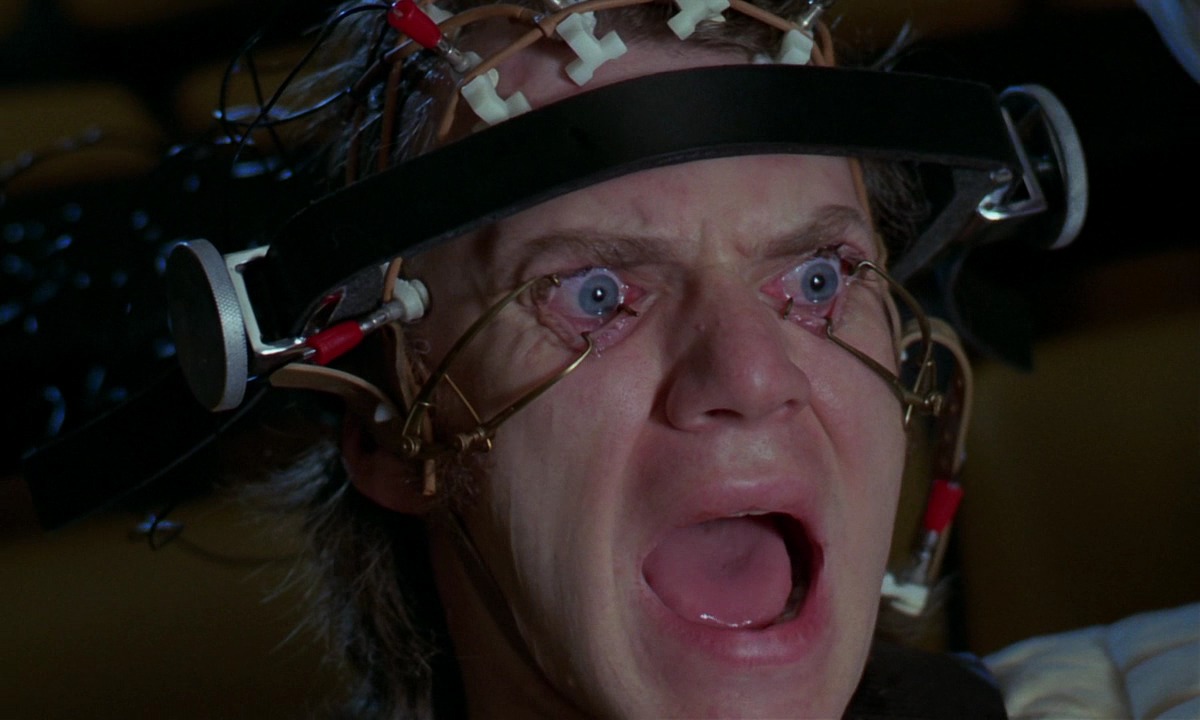
Ads are not transparent, not fact checked and in many cases not accountable. Voters get to feel like Alex DeLarge in “A Clockwork Orange” during his aversion therapy (eye drops, anyone?) without knowing who’s footing the bill.
A way to combat this Stanley Kubrick-esque torment is just ban all political advertisements on television.
“That’s an assault on free speech.”
First off television is not an unregulated utopia of free speech – that’s the Internet (for now, anyway). Television, like it or not, doesn’t allow everything to be broadcast. There are standards on television. Our mores may have changed over time but generally we’re still okay with decency standards for television. Speaking is speech. Broadcast is regulated.
And it’s worth noting, 99 percent of Americans have televisions in their homes. It’s still the broadest, most viewed medium we have. Which is why candidates and advocates for candidates invest billions into blanketing it.
We don’t allow tobacco companies, for example, to advertise on television. Why? Because their products are poisonous and harmful to our citizenry. The same could be said for Swift Boating, Demon Sheeping and whatever Herman Cain is doing.
These ads are supposed to sway public opinion. But these aren’t actually opinions being targeted – they’re emotions. Most Americans have less of an opinion when it comes to politics and more of a visceral reaction to issues. Which explains why your “political debate” over Thanksgiving dinner ended up with you being pummeled with green bean casserole.
And there’s no better example of where to start hysteria than in 30-second fear and loathing campaign spots. Does this elevate political discourse? Civic engagement? Sound policy? Hardly. These ads are doing what tobacco does: producing a carcinogenic cloud.
Ask anyone in even a slightly purple state or in an even slightly contested district: Political ads are a plague come election time. And what exactly are we getting for our (estimated) $42 per potential voter? Not much.
Ads are not transparent, not fact checked and in many cases not accountable. Voters get to feel like Alex DeLarge in “A Clockwork Orange” during his aversion therapy (eye drops, anyone?) without knowing who’s footing the bill.
A way to combat this Stanley Kubrick-esque torment is just ban all political advertisements on television.
“That’s an assault on free speech.”
First off television is not an unregulated utopia of free speech – that’s the Internet (for now, anyway). Television, like it or not, doesn’t allow everything to be broadcast. There are standards on television. Our mores may have changed over time but generally we’re still okay with decency standards for television. Speaking is speech. Broadcast is regulated.
And it’s worth noting, 99 percent of Americans have televisions in their homes. It’s still the broadest, most viewed medium we have. Which is why candidates and advocates for candidates invest billions into blanketing it.
We don’t allow tobacco companies, for example, to advertise on television. Why? Because their products are poisonous and harmful to our citizenry. The same could be said for Swift Boating, Demon Sheeping and whatever Herman Cain is doing.
These ads are supposed to sway public opinion. But these aren’t actually opinions being targeted – they’re emotions. Most Americans have less of an opinion when it comes to politics and more of a visceral reaction to issues. Which explains why your “political debate” over Thanksgiving dinner ended up with you being pummeled with green bean casserole.
And there’s no better example of where to start hysteria than in 30-second fear and loathing campaign spots. Does this elevate political discourse? Civic engagement? Sound policy? Hardly. These ads are doing what tobacco does: producing a carcinogenic cloud.
Tags
Citizens United
,
elections
,
media
,
presidential election
Monday, March 12, 2012
Justice Scalia's Revisionism Won't Help Us "Get Over" Bush v. Gore
![]() |
| DonkeyHotey |
Conservative justices, who invariably relied on principles of federalism to avoid redressing unjust actions by state governments, intervened in a state's voting process, relying on an indefensible interpretation of the Equal Protection Clause. The opinion itself implicitly conceded its flawed legal reasoning by explicitly stating that it was “limited to the present circumstances” and could not be cited as precedent. Justice Souter, appointed by the first President Bush, was so disturbed by the ruling that he considered resigning at that time.
Bush v. Gore was plain and simple "crudely partisan," as Souter later described it. Justice Breyer, in dissent, described the majority decision as a "self-inflicted wound -- a wound that may harm not just the Court, but the Nation.” Prescient words. The harm to the Court, as Justice Stevens dissented (in an opinion joined by Breyer and Ginsburg), was that it gave credence "to the most cynical appraisal of the work of judges" and undermined the country's "confidence in the judge as impartial guardian of the rule of law." (This view has only been exacerbated by such cases as Citizens United, which also blatantly ignored established precedent to reach a nakedly partisan result).
The reality is that by a narrow 5-4 margin, the Supreme Court interfered with a presidential election and gave us George W. Bush, the majority's preferred candidate. That would be "the wound" that "harmed the Nation."
According to Justice Antonin Scalia, however, reality is altogether different. Last week, Scalia delivered the Hugo L. Black Lecture on Freedom of Expression at Wesleyan University. After the speech, Scalia was asked about Bush v. Gore. His response: “Get over it.” He then told the audience that “it was a long time ago, people forget . . . It was a 7-2 decision. It wasn’t even close.”
Scalia believes what he believes, whether it is divining the intent of the Founding Fathers or rewriting the history of a controversial decision. The fact is Bush v. Gore was not a decided by a vote of 7-to-2. While seven of the nine justices agreed that Florida Supreme Court's decision, calling for a statewide recount, violated the Equal Protection Clause, four of the nine justices strenuously disagreed with the majority's remedy, to stop the recount. As Ian Millhiser summarized it:
Although it is true that the four dissenters divided on how the Florida recount should proceed — two believed there should be a statewide recount of all Florida voters while two others believed a narrower recount would be acceptable — not one of the Court’s four moderates agreed with Scalia that the winner of the 2000 presidential election should effectively be chosen by five most conservative members of the Supreme Court of the United States.It is understandable why Justice Scalia would want to downplay the radical decisions he and his conservative colleagues have authored which put a lie to the conventional wisdom that the liberal justices on the Court are the ones who substitute their personal and political views for those of the democratically elected branches of government.
It is also understandable why Scalia is still getting questions about Bush v. Gore twelve years after the opinion's issuance. It is without exaggeration one of the Supreme Court's worst decisions. (Scalia, with Justices Kennedy and Thomas, have the distinction of also being in the majority of another of high court's low points, Citizens United.)
Sorry, Nino, we are not going to "get over it."
Tags
Citizens United
,
law and justice
,
lovechilde
,
right wing
,
SCOTUS
Thursday, February 16, 2012
The .0000063% Election
By Ari Berman, cross-posted from Tom Dispatch
At a time when it’s become a cliché to say that Occupy
Wall Street has changed the nation’s political conversation -- drawing
long overdue attention to the struggles of the 99% -- electoral
politics and the 2012 presidential election have become almost
exclusively defined by the 1%. Or, to be more precise, the .0000063%.
Those are the 196 individual donors who have provided nearly 80% of
the money raised by super PACs in 2011 by giving $100,000 or more each.
These political action committees, spawned by the Supreme Court’s 5-4 Citizens United decision in January 2010, can raise unlimited amounts of money from individuals, corporations, or unions for the purpose of supporting or opposing a political candidate. In theory, super PACs are legally prohibited from coordinating directly with a candidate, though in practice they’re just a murkier extension of political campaigns, performing all the functions of a traditional campaign without any of the corresponding accountability.
If 2008 was the year of the small donor, when many political pundits (myself included) predicted that the fusion of grassroots organizing and cyber-activism would transform how campaigns were run, then 2012 is "the year of the big donor," when a candidate is only as good as the amount of money in his super PAC. “In this campaign, every candidate needs his own billionaires,” wrote Jane Mayer of The New Yorker.
“This really is the selling of America,” claims former presidential candidate and Democratic Party Chairman Howard Dean. “We’ve been sold out by five justices thanks to the Citizens United decision.” In truth, our democracy was sold to the highest bidder long ago, but in the 2012 election the explosion of super PACs has shifted the public’s focus to the staggering inequality in our political system, just as the Occupy movement shined a light on the gross inequity of the economy. The two, of course, go hand in hand.
“We’re going to beat money power with people power,” Newt Gingrich said after losing to Mitt Romney in Florida as January ended. The walking embodiment of the lobbying-industrial complex, Gingrich made that statement even though his candidacy is being propped up by a super PAC funded by two $5 million donations from Las Vegas casino magnate Sheldon Adelson. It might have been more amusing if the GOP presidential primary weren’t a case study of a contest long on money and short on participation.
The Wesleyan Media Project recently reported a 1600% increase in interest-group-sponsored TV ads in this cycle as compared to the 2008 primaries. Florida has proven the battle royal of the super PACs thus far. There, the pro-Romney super PAC, Restore Our Future, outspent the pro-Gingrich super PAC, Winning Our Future, five to one. In the last week of the campaign alone, Romney and his allies ran 13,000 TV ads in Florida, compared to only 200 for Gingrich. Ninety-two percent of the ads were negative in nature, with two-thirds attacking Gingrich, who, ironically enough, had been a fervent advocate of the Citizens United decision.
With the exception of Ron Paul’s underdog candidacy and Rick Santorum’s upset victory in Iowa -- where he spent almost no money but visited all of the state’s 99 counties -- the Republican candidates and their allied super PACs have all but abandoned retail campaigning and grassroots politicking. They have chosen instead to spend their war chests on TV.
The results can already be seen in the first primaries and caucuses: an onslaught of money and a demobilized electorate. It’s undoubtedly no coincidence that, when compared with 2008, turnout was down 25% in Florida, and that, this time around, fewer Republicans have shown up in every state that’s voted so far, except for South Carolina. According to political scientists Stephen Ansolabehere and Shanto Iyengar, negative TV ads contribute to “a political implosion of apathy and withdrawal.” New York Times columnist Tim Egan has labeled the post-Citizens United era “your democracy on meth.”
![]() |
| DonkeyHotey |
These political action committees, spawned by the Supreme Court’s 5-4 Citizens United decision in January 2010, can raise unlimited amounts of money from individuals, corporations, or unions for the purpose of supporting or opposing a political candidate. In theory, super PACs are legally prohibited from coordinating directly with a candidate, though in practice they’re just a murkier extension of political campaigns, performing all the functions of a traditional campaign without any of the corresponding accountability.
If 2008 was the year of the small donor, when many political pundits (myself included) predicted that the fusion of grassroots organizing and cyber-activism would transform how campaigns were run, then 2012 is "the year of the big donor," when a candidate is only as good as the amount of money in his super PAC. “In this campaign, every candidate needs his own billionaires,” wrote Jane Mayer of The New Yorker.
“This really is the selling of America,” claims former presidential candidate and Democratic Party Chairman Howard Dean. “We’ve been sold out by five justices thanks to the Citizens United decision.” In truth, our democracy was sold to the highest bidder long ago, but in the 2012 election the explosion of super PACs has shifted the public’s focus to the staggering inequality in our political system, just as the Occupy movement shined a light on the gross inequity of the economy. The two, of course, go hand in hand.
“We’re going to beat money power with people power,” Newt Gingrich said after losing to Mitt Romney in Florida as January ended. The walking embodiment of the lobbying-industrial complex, Gingrich made that statement even though his candidacy is being propped up by a super PAC funded by two $5 million donations from Las Vegas casino magnate Sheldon Adelson. It might have been more amusing if the GOP presidential primary weren’t a case study of a contest long on money and short on participation.
The Wesleyan Media Project recently reported a 1600% increase in interest-group-sponsored TV ads in this cycle as compared to the 2008 primaries. Florida has proven the battle royal of the super PACs thus far. There, the pro-Romney super PAC, Restore Our Future, outspent the pro-Gingrich super PAC, Winning Our Future, five to one. In the last week of the campaign alone, Romney and his allies ran 13,000 TV ads in Florida, compared to only 200 for Gingrich. Ninety-two percent of the ads were negative in nature, with two-thirds attacking Gingrich, who, ironically enough, had been a fervent advocate of the Citizens United decision.
With the exception of Ron Paul’s underdog candidacy and Rick Santorum’s upset victory in Iowa -- where he spent almost no money but visited all of the state’s 99 counties -- the Republican candidates and their allied super PACs have all but abandoned retail campaigning and grassroots politicking. They have chosen instead to spend their war chests on TV.
The results can already be seen in the first primaries and caucuses: an onslaught of money and a demobilized electorate. It’s undoubtedly no coincidence that, when compared with 2008, turnout was down 25% in Florida, and that, this time around, fewer Republicans have shown up in every state that’s voted so far, except for South Carolina. According to political scientists Stephen Ansolabehere and Shanto Iyengar, negative TV ads contribute to “a political implosion of apathy and withdrawal.” New York Times columnist Tim Egan has labeled the post-Citizens United era “your democracy on meth.”
Tags
Citizens United
,
politics
,
presidential election
,
TomDispatch
Tuesday, January 24, 2012
Newt's Sugar Daddy
How is it possible that such an unethical, nasty, sleazy, mean-spirited, polarizing, egotistical, hypocritical jerk can be winning primaries and surging in the polls? One reason, of course, is that his remaining competition consists of a liar, a creep and a full bore crank. And not to be underestimated is the power of the Occupy movement, which has dramatically changed the national conversation so that Romney's efficient and ruthless behavior at his equity firm, his refusal to disclose his tax returns and his "corporations are people" rhetoric make him the perfect symbol for the despised 1%. Third, the Republican base can't resist a fire-breathing blowhard with the shamelessness to relentlessly attack and demonize our Kenyan-Muslim-Socialist President.
But Newt, not known for his organizational or fund-raising skills, has emerged as a threat to Mitt Romney's ascendancy to the GOP nomination thanks in large part to the Supreme Court's Citizens United decision and the Super PACs the ruling has spawned. It has allowed one couple, the Adelsons, to give $10 million to Gingrich's "independent"Destroying Winning Our Future Super PAC, and thereby completely upend the political process.
Sheldon Adelson, a "casino and hotel magnate," gave the first $5 million, which was used to launch the negative ads against Mitt Romney in South Carolina that were pivotal to Gingrich's primary victory there. Now, as the New York Times reports, Sheldon's wife Miriam is giving the Super PAC another $5 million to help with the upcoming Florida primary. And thus, as the Times noted:
But Newt, not known for his organizational or fund-raising skills, has emerged as a threat to Mitt Romney's ascendancy to the GOP nomination thanks in large part to the Supreme Court's Citizens United decision and the Super PACs the ruling has spawned. It has allowed one couple, the Adelsons, to give $10 million to Gingrich's "independent"
Sheldon Adelson, a "casino and hotel magnate," gave the first $5 million, which was used to launch the negative ads against Mitt Romney in South Carolina that were pivotal to Gingrich's primary victory there. Now, as the New York Times reports, Sheldon's wife Miriam is giving the Super PAC another $5 million to help with the upcoming Florida primary. And thus, as the Times noted:
The wealth of a single couple has now leveled the playing field in two critical primary states for Mr. Gingrich, a candidate who ended September more than $1 million in debt, finished out of the running in Iowa and New Hampshire and, unlike Mr. Romney, has yet to attract the broad network of hard-money donors and bundlers that traditionally propel presidential campaigns.According to Wikipedia, Sheldon Adelson is the eighth richest American, with a net worth of over $ 23 billion. Our post-Citizens United campaign finance laws are allowing him to the opportunity to buy the Republican nomination for President. What will he want in return?
Tags
#Occupy
,
Citizens United
,
lovechilde
,
Mitt Romney
,
Newt Gingrich
,
presidential election
Saturday, January 21, 2012
Citizens United In Their Disgust
By Isaiah J. Poole, cross-posted from Campaign for America's Future
Saturday is the two-year anniversary of the infamous Citizens United ruling by the Supreme Court that allowed corporations to spend unlimited amounts of money on political campaigns.
Since then, our democracy has been drowning in a tsunami of corporate special interest money. Our government is under the thumb of the Koch brothers and other corporate moguls instead of the hands of the people.
TAKE ACTION
Send your comment to tell the Securities and Exchange Commission to require public companies to disclose their political spending. Your comments will go directly to the SEC.
And citizens are uniting in their disgust. A poll released Thursday by Democracy Corps and the Public Campaign Action Fund, an organization that is rallying to counter the Citizens United ruling, said, "Americans across all parties oppose the ruling; among all voters, 62 percent oppose the decision and nearly half (46 percent) strongly oppose it. More than half of all voters say they would support a constitutional amendment to reverse the opinion."
Further, "Eight in ten voters say there is too much big money spent on political campaigns and elections today and that campaign contributions and spending should be limited." And the candidates who stand on the side of reining in corporate efforts to buy our political system will get more favor from voters than those who stand with the status quo.
The ultimate solution is getting two-thirds of the states to pass a constitutional amendment that declares what everyone except Mitt Romney seems to understand: corporations are not people and money is not speech. But that will take time.
Saturday is the two-year anniversary of the infamous Citizens United ruling by the Supreme Court that allowed corporations to spend unlimited amounts of money on political campaigns.
Since then, our democracy has been drowning in a tsunami of corporate special interest money. Our government is under the thumb of the Koch brothers and other corporate moguls instead of the hands of the people.
TAKE ACTION
Send your comment to tell the Securities and Exchange Commission to require public companies to disclose their political spending. Your comments will go directly to the SEC.
And citizens are uniting in their disgust. A poll released Thursday by Democracy Corps and the Public Campaign Action Fund, an organization that is rallying to counter the Citizens United ruling, said, "Americans across all parties oppose the ruling; among all voters, 62 percent oppose the decision and nearly half (46 percent) strongly oppose it. More than half of all voters say they would support a constitutional amendment to reverse the opinion."
Further, "Eight in ten voters say there is too much big money spent on political campaigns and elections today and that campaign contributions and spending should be limited." And the candidates who stand on the side of reining in corporate efforts to buy our political system will get more favor from voters than those who stand with the status quo.
The ultimate solution is getting two-thirds of the states to pass a constitutional amendment that declares what everyone except Mitt Romney seems to understand: corporations are not people and money is not speech. But that will take time.
Tags
Citizens United
,
elections
,
SCOTUS
Thursday, January 5, 2012
Citizens United Not Welcome In Montana
By Sam Ferguson, cross-posted from Truthout
In a rebuke to the United States Supreme Court, the Supreme Court of
Montana has held that Citizens United does not apply to Montana campaign
finance law.
Last Friday, the Montana Supreme Court upheld the constitutionality of a
1912 voter initiative - the Corrupt Practices Act - that prohibits
corporations from making contributions to or expenditures on behalf of
state political candidates and political parties. In 2010, the Supreme
Court ruled that a similar federal prohibition was unconstitutional,
prompting a wave of bills and court rulings that erased prohibitions on
corporate and union political expenditures around the country.
"For over 100 years, Montana has had an electoral system that preserves
the integrity of the political process, encourages full participation
and safeguards against corruption," state Attorney General Steve Bullock
said in a statement after the ruling, adding, "the [Montana] Supreme
Court's decision upholds that system and is truly a victory for all
Montanans."
The Montana Court cited the state's "unique" history, culture and
economy in justifying the decision not to follow Citizens United.
"With the infusion of unlimited corporate money in support of or
opposition to a targeted candidate," wrote Chief Justice Mike McGrath,
in a 5-2 decision, "the average citizen candidate would be unable to
compete against the corporate-sponsored candidate, and Montana citizens,
who for over 100 years have made their modest election contributions
meaningfully count would be effectively shut out of the process."
Under the First Amendment, limits on speech are justified only if the
government can demonstrate a "compelling" interest for the limitation.
The Montana high court ruled that the state had several compelling
interests: preventing the corrupting influence of large political
expenditures; guarding against Montana's susceptibility to corruption
because of its low-cost, grass roots political culture; and stemming the
threat posed by out-of-state economic interests that have a financial
stake in Montana's agriculture and resource-extraction based economy.
But in Citizens United, Justice Anthony Kennedy held that the
government may "not deprive the public of the right and privilege to
determine for itself what speech and speakers are worthy of
consideration." In other words, the government may not quiet the voice
of some speakers in an effort to boost the voice of others. The Supreme
Court also held that there is no compelling interest in limiting
so-called "independent expenditures," because such limitations do not
prevent corruption.
UCLA law Professor Eugene Volokh wrote on his influential legal blog, The Volokh Conspiracy,
that "the disagreement with Citizens United is so striking that it is
likely that the Supreme Court will agree to hear the case and will
reverse the Montana Supreme Court's decision."
Previously, a lower court in Montana ruled the state's law limiting
campaign spending unconstitutional, saying, "Citizens United is
unequivocal: the government may not prohibit independent and indirect
corporate expenditures on political speech."
Tags
Citizens United
,
elections
,
law and justice
,
SCOTUS
Wednesday, December 21, 2011
"The Protester" Becomes Time's Person Of The Year, Wants More
By J.A. Meyerson, cross-posted from Truthout
Time Magazine Wednesday announced that its 2011 Person of the Year would be "The Protester." In the feature by Kurt Anderson,
Time charts the wave of protests that defined 2011, from the Middle
East to Europe to the United States and even, lately, to Russia.
By way of prognosticating where from here, Anderson confesses that "as
long as government in Washington - like government in Europe - remains
paralyzed, I don't see the Occupiers and Indignados giving up or losing
traction or protest ceasing to be the defining political mode. After
all, the Tea Party protests subsided only after Tea Partyers achieved
real power in 2010 by becoming the tail wagging the Republican Party
dog. When radical populist movements achieve big-time momentum and
attention, they don't tend to stand down until they get some
satisfaction."
In that analysis is contained the primary misunderstanding that
underlies so much of the mainstream media's coverage of Occupy and its
international brothers and sisters (and leads to such widespread
misunderstanding about the nature of the movement). This year's
"Protester" was not protesting government paralysis.
Governments are not the primary bearers of power in the geopolitical
landscape. Bigger things are at work, and the biggest of these is the
globalization of capital. Governments are, in fact, toppling in Europe
because the political superstructures of the democratic world are so
dearly at the mercy of the international financial class. Already in
Greece and Italy (a country with a bigger economy than India's,
borrowing at 7.2 percent), the democratic leadership has been replaced
by what the media euphemistically call "technocrats" - really, these are
bankers who have performed coups d'etat.
Tags
#Occupy
,
austerity
,
Citizens United
,
media
,
Progressive
,
Wall Street
Monday, December 12, 2011
The 1% Election: Their Bread, Our Circus
By Tom Engelhardt, cross-posted from Tom Dispatch
Sometimes words outlive their usefulness. Sometimes the gap between changing reality and the names we’ve given it grows so wide that they empty of all meaning or retain older meanings that only confuse us. “Election,” “presidential election campaign,” and “democracy” all seem like obvious candidates for name-change.
I thought about this recently as President Obama hustled around my hometown, snarling New York traffic in the name of Campaign 2012. He was, it turned out, “hosting” three back-to-back fundraising events: one at the tony Gotham Bar and Grill for 45 supporters at $35,800 a head (the menu: roasted beet salad, steak and onion rings, with apple strudel, chocolate pecan pie, and cinnamon ice cream -- a meal meant to “shine a little light” on American farms); one for 30 Jewish supporters at the home of Jack Rosen, chairman of the American Jewish Congress, for at least $10,000 a pop; and one at the Sheraton Hotel, evidently for the plebes of the contribution world, that cost a mere $1,000 a head. (Maybe the menu there was rubber chicken.)
In the course of his several meals, the president pledged his support for Israel (in the face of Republican charges that he is eternally soft on the subject), talked about “taxes and the economy” to his undoubtedly under-taxed listeners, and made this stirringly meaningless but rousing comment: “No matter who we are, no matter where we come from, we're one nation. We're one people. And that's what's at stake in this election."
Outside his final event, Occupy Wall Street protesters saw something else at stake, dubbing him the “1% president.” The end result from a night’s heavy lifting: $2.4 million for his election campaign and the Democratic National Committee, nowhere close to 1% of what they will need for the next year.
Sometimes words outlive their usefulness. Sometimes the gap between changing reality and the names we’ve given it grows so wide that they empty of all meaning or retain older meanings that only confuse us. “Election,” “presidential election campaign,” and “democracy” all seem like obvious candidates for name-change.
I thought about this recently as President Obama hustled around my hometown, snarling New York traffic in the name of Campaign 2012. He was, it turned out, “hosting” three back-to-back fundraising events: one at the tony Gotham Bar and Grill for 45 supporters at $35,800 a head (the menu: roasted beet salad, steak and onion rings, with apple strudel, chocolate pecan pie, and cinnamon ice cream -- a meal meant to “shine a little light” on American farms); one for 30 Jewish supporters at the home of Jack Rosen, chairman of the American Jewish Congress, for at least $10,000 a pop; and one at the Sheraton Hotel, evidently for the plebes of the contribution world, that cost a mere $1,000 a head. (Maybe the menu there was rubber chicken.)
In the course of his several meals, the president pledged his support for Israel (in the face of Republican charges that he is eternally soft on the subject), talked about “taxes and the economy” to his undoubtedly under-taxed listeners, and made this stirringly meaningless but rousing comment: “No matter who we are, no matter where we come from, we're one nation. We're one people. And that's what's at stake in this election."
Outside his final event, Occupy Wall Street protesters saw something else at stake, dubbing him the “1% president.” The end result from a night’s heavy lifting: $2.4 million for his election campaign and the Democratic National Committee, nowhere close to 1% of what they will need for the next year.
Tags
#Occupy
,
Citizens United
,
elections
,
Obama
,
presidential election
,
TomDispatch
Wednesday, December 7, 2011
L.A. City Council Echoes Occupy And Calls For End To Corporate Personhood
By Brooke Jarvis, cross-posted from Yes! Magazine
On December 3, just two days before Occupy L.A. was evicted by police, the General Assembly of the occupation passed a unanimous resolution calling for a constitutional amendment to end corporate personhood.
Today, the City Council of Los Angeles also voted, also unanimously, for a resolution making the same appeal.
So what’s this issue that's uniting occupiers and the city they’re occupying? Corporate personhood is the legal concept that underpins rulings like the Supreme Court's 2010 decision in Citizens United v the Federal Election Commission; it means that corporations are considered people under the law, with the constitutional right of free speech. Since the courts have also defined money as constitutionally protected speech, the upshot is that corporations are empowered to spend unlimited amounts of money trying to influence the political process.
In order to reverse Citizens United—and a long line of other
rulings supporting corporate rights over human ones—the resolutions
passed by Los Angeles and Occupy L.A. call for an amendment to the U.S.
Constitution clearly stating that corporations are not people and money
is not speech.
It’s little surprise that Occupy, a movement that wants our nation’s decisions to be made by the 99% instead of the 1%, supports a constitutional fix for the problem of corporate influence on politics. In its first official statement, the flagship occupation in New York’s Zuccotti Park declared, “no true democracy is attainable when the process is determined by economic power.” The assembly included in a list of grievances the fact that corporations “have influenced the courts to achieve the same rights as people, with none of the culpability or responsibility.” Other Occupy sites have also called for constitutional checks on corporate power, and slogans calling for the end of corporate personhood and the overruling of Citizens United are common sights on protesters’ signs.
But when L.A. and Occupy L.A. are making the same unanimous demand, it’s clear that the desire to take on corporate power in politics is gaining traction.
Indeed, though Los Angeles is the largest city to date to join the call for a constitutional amendment taking on corporate personhood, it’s not the first. So far this year, voters in Boulder, Colo.; Missoula, Mont.; Madison, Wisc.; and Dane County, Wisc., have all passed ballot initiatives making the same appeal, with support ranging from 75 percent to 84 percent. Other cities, including Pittsburgh, Penn., have gone so far as to eliminate the rights of “personhood” for corporations seeking to perform certain activities within their borders.
“Local resolution campaigns are an opportunity for citizens to speak
up and let it be known that we won’t accept the corporate takeover of
our government,” said Kaitlin Sopoci-Belknap, a spokesperson for Move to
Amend. The group was created in the wake of Citizens United to
advocate for a constitutional amendment that would overrule the
decision; a local chapter pressed for passage of the resolution by the
L.A. City Council. Move to Amend hopes that 50 cities and towns will put
the same resolution on ballots next November. “Our plan is to build a
movement that will drive this issue into Congress from the grassroots,”
said Sopoci-Belknap.
Approximately 100 people came to the L.A. council meeting to support the resolution, many of them reportedly members of Occupy L.A.
The Los Angeles Times reported only one dissenter: a man in a top hat, with fake money pouring out of the pockets of his suit, who said he had come to speak for the wealthy. He implored the council not to pass the resolution.
Brooke Jarvis wrote this article for YES! Magazine, a national, nonprofit media organization that fuses powerful ideas with practical actions. Brooke Jarvis is YES! Magazine's web editor.
On December 3, just two days before Occupy L.A. was evicted by police, the General Assembly of the occupation passed a unanimous resolution calling for a constitutional amendment to end corporate personhood.
Today, the City Council of Los Angeles also voted, also unanimously, for a resolution making the same appeal.
So what’s this issue that's uniting occupiers and the city they’re occupying? Corporate personhood is the legal concept that underpins rulings like the Supreme Court's 2010 decision in Citizens United v the Federal Election Commission; it means that corporations are considered people under the law, with the constitutional right of free speech. Since the courts have also defined money as constitutionally protected speech, the upshot is that corporations are empowered to spend unlimited amounts of money trying to influence the political process.
When L.A. and Occupy L.A. are making the same unanimous demand, it’s
clear that the desire to take on corporate power in politics is gaining
traction.
It’s little surprise that Occupy, a movement that wants our nation’s decisions to be made by the 99% instead of the 1%, supports a constitutional fix for the problem of corporate influence on politics. In its first official statement, the flagship occupation in New York’s Zuccotti Park declared, “no true democracy is attainable when the process is determined by economic power.” The assembly included in a list of grievances the fact that corporations “have influenced the courts to achieve the same rights as people, with none of the culpability or responsibility.” Other Occupy sites have also called for constitutional checks on corporate power, and slogans calling for the end of corporate personhood and the overruling of Citizens United are common sights on protesters’ signs.
But when L.A. and Occupy L.A. are making the same unanimous demand, it’s clear that the desire to take on corporate power in politics is gaining traction.
Indeed, though Los Angeles is the largest city to date to join the call for a constitutional amendment taking on corporate personhood, it’s not the first. So far this year, voters in Boulder, Colo.; Missoula, Mont.; Madison, Wisc.; and Dane County, Wisc., have all passed ballot initiatives making the same appeal, with support ranging from 75 percent to 84 percent. Other cities, including Pittsburgh, Penn., have gone so far as to eliminate the rights of “personhood” for corporations seeking to perform certain activities within their borders.
Approximately 100 people came to the L.A. council meeting to support the resolution, many of them reportedly members of Occupy L.A.
The Los Angeles Times reported only one dissenter: a man in a top hat, with fake money pouring out of the pockets of his suit, who said he had come to speak for the wealthy. He implored the council not to pass the resolution.
Brooke Jarvis wrote this article for YES! Magazine, a national, nonprofit media organization that fuses powerful ideas with practical actions. Brooke Jarvis is YES! Magazine's web editor.
Tags
#Occupy
,
Banks
,
Citizens United
,
Progressive
,
Wall Street
Tuesday, November 22, 2011
The Real Public Nuisance
By Robert Reich, cross-posted from his website
And what’s Washington’s response? Nothing. In fact, Congress’s so-called “supercommittee” just disbanded because Republicans refuse to raise a penny of taxes on the rich.
The First Amendment Upside Down. Why We Must Occupy Democracy
You’ve been seeing this across the country … Americans assaulted, clubbed, dragged, pepper-sprayed … Why? For exercising their right to free speech and assembly — protesting the increasing concentration of income, wealth, and political power at the top.
And what’s Washington’s response? Nothing. In fact, Congress’s so-called “supercommittee” just disbanded because Republicans refuse to raise a penny of taxes on the rich.
Tags
#Occupy
,
Citizens United
,
civil rights
,
Reich
,
Wall Street
Monday, November 21, 2011
Finally, A Constitutional Amendment For The 99%
By Greg Colvin, cross-posted from Campaign For America's Future
[On Friday], Congressman Ted Deutch (D-FL) offered the strongest constitutional amendment introduced in either House of Congress so far to rectify the imbalance of power between the corporations and the people in our democracy.
As the struggle in the streets intensifies, and Occupy Wall Street refuses to remain silent, it’s good to know there are champions in Congress who have stepped up to the challenge of amending the US Constitution. It’s called OCCUPIED: Outlawing Corporate Cash Undermining the Public Interest in our Elections and Democracy.
The Supreme Court, in the 5-4 Citizens United decision of January 2010, declared that corporations have free speech rights like human beings and invalidated the ban on corporate election spending that Congress had enacted. Since then, a grassroots movement has emerged to generate popular support for a constitutional amendment to reverse that decision, including months of work by Move to Amend, Free Speech For People, Public Citizen, People For The American Way, Common Cause, and the Center for Media and Democracy.
Rep. Deutch’s amendment is a blend of the best ideas.
[On Friday], Congressman Ted Deutch (D-FL) offered the strongest constitutional amendment introduced in either House of Congress so far to rectify the imbalance of power between the corporations and the people in our democracy.
As the struggle in the streets intensifies, and Occupy Wall Street refuses to remain silent, it’s good to know there are champions in Congress who have stepped up to the challenge of amending the US Constitution. It’s called OCCUPIED: Outlawing Corporate Cash Undermining the Public Interest in our Elections and Democracy.
The Supreme Court, in the 5-4 Citizens United decision of January 2010, declared that corporations have free speech rights like human beings and invalidated the ban on corporate election spending that Congress had enacted. Since then, a grassroots movement has emerged to generate popular support for a constitutional amendment to reverse that decision, including months of work by Move to Amend, Free Speech For People, Public Citizen, People For The American Way, Common Cause, and the Center for Media and Democracy.
Rep. Deutch’s amendment is a blend of the best ideas.
Tags
Citizens United
,
Constitution
,
elections
,
SCOTUS
Wednesday, February 16, 2011
Progressives United, Not Citizens United
As progressives, it's time we had our voices heard. -- Russ FeingoldSome politicians fade away. Others become lobbyists. Russ Feingold is not any politician. (See Regenerated Progressive.) After losing his Wisconsin Senate seat to a Tea Party-backed plastics executive, Feingold has formed a political organization, Progressives United. A direct response to the Supreme Court's disastrous and unprincipled Citizens United decision, Progressives United was formed to fight the corporate influence on elections and to support progressive candidates.
According to its web site, Progressives United's aim is to "build a massive grassroots effort dedicated to mitigating the effects of, and eventually overturning, the Citizens United decision." As Feingold says in the video below:
We'll work to ensure that our elected officials, both Republicans and Democratic, are held accountable to the people, and not to the lobbyists in Washington. We'll call out the media, when they hide from the real story. And we'll support candidates when they uphold our progressive ideals, even if the Beltway establishment doesn't.
Tags
Citizens United
,
Congress
,
politics
,
Progressive
Subscribe to:
Posts
(
Atom
)