Showing posts with label criminal justice. Show all posts

Monday, July 17, 2017

The Arbitrary Execution of Tom Thompson

I knew if I wanted to see Tom one last time I had to leave for the prison soon. It was already late in the afternoon and at 6:00 pm, he would be taken from the visiting area to the death watch cell for his last meal. There he would remain until 25 minutes before midnight when he would be led to the execution chamber next door. There wasn’t anything left for me to do anyway, so I left my San Francisco office and drove over the Golden Gate Bridge to San Quentin State Prison.

The parking lot to the East Gate of the prison is just a few yards from the San Francisco Bay. Even after countless visits the contrast between the sweeping vista of the coastline and the grim reality inside the prison’s peach colored concrete walls is striking. I passed through security and walked slowly down the long path leading to the Main Visiting Room. I was let in through the two sets of heavy doors, and saw Tom, surrounded by family and close friends, presiding over a gathering that could only be described as surreal. Tom had been on death row for fourteen years, and the prison guards who knew him well seemed as traumatized as everyone else. They were overly solicitous, awkward, almost apologetic. Instead of the usual vending machine fare there was a platter of cold cuts for sandwiches and sodas on a long table. Although in a matter of hours he was going to be strapped to a gurney and lethally injected with poison, it was Tom who was trying to keep things light, with the corny jokes and over-the-top impersonations – Steve Martin as the “Wild and Crazy Guy” and Mike Myers as Austin Powers – with which I had become all too familiar.

Behind his silliness, Tom was thoroughly depleted from being the center of a spectacle that surrounded him as the fifth man about to be executed in California since the death penalty was re-instituted in 1977. A physically healthy 43 year old was going through the process of dying, and it was disorienting and  unbearably stressful. He had been enduring emotionally-charged visits from his friends and loved ones, for whom he felt the need to constantly perform. He met often with me and other members of the legal team to approve a list of execution witnesses (he was entitled to five) and to be kept abreast of last minute developments – of which there were few. He had been under 24 hour surveillance from guards for the past five days, making sleep impossible. In accordance with prison rules, he had been stripped of his “non-legal property.” He had no reading or writing material. He was denied his art supplies, which he had used for surprisingly impressive paintings over the years, including a portrait of Billy Idol he had given me a few months earlier.

We had been preparing for this moment for far too long, having gone through a similar process one year earlier when, despite a stay of execution, prison personnel proceeded methodically with its execution protocol until, with six hours to spare, they were finally assured that the Supreme Court would not disturb the stay. There was not much left to say. Tom, although hampered by waist chains, enveloped me as best he could in a big bear hug, and thanked me for all I had done. He told me that I should feel proud about putting up such a good and righteous fight. I replied that it had been an honor to have worked with him. I exchanged tearful goodbyes with his sister and mother. I walked out of the prison and returned to my office where I continued to file court papers with little chance of success and railed to reporters about injustice. All to no avail. Six minutes after midnight on July 14, 1998, Tom Thompson was dead.

*          *          *          *

Tom Thompson had no criminal record or history of violence when he was tried for the murder of Ginger Fleischli in 1984.  He was found guilty of murder and sentenced to death based largely on the false testimony of jailhouse snitches and the failure of his trial lawyer to challenge the bogus evidence of rape invented by the prosecutor.  (The rape special-circumstance provided the basis for the death penalty.)

An explosive scandal involving the Orange County D.A.'s office has only recently shed light on the extent of the unethical behavior routinely engaged in by its prosecutors to secure death sentences.  And Michael Jacobs -- the prosecutor in Tom's case -- has been revealed to be one of the more notorious.  Jacobs was fired in 2001 for insubordination and dishonesty.  The litany of his misconduct over several cases includes presenting false testimony, using unreliable informants, and hiding exculpatory evidence -- all of which he did in Tom's case.  And there was more.  Jacobs used contradictory evidence and arguments in two separate trials to convict first Tom and then Tom's roommate, David Leitch -- the victim's former boyfriend and a man with a violent past -- on inconsistent theories.  The reliability of many other Orange County cases has been called into question since the D.A. scandal broke -- and one murder conviction based on the false testimony of one of the very same snitches who testified against Tom has been reversed.  Of course, this all comes too late for Tom.

There are approximately 750 men and women on death row in California.  Tom Thompson is one of 13 who have been executed since the death penalty was reinstated 40 years ago.  While others sentenced to death around the same time languished on death row (several of whom continue to languish), his case jumped to the head of the class for no discernible reason.  And then a series of safeguards designed to ensure that the death penalty is fairly and reliably imposed -- state and federal appellate review and clemency -- completely and utterly failed. 

All death sentences in California are automatically reviewed by the California Supreme Court.  Tom's appeal was heard in 1988, two years after three liberal justices were recalled by the voters and replaced by an ultra-conservative governor with ultra-conservative justices.  The Court was thereby transformed almost overnight from one that was appropriately open to reversing cases based on meritorious claims to one that essentially rubber-stamped death penalty cases by finding virtually every error alleged in virtually every case to be harmless.  Accordingly, Tom's conviction and sentence were affirmed.

The case then moved to federal court, where in 1995, Tom's death sentence and rape-related charges were reversed based on a finding of ineffective assistance of trial counsel for counsel's inexcusable failure to adequately rebut the snitch testimony and other evidence that purported to establish rape.  The state appealed this decision to the U.S. Court of Appeals for the Ninth Circuit. 

It is not much of an exaggeration to say that the composition of the randomly drawn three-judge panel in the federal appellate courts is the most important factor in determining the life and death of a condemned inmate.  If at least two of the judges on the panel are essentially liberal, the death penalty will likely be reversed; if they are conservative it usually will be upheld. It is simply luck of the draw and, unfortunately, Tom got a very, very bad draw.  Despite what at the time was a majority of liberal judges on the Ninth Circuit, all three judges on Tom’s panel were extremely conservative Reagan appointees.  It was therefore not surprising -- but wholly arbitrary -- when the panel reversed the district court's ruling in 1996.

To mitigate such arbitrariness is another important safeguard -- en banc review, in which an 11-judge Ninth Circuit panel has the option to review a 3-judge panel's ruling.  Court papers were filed requesting rehearing en banc, which can only be granted after one of the active judges who sits on the Ninth Circuit calls for a vote and a majority of those judges then vote in favor of rehearing. Given the number of liberal judges on the Ninth Circuit at that time it would be unusual for there not to at least be one judge calling for a vote in a death penalty case.  However, on March 6, 1997, an order issued stating that the request for en banc review was denied because not one judge asked for a vote to rehear the case. After the U.S. Supreme Court denied review, an execution date was set for August 5, 1997. 

In the months that followed, evidence surfaced that corroborated Tom's long-standing version of events -- that he and the victim had consensual sex on the night of her death.  This included a statement from Tom's roommate, David Leitch, that was never turned over to the defense.  Such evidence completely undermined the prosecutor's rape-murder theory and called into question the credibility and integrity of the prosecutor's entire case.   Unfortunately, presenting this new evidence was severely hampered by a federal law that had just been enacted in the wake of the Oklahoma City bombing.  The Anti-Terrorism and Effective Death Penalty Act of 1996 ("AEDPA") was designed to thwart "frivolous appeals" but it cast far too wide a net and created virtually insurmountable hurdles to presenting new claims in federal court.  Another problem was that the federal judge who had originally granted relief had passed away and the case was assigned to a far more conservative judge who was completely unreceptive to this new evidence and rejected the claim. 

Another purported safeguard is clemency, a process in which the governor is empowered to act when the judicial system breaks down.  No California governor since Ronald Reagan, however, has seen fit to grant clemency in a capital case, and in Tom's case, Governor Pete Wilson proved no exception. Despite powerful and emotional pleas from family and loved ones, the lack of any prior criminal history, testimonials from prison guards about Tom's exemplary conduct at San Quentin, and serious doubts raised regarding the fairness of the trial and the subsequent judicial proceedings, Wilson denied clemency.  He ultimately based his decision on nothing more than a determination that Tom could not prove his innocence ("But at the end of it all, I am absolutely confident that he raped and murdered Ginger Fleischli").

On August 3, 1997, one night before Tom's execution was scheduled to take place, an 11-judge en banc panel of the Ninth Circuit issued a dramatic order.  The court explained that it was taking the highly unusual step of ruling after its earlier denial of review because of “exceptional circumstances” caused by a malfunction in the court’s review process -- a glitch in the court's communication system that resulted in the failure of any judge voting to review the case en banc the first time -- and because “we are convinced that the panel committed fundamental errors of law that would result in a manifest injustice.” The Ninth Circuit then vacated the three-judge panel opinion, and reversed the death sentence, holding that trial counsel's ineffectiveness was prejudicial and that the prosecutor’s use of fundamentally inconsistent theories at Tom and David’s separate trials was fundamentally unfair.

The state sought review in the U.S. Supreme Court, while the prison proceeded with its execution protocol.  With six hours to spare, the Supreme Court refused the state's invitation to summarily reverse the Ninth Circuit and allow the execution to go forward.  But it did agree to hear the state's appeal on December 9, 1997. 

The grand stairway of 53 steps, the massive Corinthian marble columns, the grandeur of the Great Hall, and all the pomp and circumstance attending the Supreme Court are surely designed to give lawyers a sense of awe and wonder as they go through the red-curtained entrance into the courtroom and sit just a few short feet from the nine justices.  One comes completely down to earth, however, as it becomes clear that at least a majority of those justices intend to make sure one’s client is executed. This seemed like a foregone conclusion in Tom’s case. When the high court decides to intervene in a Ninth Circuit case that has reversed a death sentence it is usually not to approve its ruling.  And thus, another safeguard proved ephemeral.  On April 29, 1998, by a bare 5-to-4 majority, the Court reversed the Ninth Circuit and ordered it to reinstate Tom's death sentence. Justice Kennedy (a former Ninth Circuit judge, himself) wrote the majority opinion, finding a “grave abuse of discretion” in the Ninth Circuit’s handling of  the case, and stressed the importance of “finality” of state judgments. Thus, even though Tom was not at fault, the Court rejected Tom’s claims on the technicality that the Ninth Circuit had waited too long to grant en banc review.  The Court never even addressed the validity of Tom’s substantive claims.  A new execution date was set for July 14, 1998.

The last hope was the separate appeal of the federal judge's rejection of the newly discovered evidence of innocence.  The case was heard by the same en banc panel that had granted relief earlier, but the court was no longer receptive.  It seemed chastened by the lashing it had received by the Supreme Court and shackled by the barriers to relief imposed by AEDPA.  At 11:00 p.m., on July 11, 1998, the court denied relief. Tom was executed two nights later.


*          *          *          *

Tom Thompson was represented by a trial lawyer who failed to take the steps required to afford minimally competent representation in a capital case. He was convicted and sentenced to death in a county where a cynical prosecutor could pick and choose among jail inmates who were willing and able to manufacture evidence to support the prosecution’s theory of the case. His death sentence was affirmed by a state court that at the time refused to meaningfully review death penalty cases. Relief in federal court was first denied because he unluckily drew a conservative panel and later because of legal technicalities that had nothing to do with the merits of his claims. Despite obtaining new evidence that suggested he was innocent, Tom was precluded from obtaining a new trial because of insurmountable legal procedures and the paramount importance of closure. 

Almost twenty years later, poor defense lawyers, unsavory prosecutors, disinterested courts and impenetrable procedural hurdles remain all too common elements in capital cases.  They are inherent aspects of an irreparably broken system.  Apart from the barbarity of the death penalty, the absence of meaningful safeguards to ensure that death sentences are not unreliably and arbitrarily imposed and carried out should be deeply disturbing to anyone who cares about fairness and justice. 


Meanwhile, here in California, the state supreme court is weighing whether to implement vote-approved Proposition 66, a cynical initiative that would do absolutely nothing to address the root problems with California's death penalty – arbitrariness and unreliability -- the problems which led to Tom Thompson's execution.  Worse, it would further undermine the already tenuous ability of the legal system to ensure that death sentences are fairly and consistently imposed and that innocent men and women are not executed.  If the challenges to Proposition 66 are rejected, it will pave the way for more Tom Thompsons.

(Originally published on December 18, 2015; here are other pieces on Tom Thompson -- My Opposite and  Final Hours)

Monday, April 4, 2016

The Unnatural Death Of Bernard Hamilton


After 35 years on death row, Bernard Hamilton died of "natural causes" at the age of 64.  How profoundly messed up is our system of criminal justice that I could even write such a sentence?  What an enormous waste of judicial resources.  What an enormous waste of taxpayer money.  What an enormous waste of time, emotion and hard work for the countless people who have tried to kill him and for those who tried to save him. 

California's death penalty system is so dysfunctional that even after 35 years, issues regarding the reliability of his conviction and the fairness of his death sentence have not been resolved.  And now they never will be because Bernard Hamilton has died of "natural causes" at the age of 64.

What madness.
 
In 1981, Bernard Hamilton was found guilty of the murder of a woman named Eleanore Buchanan and sentenced to death.  Although the facts of the crime are quite gruesome, the trial itself was a travesty.  (Most notably, Bernard was shackled throughout the trial, originally at his own lawyer's suggestion, calling into question both whether his lawyer could possibly represent him impartially and whether the jury would view him as anything but uncontrollably dangerous.) 

In the early 1990s, as a relatively young lawyer, I was assigned to work on Bernard's case.  By then, there had already been several dramatic twists and turns that were not untypical of the death penalty post-conviction process in California.

In 1985, the California Supreme Court reversed Bernard's death sentence because the jury was never instructed that it had to find an intent to kill before finding him eligible for the death penalty.  (The jury had found him guilty of intent to rob and kidnap, but not that the murder itself was intentional.)  The U.S. Supreme Court vacated that decision and sent the case back to the California Supreme Court for reconsideration.  Unfortunately by the time the case returned, the California Supreme Court's three liberal justices, including Chief Justice Rose Bird, had been recalled and replaced with three extremely conservative justices.  Not surprisingly, the newly transformed court reinstated Bernard's death sentence.

After state court remedies are exhausted, challenges can be made in federal court and that is where I became involved.  Ultimately, in 1994, we were able to win a reversal of Bernard's death sentence based on another instructional error.  The federal appellate court (The Ninth Circuit) agreed that the jury sentenced Bernard to death after having been misled about the likelihood that the governor could commute his sentence if the jury gave him LWOP instead of death.  (In fact, the governor did not have the power to do so.)

The San Diego District Attorney did not have to seek another death sentence.  Had he done nothing, Bernard would have been sentenced to LWOP.  Even back then, Bernard was in very poor physical health and showed signs of serious mental illness.  And despite the fears that led to his shackling during the first trial, Bernard had been a model prisoner in his years on the row.  But the D.A. sought death again, and Bernard was retried in 1995.  Remarkably, despite his impairments, he was permitted to represent himself and was again sentenced to death.  It took another 14 years for the California Supreme Court to review and uphold his death sentence on appeal.  Substantial challenges to his conviction and sentence were pending when he died. 

In 2008, the California Commission for the Fair Administration of Justice (CCFAJ), after its extensive study of the state's death penalty system, concluded that the process for reviewing death sentences was “plagued with excessive delay” in the appointment of post-conviction counsel and a “severe backlog” in the California Supreme Court's review.  Since the publication of this report, it has only gotten worse.  For the reasons explained here, California's death penalty scheme is irrevocably broken and the delay is due to the inherently dysfunctional nature of the process.

U.S. Court of Appeals Judge Arthur L. Alarcon and law professor Paula Mitchell  co-authored a ground-breaking study in 2011, concluding that "since reinstating the death penalty in 1978, California taxpayers have spent roughly $4 billion to fund a dysfunctional death penalty system that has carried out no more than 13 executions."  A year later, an updated study revealed that "if the current system is maintained, Californians will spend an additional $5 billion to $7 billion over the cost of LWOP to fund the broken system between now and 2050. In that time, roughly 740 more inmates will be added to death row, an additional fourteen executions will be carried out, and more than five hundred death-row inmates will die of old age or other causes before the state executes them."

There are currently nearly 750 men and women on California's death row.  Like Bernard, they are far more likely to die of natural causes than to be executed.  Indeed, since 1978, 70 condemned inmates have died from natural causes and 8 from other causes.  25 have committed suicide.  13 have been executed.

What madness.

California's death penalty is a costly government program that doesn't work and can't be fixed.  But it can be replaced.  Headed for the ballot in 2016 is the Justice That Works initiative to replace the death penalty with LWOP - - and require defendants sentenced to LWOP to work in prison, with 60% of their wages going to victim restitution.  A Legislative Analyst's Office has determined that replacing the death penalty with LWOP would save California $150 million a year, by reducing the costs of trials and subsequent appeals.

To find out more, to volunteer and/or to donate click on this link:  Justice That Works.

[See also The Arbitrary Execution of Tom Thompson]

Monday, March 14, 2016

Supreme Court Justice For All? The Shameful Attack On Zealous Advocates For The Despised

The popular version of the heroic criminal defense lawyer is one who tirelessly defends the wrongly accused, saving a client who is more victim himself (or herself) than perpetrator.  In real life, defense lawyers are usually called upon to represent the guilty, to provide a vigorous defense for those who have committed despicable acts.  This is a far more heroic calling. Indeed, it is critically necessary to our system of justice to have dedicated, skillful advocates representing people who are hated and feared, and ensuring that the government is following the law.

I recently argued that President Obama should nominate a criminal defense attorney to the Supreme Court.  (A Public Defender For Justice)   In my view, lawyers who have represented criminal defendants, who have challenged the power of the government, who have fought violations of human rights and civil rights, bring a critical perspective about challenges facing the most vulnerable in our society, and about the inherent biases in the legal system against the poor and people of color and those accused of crime, who are often both.  This is a perspective sorely missing on the high court, as well as throughout the federal judiciary, in which prosecutors out number public defenders by more than 3 to 1.

Unfortunately, it is becoming  all too common that zealous lawyers who take on the cases of notorious clients are themselves targeted and deemed essentially ineligible for higher office.  One ideal candidate for the Supreme Court is Jane Kelly, a former public defender who now sits on the U.S. Court of Appeals for the Eighth Circuit, having been confirmed by the Senate in a 96-0 vote.  Shamefully, a conservative group called the Judicial Crisis Network has launched a preemptive attack against Judge Kelly for having represented a man named Casey Frederiksen for child pornography when she was a public defender.  It turns out Frederiksen was later convicted for killing a five-year old girl and the fact that Kelly provided constitutionally-mandated representation for this very bad man makes her unworthy of a Supreme Court nomination. 

This is part of an all-too-familiar strategy.  In 2010, Liz Cheney and her group, Keep America Safe, launched a smear campaign against lawyers in Obama's Justice Department, referring to them as the "Al Qaeda 7," for previously having represented Guantanamo detainees.  A group of former Bush Administration officials and other prominent lawyers thankfully shot back, publishing a letter condemning Liz Cheney's ad.  They rightfully stressed that "the American tradition of zealous representation of unpopular clients is at least as old as John Adams's representation of the British soldiers charged in the Boston massacre."

Two years ago, the United States Senate voted to reject Depo Adegbile, an otherwise sterling choice to run the Civil Rights Division of the Justice Department, because he headed the NAACP Legal Defense and Education Fund when it represented Mumia Abu-Jamal, sentenced to death for killing a police officer, in his successful fight for life.  (Abu-Jamal is now serving a life without possibility of parole sentence.)   Bob Casey, a Democratic Senator from Pennsylvania, paid lip service to “respect[ing] that our system of law ensures the right of all citizens to legal representation no matter how heinous the crime" but added the disturbing non sequitur that "it is important that we ensure that Pennsylvanians and citizens across the country have full confidence in their public representatives — both elected and appointed.”  Republican Senator Lindsay Graham, defending Adegbile's rejection by the Senate, was more direct:  “When someone has a history of helping cop-killers, this is what happens.”

Then there was the offensive campaign ad sponsored by the Republican Governors Association (RGA), entitled "Vincent Sheehan Protects Criminals, Not South Carolina." Sheehan was running for Governor against Republican incumbent, Nikki Haley.  He was described in the ad  as "trial lawyer" who "made money off criminals" and "got a sex offender out of jail time."  Indeed, he was actually paid for defending “violent criminals who abused women.”  Can you imagine?

What I can't imagine is that any reasonable person would disagree that it is critical to our legal system to ensure that all criminal defendants have effective advocates.  But as President Obama is looking for an unassailable candidate for the Supreme Court to highlight the Republican Party's anticipated obstruction, it is deeply troubling that someone like Judge Kelly  -- who after Harvard Law School and two prestigious federal clerkships, chose not to take her formidable legal skills to a high-powered law firm but instead committed herself to the less far lucrative, time-honored tradition of representing the despised -- is being assailed. 

Monday, February 22, 2016

A Public Defender For Justice

The typical path to becoming a federal judge is to have been a prosecutor and/or a big firm lawyer representing corporate interests.  This is true whether the president is Democrat or Republican.  Indeed, while President Obama can rightfully boast about the diversity of his federal court appointments in terms of race, gender and sexual orientation, it is troubling that roughly 85% of his federal court nominees have been corporate attorneys, prosecutors or both

In addition, according to an Alliance for Justice report published last year:
  • Fewer than four percent of President Obama’s judicial nominees have worked as lawyers at public interest organizations;
  • Fewer than four percent have significant experience representing workers in labor and employment disputes;
  • Prosecutors outnumber public defenders (state or federal) by more than three to one;
  • Only four out of 56 circuit nominees have worked as a public defender (state or federal), compared to 21 who have worked as prosecutors.
  • .
    Lawyers who have represented criminal defendants, who have challenged the power of the government, who have fought violations of human rights and civil rights, and who have taken on Big Business, bring a critical perspective about challenges facing the most vulnerable in our society, and about the inherent biases in the legal system against the poor and people of color and those accused of crime, who are often both. 

    Countless legal determinations require applying a "reasonableness" standard -- what a reasonable person would do or understand -- or deciding whether a particular claim is "plausible."  Such judgments are necessarily filtered through one's personal and professional experiences.  Thus, as Sen. Elizabeth Warren has explained:  “It matters that someone has represented people other than corporate clients, that they’ve had real experience with people who can’t afford lawyers, that they’ve had real experience trying to fight for the public interest …. It matters where you come from.”

    This is a perspective that is sorely missing on the Supreme Court.  Even so, Supreme Court watchers who bandy about qualified nominees to replace Justice Scalia rarely mention the host of brilliant candidates with experience as public defenders or public interest lawyers.

    A article appearing in the National Association for Public Defense provides an impeccable list that begins with a perfect choice:  Bryan Stevenson:
    Stevenson, 56, is our country’s greatest human rights lawyer. Stevenson is the founder and head of the Equal Justice Initiative, fighting poverty and challenging racial discrimination in the criminal justice system for 30 years. He has successfully argued in the Supreme Court, including this January’s decision striking down mandatory life-without-parole sentences for children. Stevenson speaks eloquently about America’s troubled history of racial strife and injustice, and about how to heal the wounds of that history. President Obama selected Stevenson to serve on last year’s Task Force on 21st Century Policing.
    The NAPD piece provides several other stellar candidates, including practicing lawyers (Lisa Feeland, David Singleton, Christine Swarns) law professors (Ronald Sullivan, James Forman, Michelle Alexander) and federal appellate judges (Robert Wilkins, Jane Kelly). 

    It goes without saying that no matter who President Obama chooses to replace Justice Scalia, he or she will be met with unprecedented obstruction from the Republican-led Senate given that anyone to the left of Justice Kennedy will dramatically shift the Court's ideological balance and provide a liberal majority for the first time since the early 1970s.  But that shouldn't stop Obama from choosing a candidate who has devoted a legal career to fighting for justice rather than for power. 

    Monday, August 31, 2015

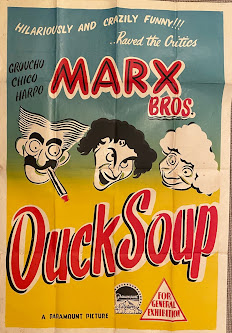
    How Life And The Death Penalty Imitate The Marx Brothers

    The Court:  We'll take up old business.
    Defense Counsel:  I wish to discuss the [constitutionality of the death penalty]  
    The Court:  Sit down, that's new business. No old business? Very well... We'll take up new business.
    Defense Counsel:  Now, about the [death penalty] ....
    The Court:  Too late, that's old business already. Sit down
    Today, the Ninth Circuit Court of Appeal heard oral argument in the case of Jones v. Chappell, in which a federal district judge ruled that the administration of California's death penalty is irrevocably dysfunctional, resulting in systemic delays in which only the "random few" are executed in violation of the Eighth Amendment’s prohibition against cruel and unusual punishment. As U.S. District Judge Cormac J. Carney found, of the over 900 people that have been sentenced to death since the adoption of the death penalty in 1978, 13 have been executed, 94 have died of other causes. There are over 750 men and women on California's death row. The process for reviewing their death sentences takes an average of 25 years and is getting longer -- delays, as the court found, that are inherent in the system and not the fault of inmates themselves.

    Anyone wishing to hear a spirited argument about this ruling and whether California's death penalty is constitutional did not hear it today.  Here's a clip:

    .
    The argument barely touched on the underlying merits of the case.  Instead, the focus was on whether the claim could even be considered at all under the Byzantine rules erected by the Supreme Court and Congress -- rules that are designed to thwart criminal defendants from challenging their state convictions and sentences in federal court.  Under these often insurmountable procedural hurdles, a claim cannot involve the application of a new rule that was not clearly established by the Supreme Court at the time a defendant's case became final in the state courts.  [UPDATE:  On 11/12/15, the  Ninth Circuit overturned the decision on this ground]  A claim has to be exhausted in state court before being raised in federal court.  If it has not been exhausted it is generally too late to do so.  [UPDATE:   One of the three 9th Circuit judges on the panel would have overturned the decision on exhaustion grounds]  And if it has been exhausted and the state court rejected the claim, it must also be rejected in federal court-- even if the state court erred -- as long as the state court's decision was not "unreasonable."


    One often hears the cliché about criminals being released on technicalities. The reality is that far more often a defendant's righteous claims are tossed out based on technicalities. 
    The infrequency of executions and the randomness with regard to which condemned inmates actually will be executed have made a mockery of the supposedly rational justifications for the death penalty.  Because it is “so wantonly and so freakishly” used, California’s death penalty has become a wholly arbitrary punishment in the same sense as the death penalty laws that were struck down by the Supreme Court in 1972 in Furman v. Georgia.

    This is a critical issue going to the heart of whether the death penalty as applied in California is so dysfunctional as to be unconstitutional.  The fact that such a claim might not even be considered on its merits but, instead, could be dismissed on a technicality is further evidence of dysfunction.

    Not so funny.

    Thursday, July 9, 2015

    A Summer Classic: Moral Panic Over A Pier Shooting

    Guest Blog Post by Professor Jonathan Simon

    It is a reminder of how hard the past is to leave behind (especially when your leading politicians belong to it). By now the whole nation knows the basic facts: Francisco Sanchez, a 45- or 52-year-old Mexican national, shot and killed Kathryn Steinle, 32-year-old resident of a nearby suburb, in a chance encounter along San Francisco’s popular, and seemingly safe, waterfront Embarcadero Boulevard last week.

    It had all the makings of what criminologists call a “moral panic” — an untoward event, small or large, that becomes a vehicle for vast social and political anxieties over race, class and national identity. A low-status villain — non-white, poor, non-citizen, long criminal record, multiple incarcerations — kills a high-status victim — white, middle class, citizen, mother of children, never been in trouble with the law.  It occurs where it should not, in a place associated with comfort and recreation. Events like this sometimes stay just local news, but given the right conditions, they can blow up into a policy storm of significant magnitude. Will this one?

    It comes at a time when white anxiety over the growing Latino population in the United States has become a dominant obsession with the Republican party. Indeed, Republican politicians have found themselves in something of a dilemma over which to attack among two of their favorite targets: liberal cities like San Francisco or the Obama administration.

    Since the dominant media narrative has focused on the decision of the San Francisco sheriff’s department to release Sanchez, after the marijuana possession warrant he was being held on was dismissed — without notifying ICE (the Immigration Control and Enforcement agency) as requested — Republicans and now Senator Diane Feinstein, have decided to focus their rage on the city’s sanctuary policy, which mandates non-cooperation with the aggressive detention and deportation policies of recent years. Feinstein wrote SF Mayor Ed Lee yesterday, excoriating the City and its sanctuary policy, and all but blaming them for the crime.

    Familiar narrative

    The story line is a familiar one to politicians of Feinstein’s generation, who rose to maturity and power addressing it. In Feinstein’s case, this was quite literal, as she became mayor of San Francisco in 1978 after the high-profile City Hall murders of Mayor George Moscone and Supervisor and civil-rights leader Harvey Milk.

    According to the logic that became common sense during the high crime eras of the 1970s, 1980s and 1990s, state and local justice systems were overwhelmed by crime and prone to ignoring criminal threats by dumping known threats on the streets. According to this thinking (which I described at length in my 2007 book Governing through Crime), only tough laws limiting judicial discretion, and federal mandates requiring that felons serve the vast majority of their sentences and protect Americans. The result: mass incarceration and mass deportation.

    A closer look at the narrative surrounding the Sanchez case reveals it for the ideological construction it is. In fact, Sanchez epitomizes why the logic of exclusion and segregation that undergird our wars on crime and terror can never achieve public safety.

    Start with the focus on San Francisco’s sheriff and the city’s sanctuary policy. It seem obvious and outrageous to Sen. Feinstein that Ms. Steinle would not have been killed that night but for the sheriff’s and city’s failure to incarcerate him until he could be deported.

    But who was really the proximate cause of Mr. Sanchez’s presence in San Francisco? He didn’t start here, but instead in federal prison, where he was serving time for repeated unlawful entries to the United States.

    Nothing in federal law required ICE to bring Sanchez to San Francisco to address a 20-year-old warrant for marijuana possession. Such charges are routinely dismissed in San Francisco and other cities, and the feds had apparently deported him five times during that period without feeling compelled to bring him to answer justice in San Francisco. Most likely the overworked ICE staff found the warrant and realized it would be easier to dump him on San Francisco then complete the paper work necessary to deport him promptly (or even generate the kind of immigration warrant rather than “hold” what would have prevented Sanchez’s release even under the sanctuary policy).

    Dangerous felon?

    A second phony element is the idea that Sanchez was obviously dangerous because of his seven felonies. In fact, as the media realized pretty early, all but one of these felonies were for drugs or illegal reentry, and only one was for assault (the least serious form of crime against the person, the equivalent of a fist fight).

    If anything, Sanchez’s record is monument to how stretched the felony concept has become in our time. Seven felonies sure sound scary, until you actually look at them. There is nothing about his record that would have signaled to San Francisco sheriff’s deputies that Sanchez posed a serious threat. He appeared to be a not untypical inmate in the jail: poor, disorganized, a drug user without a stable family or work life, and probably some mental illness (indeed I suspect he has a chronic mental illness and decompensated for lack of proper treatment during his federal imprisonment).

    The shooting of Kathryn Steinle appears to be a tragic escalation of Sanchez’s lifestyle. The weapon was apparently found on the beach (latest reports suggest it belonged to a federal agent). He admits to having been high on cannabis and sleeping pills. She was shot in the back, consistent with his “accident” defense. His most persistent deliberate pattern was apparently returning to the United States — not to prey on its citizens a la Donald Trump, but to support himself and perhaps to stay in contact with family here.

    So what to conclude from the Sanchez case? Trying to protect ourselves from random violence by incarcerating and deporting people, on the basis of race and often-inflated criminal records, is deeply flawed (and far from the slam-dunk solution that Sen. Feinstein believes).

    Lessons from criminology

    The underlying theory here is that crime is a product of dangerous people. Lock up or deport the dangerous people and the problem is solved. But criminology now suggests that crime is situational, a product of people with chaotic lives, substance abuse, and chance encounters in environments that provide either accelerants or de-accelerants (think of the gun that Sanchez found).

    There is no perfect solution, save for the ideal of fixing all our “broken toys” (and even unbroken ones break in the spur of the moment). Instead, careful mental-health screening of the jail population, and attentive post-release efforts to keep people with mental health needs and drug-abuse histories on the right medications and off the wrong ones, could do far better than incarceration for people like Sanchez (what about his previous imprisonments protected us?).

    Nor, quite clearly, is deportation a solution. For two decades now, we’ve been aggressively deporting people we label “criminal aliens,” creating significant gang problems in countries like Guatemala and El Salvador (many of them, in fact, have recreated the same gang milieus they used to survive in the United States) without doing much to reduce crime here.

    I suspect this moral panic will run its course without uprooting San Francisco’s sanctuary policy or placing Donald Trump in the White House. The general trend is away from harsh and exclusionary policies in both criminal justice and immigration.

    Sadly, the punitive storm that has arisen around Francisco Sanchez and the killing of Kathryn Steinle is a reminder of how powerful the hold of crime-panic journalism, and hyperventilating crime-warrior politicians like Feinstein, remains on our public policy and how slow reform will probably be.

    Jonathan Simon is a professor of law at UC Berkeley and Faculty Director of the Center for the Study of Law & Society.  This article was originally posted at The Berkeley Blog

    Tuesday, June 9, 2015

    Justice Scalia's Poster Child For The Death Penalty Is Now A Poster Child For Abolition

    Justice Harry Blackmun famously announced more than 20 years ago that he would "no longer . . . tinker with the machinery of death," expressing his deep frustration with a system that "despite the effort of the States and courts to devise legal formulas and procedural rules . . . remains fraught with arbitrariness, discrimination, caprice, and mistake." 

    Blackmun made this painfully honest assessment in a dissent from the Court's refusal to review the death sentence of Bruce  Callins.  Blackmun explained that "rather than continue to coddle the Court's delusion that the desired level of fairness has been achieved," he felt "morally and intellectually obligated simply to concede that the death penalty experiment has failed."  He understood that "no combination of procedural rules or substantive regulations ever can save the death penalty from its inherent constitutional deficiencies."  He concluded that:

    The basic question-- does the system accurately and consistently determine which defendants "deserve" to die?-- cannot be answered in the affirmative. . . . The problem is that the inevitability of factual, legal, and moral error gives us a system that we know must wrongly kill some defendants, a system that fails to deliver the fair, consistent, and reliable sentences of death required by the Constitution.
    Blackmun's heartfelt statement stands in stark contrast to Justice Antonin Scalia's cold-blooded retort.  Scalia chided Blackmun for choosing the Callins' case -- involving the lethal shooting of a bar patron during a robbery -- as the vehicle to declare that the death penalty was unconstitutional.  Scalia asserted that "death-by-injection . . . looks even better next to some of the other cases currently before us, which Justice Blackmun did not select . . . for example, the case of the 11-year-old girl raped by four men and then killed by stuffing her panties down her throat. How enviable a quiet death by lethal injection compared with that!"

    The case that Justice Scalia plucked out as symbolizing how well the process works in determining who is deserving of death was that of Henry Lee "Buddy" McCollum. 

    Back in 1994, several months after the Court denied review in the Callins case, it denied review in McCollum's as well.  Blackmun in his dissent from that denial noted that Scalia had previously questioned why he did not choose this as the case to announce his position on the death penalty.  Blackmun acknowledged that the crime was, indeed, "abhorrent" but that "there is more to the story, including that McCollum has an IQ between 60 and 69 with the mental age of a 9-year old, and that he was "far from the most culpable" of those purportedly involved in the crime.   Blackmun concluded:  "That our system of capital punishment would single out Buddy McCollum to die for this brutal crime only confirms my conclusion that the death penalty experiment has failed. Our system of capital punishment simply does not accurately and consistently determine which defendants most "deserve" to die."

    There is even more to the story than Blackmun knew.  Turns out Henry Lee McCollum -- and his half-brother Leon Brown who had been convicted and sentenced to life -- were innocent. 

    With no physical evidence tying them to the crime, these two mentally-disabled half-brothers had been convicted based solely on their confessions.  The confessions were written in long hand by the police and signed by McCollum and Brown, who shortly afterwards insisted they were tricked and bullied into signing them.  The confessions were, in fact, coerced and false.  Only recently was the North Carolina Innocence Inquiry Commission able to obtain DNA testing of a cigarette butt found at the crime scene -- testing which showed a match with a sex offender who lived near the crime scene and had been convicted of another rape-murder that occurred around the same time.

    Last September, a North Carolina Superior Court judge vacated the convictions of McCollum and Brown, and ordered their release-- with the support of the prosecuting district attorney, the notorious Joe Freeman Britt, described by the New York Times as "the 6-foot-6, Bible-quoting district attorney who was later profiled by “60 Minutes” as the country’s 'deadliest D.A.' because he sought the death penalty so often."

    And last week, North Carolina Governor Pat McCrory pardoned McCollum and Brown, stating: “Based on the available evidence I’ve reviewed, I am granting pardons of innocence to Henry McCollum and Leon Brown. It’s the right thing to do.”
     

    Justice Scalia -- along with Justice Clarence Thomas -- has stated that the execution of innocent men or women after they were afforded a full and fair trial does not offend the Constitution.  He is surely not troubled in the least by the revelation that the condemned man he anointed as a shining example for the death penalty's efficacy was declared innocent after serving 30 years on death row -- or troubled that this innocent man would have been executed long ago if Scalia had his way.  The rest of us should be.

    Tuesday, July 22, 2014

    An Open Letter To Kamala Harris

    Dear Madam Attorney General:

    I write to urge you to not appeal Jones v. Chappell, the recent federal court decision holding that the administration of California's death penalty is irrevocably dysfunctional, resulting in systemic delays in which only the "random few" are executed in violation of the Eighth Amendment’s prohibition against cruel and unusual punishment. 

    As U.S. District Judge Cormac J. Carney found, of the over 900 people that have been sentenced to death since the adoption of the death penalty in 1978, 13 have been executed, 94 have died of other causes.  There are currently 748 death row inmates. The process for reviewing their death sentences takes an average of 25 years and is getting longer -- delays, as the court found, that are inherent in the system and not the fault of inmates themselves.

    I had the good fortune of meeting you in 2007, at a Death Penalty Focus Awards Dinner when, as San Francisco District Attorney, you were given the Mario Cuomo Acts of Courage Award for declining to authorize death penalty prosecutions. 

    Subsequently, when you campaigned for Attorney General, you acknowledged that California's death penalty system is flawed.  You argued that the death penalty has not made us safer and that the money spent every year on the death penalty could be far more productively used to fund programs which aim to stop recidivism. As you put it, "not housing octogenarians on Death Row could put 1,000 more cops on the street."

    I imagine as Attorney General you now have an even clearer sense of how broken and how costly the death penalty is.  As the bipartisan California Commission on the Fair Administration of Justice found, the system continues to be "plagued with excessive delay in the appointment of counsel" and "a severe backlog in the review" of cases before the California Supreme Court.  

    An extensive study headed Judge Arthur Alarcon determined that California's death penalty system has cost taxpayers roughly $4 billion "to fund a dysfunctional death penalty system that has carried out no more than 13 executions."  But despite these vast expenditures, the current Chief Justice of the State of California Tani Cantil-Sakauye acknowledged, the death penalty is not effective and fixing its problems would require "structural changes" that the State cannot afford. Her predecessor, Ron George, who was Chief Justice for 15 years, came to the same conclusion, describing California's death penalty scheme as "dysfunctional."

    The infrequency of executions and the randomness with regard to which condemned inmates actually will be executed have made a mockery of the supposedly rational justifications for the death penalty – deterrence and retribution.  In a well-reasoned and well-documented opinion, a federal judge has now agreed:  "For all practical purposes ... a sentence of death in California is a sentence of life imprisonment with the remote possibility of death -- a sentence no rational legislature or jury could ever impose."

    As Attorney General, representing the People of California, you have a duty to enforce and apply the law.  But where a court has found that law to be unconstitutional, you are well within your discretion to abide by the court's decision.  By not appealing a ruling that confirms what you have long stated -- that California's death penalty is broken -- you will again be taking the kind of principled position for which you were honored when we met years ago and for which you are so admired.


    (Related post:  California's Cruel and Unusual Death Penalty)

    Wednesday, March 5, 2014

    Travesty of Justice: Nominee To Enforce Civil Rights Rejected For Fighting For Justice

    "The Senate’s failure to confirm Debo Adegbile to lead the Civil Rights Division at the Department of Justice is a travesty based on wildly unfair character attacks . . . . Mr. Adegbile’s qualifications are impeccable. . . . His unwavering dedication to protecting every American’s civil and Constitutional rights under the law – including voting rights – could not be more important right now. . . The fact that his nomination was defeated solely based on his legal representation of a defendant runs contrary to a fundamental principle of our system of justice – and those who voted against his nomination denied the American people an outstanding public servant."  -- President Obama 

    Debo Adegbile
    In 1982, Mumia Abu-Jamal was sentenced to death for the killing of Philadelphia Police Officer Daniel Faulkner.  Abu-Jamal remained on death row for 30 years during an intensely fought battle in both the legal arena and public sphere which resulted in his death sentence being vacated.  Now almost 60 years old, Abu-Jamal is serving a sentence of life without the possibility of parole.

    Serious concerns remain about the fairness of Abu-Jamal's trial.  Some consider him a political prisoner.  On the other side, which includes Officer Faulkner's family and the Fraternal Order of Police, there continues to be outrage about the campaign to free Abu-Jamal as well as the fact that he was not executed.

    No matter one's views about Abu-Jamal, about the case or the politics, or even about the death penalty, one issue should be uncontroversial -- that Abu-Jamal or any criminal defendant has the right to have an effective, zealous advocate, particularly when the case is a matter of life and death.  An important corollary, in my view, is that a lawyer's most  honorable role is to represent people who are hated and feared, and to ensure that the government is following the law.  (Here's an earlier piece, Crossing the Line, on prior attempts to smear lawyers who advocate for the despised.)

    It is deeply distressing that the United States Senate just voted to reject Depo Adegbile, an otherwise sterling choice to run the Civil Rights Division of the Justice Department, because he headed the NAACP Legal Defense and Education Fund when it represented Abu-Jamal in his fight for life.  Adegbile, who didn't personally work on Abu-Jamal's case, twice argued cases defending the Voting Rights Act before the U.S. Supreme Court, a far more relevant qualification for the job.

    Sen. Patrick Leahy made the case that "the principle that all sides deserve an effective counsel is at the bedrock of our constitutional system” and “we cannot equate the lawyer with the conduct of those we represent if we want our justice system to endure."

    Nevertheless, the Senate voted 52-47 to scuttle the nomination.

    You can expect Republicans to vote against any Obama pick who would be supportive of civil rights enforcement.  As Sen. Dick Durbin put it, "I think the accusation is that the president is picking someone for the Division of Civil Rights who has been a leader in civil rights," and Republicans have “historically been troubled by … appointments [to the post] no matter who they are.” 

    And you can expect Republicans to say stupid shit like what Sen. Lindsay Graham said:  “When someone has a history of helping cop-killers, this is what happens.”

    But it was the Democrats who doomed Adegbile's chances, by pandering to the same simplistic pro-law enforcement, pro-prosecution sentiment as Senator Graham, effectively denigrating the importance of mounting a vigorous legal defense of a notorious defendant.

    Pennsylvania Democrat, Bob Casey paid lip service to “respect[ing] that our system of law ensures the right of all citizens to legal representation no matter how heinous the crime" but added the disturbing non sequitur that "it is important that we ensure that Pennsylvanians and citizens across the country have full confidence in their public representatives — both elected and appointed.”  Casey added that “The vicious murder of Officer Faulkner in the line of duty and the events that followed in the 30 years since his death have left open wounds for Maureen Faulkner and her family as well as the City of Philadelphia.”

    Christopher Coons, a Democratic Senator from Delaware also claimed to understand, "as a lawyer . . . the importance of having legal advocates willing to fight for even the most despicable clients" and purported to "embrace the proposition that an attorney is not responsible for the actions of their client."  But he decided to cast his vote aganst Adegbile because of the "decade-long public campaign . . . to elevate a heinous, cold-blooded killer to the status of political prisoner and folk hero," a campaign that Adegbile, by the way, had nothing to do with.

    According to this reasoning, it is critical for our legal system to ensure that all criminal defendants have effective advocates but a lawyer's representation of a particularly despicable client accused of a particularly despicable crime (such as killing a police officer) is a disqualifying factor for public office.  Or as Lindsay Graham put it, "this is what happens" when you help cop-killers.

    In addition to Casey and Coons, other shameful Democrats included Senators Mark Pryor of Arkansas. John Walsh of Montana, Joe Manchin III of West Virginia, Heidi Heitkamp of North Dakota, and Joe Donnelly of Indiana.

    Tuesday, August 13, 2013

    Finding Sandra Coke

    I never really thought about the victims.

    As a lawyer representing death row inmates for almost 25 years, I focused on the trial – whether the judge and jury acted properly, whether the prosecutor tried the case fairly, and whether defense counsel investigated and presented a constitutionally adequate defense. Mostly, I focused on my clients – on the (mostly) men who were found guilty of committing terribly brutal crimes, and tried to figure out and then explain to the courts the myriad of life circumstances that led them there. The victims and their loves ones were generally not a central part of this story.

    I have known many people convicted of murder and sentenced to death. I had never known anyone who was killed.

    Sandra Coke and I worked together in the early 1990s.  She developed the social histories of our clients, painstakingly gathering vital records, skillfully conducting sensitive, uncomfortable interviews with relatives, teachers, and friends, consulting with mental health experts, and researching communities. Sandra uncovered the evidence of horrific childhood trauma and impaired mental functioning, of family histories filled with abuse, addiction and mental illness, of multi-generational experiences scarred by poverty and racism, of failed social institutions.

    Sandra continued to work as an investigator, most recently at the Federal Defender’s Office. With empathy and compassion, she was committed to showing how every client, no matter what despicable acts they had committed, were human beings – they were not monsters to be despised and disposed of.

    Sandra disappeared last Sunday evening. She was 50 years old. A single mother of a teenage girl. She was beloved by her family, by many friends, and by the criminal defense community – my community – who have worked with her for over two decades.

    After she failed to return home, Sandra’s friends, family and co-workers spent the next few days canvassing her Oakland neighborhood. At the forefront of the search was Sandra's sister, Tanya -- herself married to one of the most respected and revered death penalty lawyers in the country.  In an unfamiliar role, criminal defense lawyers worked with law enforcement, searching for clues that would lead them to Sandra. Sandra’s car and cell phones were found. A man with an extremely violent past, recently released from prison, was arrested on a parole violation as a person of interest. He and Sandra had dated briefly 20 years ago, and it was reported that they had been seen together on Sunday.

    In the wake of these ominous signs, we still held out hope that Sandra would return to us.  But on Friday, during the course of a massive search, a woman’s body was found near a park in Vacaville (about 45 miles from Sandra’s home). And then today (on Tuesday), the Oakland Police Department identified that body as Sandra's.

    Sandra Coke, one of our own – someone from my professional family – has been killed by one of those people who we have long defended.  Killed by someone who in any other circumstance I would ward off others’ attempts to demonize – to point out the humanity even in someone who acted inhumanely. “You can’t define someone by the worst thing they have ever done,” I would say.

    It isn’t that I don’t still believe those things. I do. But that doesn’t matter right now. The perpetrator has receded into the background. I don’t care about his history or life struggles, his impairments or his vulnerabilities. But I don’t feel anger or hatred either. I don’t have feelings of vengeance. I don’t want him dead. I don’t feel anything for him at all. This isn’t about him. This is about the horror, shock, pain and overwhelming sadness over the irreplaceable loss of a remarkable person. For the first time in 25 years, my focus has shifted from perpetrator to victim.

    Please give generously to the Sandra Coke Fund, which will provide for the care and education of Sandra’s daughter.

    Monday, June 25, 2012

    Supreme Court Bans Mandatory Life-Without-Parole For Children Convicted Of Homicide

    Bryan Stevenson
    In Miller v. Alabama and Jackson v. Hobbs, the Supreme Court holds that mandatory life-without-parole sentences for all children 17 or younger convicted of homicide are unconstitutional.  (I wrote about these cases earlier here.)  Both cases were argued by the brilliant and heroic Bryan Stevenson.

    Here is a summary of this great outcome from Equal Justice Institute of which Bryan is the founder and executive director:

    The Court today struck down statutes in 29 states that provide for mandatory life-without-parole sentences for children, reasoning that mandatory imposition of life-without-parole sentences on children “contravenes Graham’s (and also Roper’s) foundational principle: that imposition of a State’s most severe penalties on juvenile offenders cannot proceed as though they were not children.”

    "This is an important win for children. The Court took a significant step forward by recognizing the fundamental unfairness of mandatory death-in-prison sentences that don't allow sentencers to consider the unique status of children and their potential for change," said Bryan Stevenson, Executive Director of the Equal Justice Initiative, who represents Jackson and Miller. "The Court has recognized that children need additional attention and protection in the criminal justice system.”

    Today’s decision requires the lower courts to conduct new sentencing hearings where judges will have to consider children’s individual characters and life circumstances, including age, as well as the circumstances of the crime.

    While the Court did not categorically ban juvenile life without parole in all circumstances, Justice Kagan wrote for the majority that, “given all we have said in Roper, Graham, and this decision about children’s diminished culpability and heightened capacity for change, we think appropriate occasions for sentencing juveniles to this harshest possible penalty will be uncommon.”

    Stevenson cautioned, however, that sentencing courts’ discretion must be exercised in an informed and thoughtful way that acknowledges that children are biologically different than adults and less responsible for their wrongdoing, and that the courts should provide the individuals affected by the ruling a meaningful opportunity to show they have rehabilitated themselves and are appropriate candidates for release.
    Stevenson added that historically, race and poverty have been powerful forces in influencing which children receive life-without-parole sentences.

    Today's decision follows the Court's earlier rulings in Roper v. Simmons (2005) and Graham v. Florida (2010), which acknowledge the diminished culpability of children.

    Groups as diverse as the American Psychological Association, the American Academy of Child and Adolescent Psychiatry, the American Psychiatric Association, the Council of Juvenile Correctional Administrators, the American Bar Association, mental health professionals, former juvenile court judges, criminologists, victims, and national advocacy organizations filed amicus briefs in the cases to urge the Court to give children an opportunity to have their sentences reviewed later in life.

    Monday, June 18, 2012

    Acquittal On Steroids

    Roger Clemens was acquitted today of perjury charges based on his testimony before Congress in 2008, in which he stated that he never used steroids or human growth hormone.  After an earlier mistrial, federal prosecutors decided to retry Clemens and, as the New York Times reports, the second trial was far more extensive than the first, with 46 witnesses over more than eight weeks.

     I have long despised Clemens for his petulance, his arrogance and not least, his beaning of Mike Piazza in 2000, followed in the the World Series of that year with his inexcusable heaving of a piece of  broken bat at Piazza after it was shattered by a pitch.   Nevertheless, for the reasons I explored in a piece re-posted below on the Barry Bonds trial (which also ended in embarrassment for the prosecution when it was able to obtain a conviction on only one count, an obstruction of justice charge) the case served no purpose and was a colossal waste of resources.
     

    Trial On Steroids


    So many people in and out of baseball hate Barry Bonds passionately.  He was a selfish player who focused unduly on his own statistics.  He is arrogant and unapologetic.  He has always treated the press with great disdain.  He had his own Barcalounger in the Giants' clubhouse.  Unlike, perhaps, more sympathetic marginal or fading players, he was a brilliant player in his prime when he felt compelled to cheat by using steroids.  He is a petty man who cheated because he was jealous of Sammy Sosa and Mark McGwire, and wanted to become not just the best all around player, but the home run king.  And it worked; he not only broke McGwire's single-season home run record, even more egregiously, he eclipsed the hallowed career home run mark of the beloved Hank Aaron.  Have I missed anything?  Oh, and he denied knowingly taking steriods when forced to testify under oath before a grand jury.

    For the last of these, Bonds is on trial, charged with lying to the grand jury and obstruction of justice.  It seems, however, that those who hate Barry Bonds hope he is humiliated, found guilty, and sentenced to a long prison term for his many other other non-criminal offenses.

    I am not one of the Barry Haters.  Watching Barry Bonds play for the Giants, both pre- and post-alleged steroid use was one of my greatest thrills as a baseball fan.  Every time I went to the ballpark I felt it was a privilege to be able to see one of the most amazing players to have ever played.  In 2001, the year he hit 73 home runs, he hardly ever got a decent pitch (he walked 177 times that year), but when he did he crushed it.  Maybe steroids added some distance to these blasts, but the discipline, focus, timing and beauty of these at bats can't be credited to drugs.  The dude could flat out hit.

    OK, with that disclaimer out of the way, I think the issue is less about Bonds and more about whether the United States Government should be expending so many resources on the use of performance enhancing drugs in baseball. 

    Saturday, May 19, 2012

    Using The Poor As Piggy Banks

    By Barbara Ehrenreich, cross-posted from TomDispatch

    Individually the poor are not too tempting to thieves, for obvious reasons. Mug a banker and you might score a wallet containing a month’s rent. Mug a janitor and you will be lucky to get away with bus fare to flee the crime scene. But as Business Week helpfully pointed out in 2007, the poor in aggregate provide a juicy target for anyone depraved enough to make a business of stealing from them.

    The trick is to rob them in ways that are systematic, impersonal, and almost impossible to trace to individual perpetrators. Employers, for example, can simply program their computers to shave a few dollars off each paycheck, or they can require workers to show up 30 minutes or more before the time clock starts ticking.

    Lenders, including major credit companies as well as payday lenders, have taken over the traditional role of the street-corner loan shark, charging the poor insanely high rates of interest. When supplemented with late fees (themselves subject to interest), the resulting effective interest rate can be as high as 600% a year, which is perfectly legal in many states.

    It’s not just the private sector that’s preying on the poor. Local governments are discovering that they can partially make up for declining tax revenues through fines, fees, and other costs imposed on indigent defendants, often for crimes no more dastardly than driving with a suspended license. And if that seems like an inefficient way to make money, given the high cost of locking people up, a growing number of jurisdictions have taken to charging defendants for their court costs and even the price of occupying a jail cell.

    The poster case for government persecution of the down-and-out would have to be Edwina Nowlin, a homeless Michigan woman who was jailed in 2009 for failing to pay $104 a month to cover the room-and-board charges for her 16-year-old son’s incarceration. When she received a back paycheck, she thought it would allow her to pay for her son’s jail stay. Instead, it was confiscated and applied to the cost of her own incarceration.

    Tuesday, May 15, 2012

    Executing The Innocent

    Carlos deLuna
    "No one can ever say again with a straight face that America doesn't execute innocent men. No one."  -- Andrew Rosenthal, The Atlantic
    Carlos DeLuna was executed in 1989 for the 1983 stabbing death of a gas station clerk in Corpus Christi, Texas.  The Columbia University Human Rights Review has just published its Spring 2012 issue devoted entirely to demonstrating that De Luna was innocent and that it was another Carlos - Carlos Hernandez -- who committed the murder.  The book-length article, entitled "Los Tocayos Carlos: Anatomy of a Wrongful Execution," was authored by Columbia law professor James Liebman and his team of students.

    Rosenthal's piece in The Atlantic and Michael McLaughlin's at Huffington Post provide excellent summaries of the details of this deeply troubling case.

     McLaughlin cites some of the key findings of the investigation:
    • The eyewitness statements actually conflict with each other. What witnesses said about the appearance and location of the suspect suggest that they were describing more than one person.
    • Photos of a bloody footprint and blood spatter on the walls suggest the killer would have had blood on his shoes and pant legs, yet De Luna's clothes were clean.
    • Prosecutors and police ignored tips unearthed in the case files that Carlos Hernandez, an older friend of De Luna, who had a reputation for wielding a blade, had killed Lopez. The defense failed to track down Hernandez, who bore a striking resemblance to De Luna.
    This was a case of "epic malfeasance and misfeasance," Rosenthal writes, in which the police, prosecutor, defense lawyer and judge all contributed.

    The execution of an innocent man over two decades ago cannot be dismissed, however, as an isolated case from a time when procedural safeguards were not as rigorous as they are today.  Indeed, Rosenthal cites to several recent capital cases in which there remain serious and substantial questions of innocence.

    But this well-investigated, extensively documented report, as Rosenthal writes, "ought to end all reasonable debate in this country about whether an innocent man or woman has yet been executed in America since the modern capital punishment regime was recognized by the Supreme Court in 1976."